
Best Cutter Suction Dredger Manufacturer for Reliable and Efficient Dredging Solutions
2026-08-21
When a dredging project hangs in the balance, the margin between success and costly delay often comes down to one thing: the cutter suction dredger you choose. Too many operators settle for equipment that struggles in tough soils or burns through fuel without delivering results. But what if you didn’t have to compromise? YaKai Dredger has built its reputation on exactly that—reliable, efficient dredging solutions that hold up when the work gets hard. In this post, we’ll explore what sets a top-tier manufacturer apart and why YaKai Dredger is becoming the go-to name for teams that demand more from every cubic meter.
Why a Cutter Suction Dredger Earns Its Keep in Hard Material
A bare suction mouth cannot do much when the bottom is compacted clay, cemented sand, or fractured rock. A cutter suction dredger changes that by putting a rotating cutter head right at the suction inlet. The teeth bite into the hard matrix, break it loose, and let the pump take a dense mixture instead of waiting for hydraulic erosion to do the job. That single difference turns slow or impossible ground into steady production.
Where the machine really earns its keep is in cost per cubic meter. Because the cutter keeps solids moving into the pump, the crew spends less time and fuel churning water. In stiff glacial till, calcareous sandstone, or coral limestone, this approach often undercuts the cost of drilling and blasting while leaving a cleaner profile and less over-dredge.
Control matters just as much as cutting force. The spud carriage and swing winches allow thin, layer-by-layer cuts through hard seams, so the operator can adapt to changes in hardness without stopping. When the material varies from soft overburden to stubborn rock, that steady, adjustable bite keeps the job moving instead of forcing a change of equipment or a new setup.
The Hidden Differences Between a Good Dredger and a Great One
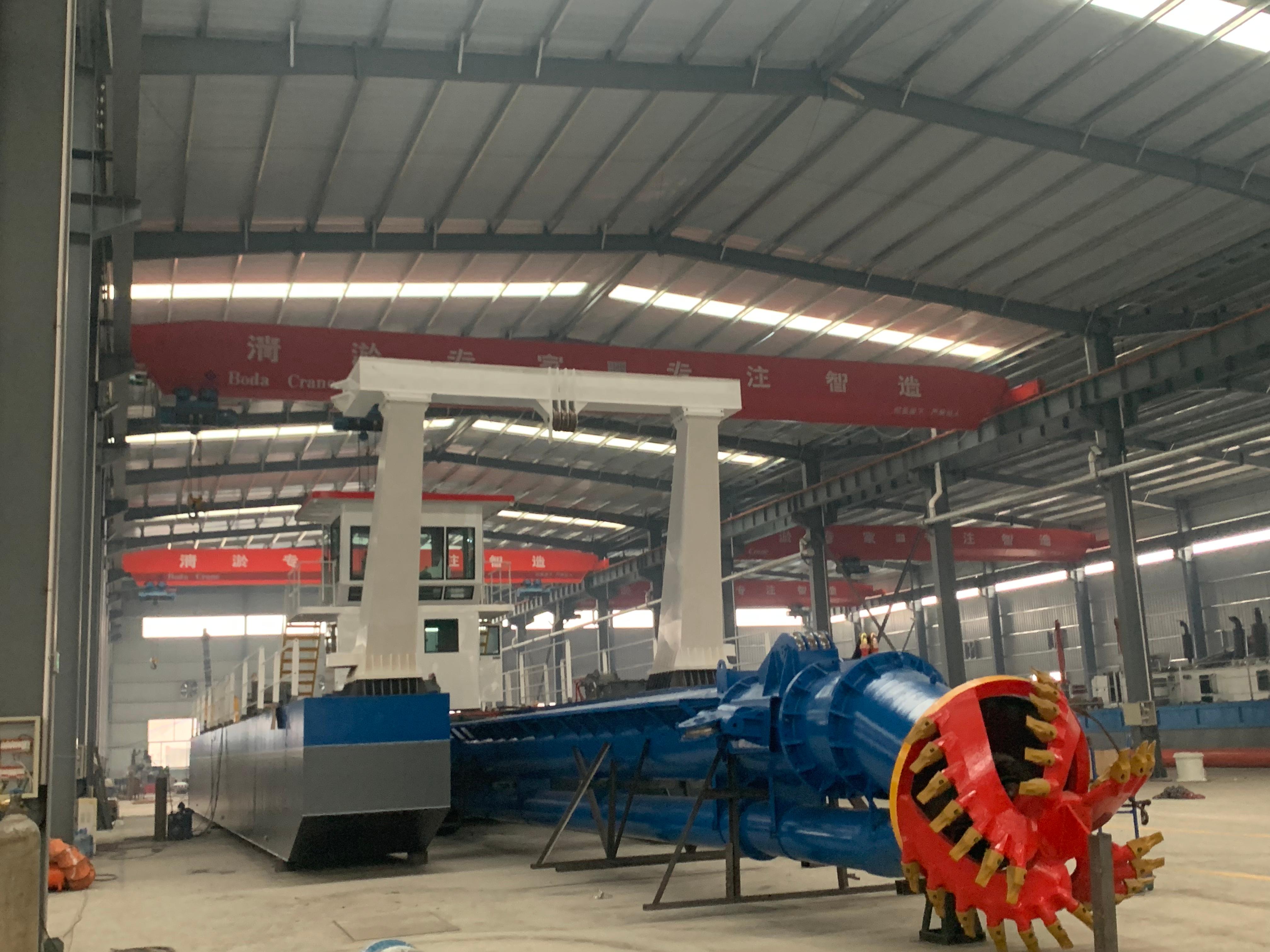
Many operators can keep a dredger running, but the gap between merely good and genuinely great often lives in the quiet habits nobody thinks to mention. A good dredger follows the survey, hits the target depth, and keeps the pipeline moving. A great one reads the water, feels the cut, and adjusts before the instruments even register a problem. That intuition comes from thousands of hours of paying attention to subtle cues: the pitch of the pump, the curl of the overflow, the way the swing wire loads up on a hard bottom.
The difference also shows up in how they handle the unexpected. A good dredger sticks to the plan and reports deviations. A great one treats every deviation as information, mentally mapping hidden layers of clay, sand, or buried debris that no chart could capture. They remember where the bucket hesitated last week, where the suction dropped for no obvious reason, and they use that memory to make tomorrow's cut cleaner and faster. This quiet accumulation of local knowledge turns an expensive piece of machinery into an extension of the operator.
Finally, great dredgers take ownership of the outcome, not just the task. They notice when the slurry density drifts, when a gasket is about to weep, or when the anchor barge is sitting slightly wrong for the wind shift expected after lunch. They don't wait for a supervisor to point it out. That proactive, almost possessive care for the cut, the equipment, and the finished grade is what separates a solid professional from someone who makes the whole operation look effortless.
How Build Quality Shows Up After the First 1,000 Hours
After the first thousand hours, the subtle signs of solid construction start to emerge in ways you can feel but not always see. Hinges that still close with the same damped resistance, drawer slides that haven't developed that telltale sideways play, and seams that remain tight even as temperature swings stress the materials—these are the quiet indicators that the build wasn't just good on day one. Cheap assemblies reveal themselves through micro-looseness: a slight click in a joint, a faint buzz at certain RPMs, a shift in alignment that your hands learn to anticipate. Quality, by contrast, settles into a kind of predictable silence.
You might not notice it immediately, but after 1,000 hours the difference is in the details that don't demand attention. Fasteners stay torqued, surfaces resist marring even where they rub, and the overall assembly feels as cohesive as it did when new. There's no need to tighten something "just a little more" every week, no growing tolerance that makes you adjust your technique. The build quality isn't a spec sheet number—it's the absence of accumulating annoyances, the reassurance that nothing is slowly working itself apart.
That first thousand hours also reveals how well the manufacturer managed stress points. In cheaper builds, that's when you start seeing hairline cracks at corners, peeling edges, or the faint warp of a panel that was never properly stress-relieved. A well-built product absorbs those loads without broadcasting them; it may gain a patina of use, but it doesn't start to fail in small, annoying ways. The real tell is whether your maintenance routine has shifted from "fixing" to simply wiping it down.
Real-World Fuel and Output Numbers Worth Asking About
A generator’s spec sheet rarely tells you how it behaves on a job site after six straight hours. The number that matters is fuel burn at 50% or 75% load, not the best-case figure pulled from a lab run. Ask for gallons per hour at half load and at three-quarter load, then do the math for a full workday. That gap between advertised runtime and what you actually pour into the tank tends to widen once a fridge, a compressor, and a few chargers are all pulling at once.
Output claims deserve the same scrutiny. A 5000-watt unit might only deliver 4200 watts continuous once heat and altitude take their cut. Ask for sustained output at your elevation and expected temperature, not the surge number printed on the box. If you are running sensitive electronics, also ask how much voltage drop occurs when a motor kicks on—many budget inverters sag just enough to trip a breaker or reset a router.
Finally, pin down the numbers under partial load with an eco-mode engaged. Some models sip fuel at idle but then spike when the compressor cycles, while others hold a flatter consumption curve but run louder. Getting the actual gallons-per-hour and watts-per-gallon figures for your typical draw pattern will tell you more than any peak wattage sticker.
What On-Time Parts and Service Actually Look Like on Site
When a service truck rolls up before the scheduled window even opens, it sets a different tone for the whole job. The parts are already staged in labeled bins behind the driver's seat, not buried under tarps or left on a warehouse dock. You see the technician pull out a pre-printed checklist that matches your exact equipment serial number, then walk straight to the failed component with a torque wrench in hand—no rummaging, no second trip back to the van. That's what on-time actually means: the right pieces arrive with the person who knows how to install them, at the moment the work was supposed to start, not half a day later with an apology.
On-site coordination matters more than the delivery timestamp. A crew that shows up early but spends forty minutes unwrapping pallets or calling the dispatcher for a missing gasket isn't really on time—they're just physically present. Real readiness looks like a pre-staged drop zone near the equipment, with the replacement bearing already unpacked, the hydraulic lines capped and labeled, and the service manual open to the torque spec page. The master technician walks the site with the maintenance lead first, confirming the lockout points and the exact floor access route, then gives a fifteen-minute warning before the lift starts. That kind of sequencing is invisible when it works and instantly obvious when it doesn't.
The gap between promised and delivered often hides in the small handoffs. You can have a courier drop a box of parts at the gate by 7 a.m., but if the night shift didn't sign for it or the seal kit sat in direct sun for three hours, the repair still stalls. When parts and service are genuinely synchronized, the delivery driver doesn't just leave a box—he checks in with the on-site supervisor, places the parts in a shaded area next to the work zone, and photographs the condition and location before the crew clock in. Then the first wrench turns at the agreed time, not after a scavenger hunt. That's the visual difference between a schedule that looks good on a spreadsheet and one that holds up on the concrete floor.
Sizing the Dredger to the Job Without Overspending
Choosing the right dredger starts with a clear-eyed look at the material you're actually moving. Silts and soft clays call for a different pump and cutter setup than compacted sand or gravel. A machine built for heavy rock will burn fuel and wear parts faster on a soft-bottom job, while an undersized unit forces you into extra passes and longer rental windows. Match the suction head and impeller clearance to the grain size, not to the salesman's best-case scenario.
Depth and reach matter just as much as horsepower. A dredger that can't swing its ladder to the required cut depth will leave low spots, and one that outruns your disposal pipeline just creates bottlenecks at the booster pump. Before you commit, map the full cut face and settle on a realistic average production rate per hour. That number, not the peak capacity on the spec sheet, is what drives your cost per cubic meter.
Finally, think about mobilization and support equipment. A mid-size cutter suction dredge may do the job with a smaller crew and a single barge, while a larger trailing hopper dredge demands deeper water, more fuel, and a longer setup time. The cheapest bid often hides these logistics. Size for the job's true working conditions, and you'll avoid paying for capacity you'll never use—or renting a second machine to finish what the first one couldn't handle.
FAQ
Look closely at the cutter head design, ladder support structure, and the quality of the dredge pump. A manufacturer that uses abrasion-resistant steel in high-wear zones and offers a reinforced spud system typically produces machines that hold up under continuous use. Real-world reliability also shows up in simpler things like accessible grease points and well-routed hydraulic lines, which reduce downtime dramatically.
Efficiency isn't just about engine power. Check the matching between the pump curve and the discharge distance, the swing winch speed, and whether the automation can hold a steady vacuum. Ask the manufacturer for fuel consumption figures at a specified slurry density rather than a bare horsepower rating. A well-matched pump and ladder angle often beats a bigger engine when it comes to cubic meters moved per liter of fuel.
They earn their keep on harbour deepening, land reclamation, canal maintenance, and mining tailings ponds. Hard clay, compacted sand, and even soft rock are workable if the cutter teeth and drive are specified correctly. For delicate environmental dredging, a smaller unit with precise positioning and low turbidity cutter options is usually the better call.
Daily checks on cutter teeth wear, regular greasing of the ladder pivot, and monitoring pump clearances make a bigger difference than most operators expect. Replace worn teeth before they damage the adapter, flush the suction line after working in sticky material, and keep an eye on hydraulic oil temperature trends. A simple logbook entry for suction vacuum and discharge pressure will catch pump wear weeks before a failure.
A customised dredger matched to your soil type and discharge distance avoids the hidden cost of running an oversized or undersized machine. For example, specifying a wider spud carriage for better stepping in soft ground or selecting a different cutter drive ratio for clay versus sand can drop fuel use by 10 to 20 percent. It also reduces wear on the pump and pipeline because the system isn't constantly fighting a mismatch.
Ask for a written response time for spare parts, and check whether they stock wear components locally or ship from a central warehouse. The best manufacturers will give you a direct line to an engineer who has worked on dredgers, not just a call centre. They should also offer commissioning support and operator training on your site, because even a well-built dredger underperforms if the crew doesn't understand swing patterns and vacuum control.
Yes, but only if the cutter head, pump impeller, and ladder hydraulic settings are chosen with that range in mind. Sand calls for high flow and lower concentration, while clay needs slower cutter speed and more torque. Adjustable cutter speed, interchangeable teeth, and a pump with replaceable wear liners let you switch between materials without sacrificing output. Without those features, you will constantly be balancing clogged suction lines against excessive pump wear.
Conclusion
A cutter suction dredger proves its worth when the bottom turns rocky or compacted—no other dredge type cuts through hard material with the same combination of rotating force and suction. The best manufacturers don't stop at raw cutting power; they focus on hidden details like impeller clearance, ladder pivot geometry, and wear-part metallurgy. Those differences show up long before a failure: after the first thousand hours, a well-built dredger still holds pump clearance and shaft alignment, while a cheaper one eats seals and liners. That reliability comes from boring, unglamorous choices—thicker hull plates, oversized bearings, and hard-faced cutter teeth—rather than marketing language.
Real performance numbers matter more than brochure specs. Ask a builder for logged fuel burn and cubic meters per hour from an actual job, not a calculated ideal. A good manufacturer will share those figures openly and explain how to size the cutter head, ladder length, and discharge pipeline to your specific material and depth—so you don't overspend on capacity you never use. On site, timely parts and service mean having a local stock of wear items and a technician who can video-call you through a repair instead of waiting two weeks for a visit. That kind of support keeps a dredger working when every hour of downtime costs real money.
Contact Us
Contact Person: Nancy
Email: [email protected]
Tel/WhatsApp: (+86) 13869631558
Website: https://www.yakaidredger.com/