
Best Diesel Forklift Options: Which One Suits Your Needs?
2026-07-11
Discovering the right diesel forklift can transform your warehouse efficiency. When you choose HANGCHA, you gain a partner backed by cutting-edge technology and proven reliability. Let's explore the options that match your lifting needs and operational goals.
Why Diesel Forklifts Outperform Electric in Heavy-Duty Jobs
When the workload involves moving massive steel coils or maneuvering through unpaved yards, diesel forklifts bring a ruggedness that electric models simply can't match. Their internal combustion engines deliver sustained, high-torque power without the gradual fade that battery-powered units suffer as the charge depletes. You won't find yourself watching the clock, waiting for a battery swap mid-shift; instead, a quick refuel and the machine is back to full strength, keeping productivity on track even during round-the-clock operations.
Electric forklifts often need smooth, clean surfaces to operate efficiently, but real-world job sites rarely stay pristine. Rain, mud, dust, and uneven terrain are part of daily life in heavy industries, and diesel engines are sealed and built to power through these conditions without throwing error codes or losing traction. The robust drivetrain and higher ground clearance let operators push into piles of gravel or lumber without the hesitation that comes with worrying about damaging sensitive electronics or batteries.
Beyond raw capability, there's a practical side to choosing diesel for demanding tasks: the infrastructure and longevity simply align better. Many heavy-duty workplaces already have diesel fuel tanks on site for other equipment, eliminating the need to invest in expensive charging stations and battery maintenance areas. And while electric motors have their place, diesel engines often rack up 20,000 hours or more with basic care, making them a familiar, predictable tool that mechanics understand and operators trust when the work gets tough.
Key Specs to Check Before Buying a Diesel Forklift
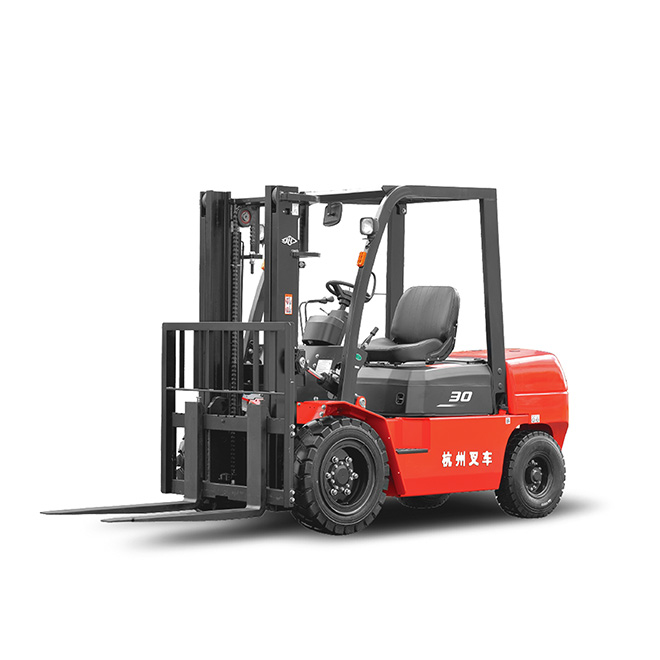
Engine specs on paper rarely tell the full story. While horsepower ratings get attention, it’s the torque curve that does the heavy lifting—literally. A diesel forklift that peaks early and holds steady through the low-to-mid RPM range will move pallets without bogging down, especially when ramps or uneven surfaces are in play. Beyond power delivery, emissions tiering (Tier 4 Final or EU Stage V) isn’t just a bureaucratic checkbox; it can decide whether the unit is legal for indoor use or subject to future restrictions in your area. Ignoring that detail has cost plenty of warehouse managers unexpected retrofit bills.
The mast and hydraulics often get a quick glance, but they’re where daily productivity lives or dies. Lift speed, lowering control smoothness, and free lift height determine cycle times, not just max capacity. A forklift that jerks a load on the way down wastes seconds each trip and invites damage claims. Ask about auxiliary hydraulic functions, too—if you’ll need sideshift, fork positioners, or a rotating clamp, confirm the system’s flow rate and valving now rather than bolting on underpowered add-ons later. Visibility through the mast rails is the difference between a close call and a collision in a tightly packed yard; some designs create blind spots half the width of the aisle.
Tires and chassis geometry separate the machine that works everywhere from the one that stays parked. Cushion tires are quiet on concrete but useless on gravel; air-filled pneumatics handle rough ground but risk flats, while solid or foam-filled options bridge that gap at a higher cost and harsher ride. Ground clearance isn’t just about dock plates—it dictates whether you’ll scrape the underbody every time a ramp angle changes. And never overlook turning radius: in a cramped feed mill or a busy cross-dock, a foot of extra swing space reshapes your whole traffic flow. The right chassis specs turn a same-class forklift into the fleet’s most flexible tool.
Top Brands Compared: Toyota vs. Hyster vs. Komatsu
When it comes to material handling equipment, few names carry as much weight as Toyota, Hyster, and Komatsu. Each brings a distinct philosophy to forklift design and manufacturing. Toyota often leads with its legendary reliability and lean manufacturing principles, resulting in machines that feel intuitive and require less frequent maintenance. Hyster, with its roots in heavy-duty applications, tends to emphasize ruggedness and endurance, making their lifts a favorite in high-intensity environments. Komatsu, meanwhile, integrates its heavy equipment expertise into forklifts that excel in power and operator comfort, often incorporating advanced hydraulics and ergonomic cabins.
Performance-wise, the differences become clearer when you look at specific metrics. Toyota models typically offer smooth acceleration and precise control, which boosts efficiency in fast-paced warehouses. Hyster counters with impressive lifting capacities and tough frames that handle uneven surfaces without complaint. Komatsu forklifts frequently stand out for their engine performance and fuel efficiency, especially in diesel variants, thanks to proprietary technology that optimizes combustion. The choice often boils down to whether you prioritize seamless operation, brute strength, or a blend of power and economy.
Beyond the specs, ownership experience varies significantly. Toyota’s extensive dealer network and parts availability reduce downtime, while its residual value remains high. Hyster offers customizable configurations and robust support for heavy industry, though some models can be thirstier on fuel. Komatsu emphasizes total lifecycle costs and provides strong warranties, yet its footprint in certain regions might be smaller. Ultimately, comparing these brands isn’t about declaring a winner—it’s about matching the forklift’s strengths to your operational reality.
Rough Terrain? No Problem: Diesel Forklifts Built for the Outdoors
When the ground gets unpredictable—uneven dirt, slick mud, gravel slopes—diesel forklifts step up where others spin out. Their high-torque engines and rugged frames allow them to push through loose surfaces with the kind of stubborn traction that feels almost mechanical in its refusal to quit. You can feel the difference as soon as the tires bite down: a steady, low-end grunt that keeps loads level even when the path underneath is anything but.
These machines don't just survive outdoor chaos—they're designed for it. Sealed components keep dust and moisture out of the engine, while reinforced masts absorb the constant micro-shocks of bumpy travel. Operators often mention the confidence that comes from a higher ground clearance, letting them roll over obstacles that would leave other lifts snagged or scraping. It's a tool that matches the rhythm of outdoor logistics: less hesitation, more forward motion.
Fuel efficiency also plays a quiet, powerful role. With a single tank, a diesel forklift can slog through an extended shift without needing a break, far outlasting its electric cousins when charging infrastructure is miles away. That endurance matters when jobs stretch from a dusty lumber yard to a wind-blown construction site, where the only constant is the demand to keep moving, no matter what the terrain throws at you.
Cost-Effective Diesel Forklifts That Won’t Break the Bank
Diesel forklifts have long been the workhorses of warehouses and construction sites, but many businesses shy away from them, fearing steep upfront costs and ongoing fuel expenses. The truth is, there are plenty of cost-effective options that deliver rugged performance without draining your budget. Modern diesel forklifts are designed with fuel efficiency in mind, often featuring advanced engine technology that reduces consumption and emissions. When you factor in their durability and lower maintenance requirements compared to some alternatives, the total cost of ownership can be surprisingly affordable.
One key to unlocking value is focusing on the right capacity and features for your specific needs. Overbuying horsepower or lift height you'll never use only wastes money. Look for models that offer the essentials—reliable hydraulics, ergonomic controls, and solid build quality—without expensive add-ons that rarely get used. Many manufacturers now offer competitively priced base models that can be customized with only the attachments you truly need, keeping the initial price tag in check while still giving you a machine that gets the job done day after day.
Another overlooked avenue for savings is the used and refurbished market. High-quality diesel forklifts, when properly maintained, can run for thousands of hours, and a well-cared-for pre-owned unit often comes at a fraction of the cost of new. Dealers that offer certified refurbished equipment with warranties can provide peace of mind while slashing your capital expenditure. Pair this with a straightforward maintenance plan, and you’ve got a diesel workhorse that won’t break the bank—leaving you with more cash for other parts of your operation.
How to Match Lifting Capacity to Your Warehouse Needs
Determining the right lifting capacity starts with a clear picture of your heaviest regular load. Think beyond just the weight of the product itself—add the packaging, pallet, or stillage, and factor in any attachment the equipment might use, like a clamp or fork positioner. It’s easy to overlook the cumulative effect of these add-ons, but they can push a borderline capacity into unsafe territory. A good rule of thumb is to build in a buffer of at least 10–15% above your calculated maximum to accommodate slight imbalances or future changes in load composition without having to reinvest in new gear.
Beyond static weight, consider how you move. If your warehouse involves frequent lifting to high racks or extended reaches, the rated capacity often drops significantly at height. A forklift, for example, might handle 2.5 tons at ground level but only 1.8 tons when the mast is fully extended. Similarly, a reach truck’s capacity is closely tied to its lift height and load center. Don’t just rely on a brochure’s top‑line number—check the load chart for the exact configuration you need. Also account for the pace of operations: high‑cycle environments can expose weaknesses in components if they’re constantly operated near maximum, leading to premature wear.
Lastly, think about the space you’re working in. Narrow aisles might limit you to compact equipment with lower capacities, so you may need to adjust storage density or product arrangement to stay within a feasible range. It’s also worth reviewing your inventory trends: if you’re gradually shifting to denser or larger items, spec for that future state now rather than being caught off guard. Talk to your operators about what they experience daily—they’ll often highlight practical limitations that the numbers alone don’t reveal. Matching capacity isn’t just a technical exercise; it’s about blending safety, efficiency, and a realistic view of how your warehouse actually functions.
FAQ
Think about the weight of the loads you handle most often, how high you need to lift them, and the width of your aisles. Also, consider whether you'll be using it indoors or outdoors—diesel engines are great for outdoor use because they're rugged, but they produce exhaust, so indoor use requires good ventilation.
Brands like Toyota, Hyster, and Crown often come up in conversations about dependable diesel forklifts. Toyota's models, for instance, are praised for their durability and low maintenance costs. Hyster offers robust machines built for tough jobs, while Crown focuses on operator comfort without sacrificing performance. It's worth test-driving a few to see which feels right.
Diesel forklifts excel in heavy-duty outdoor applications where you need lots of power and don't want to worry about recharging. They can run all day as long as you have fuel. Electric forklifts are quieter, emission-free, and better suited to indoor environments. If your work involves moving very heavy loads outside or on rough terrain, diesel is usually the way to go.
Regular maintenance includes checking and changing engine oil, replacing fuel and air filters, and inspecting the cooling system. You'll also need to keep an eye on tire wear and hydraulic fluid levels. Because diesel engines have more moving parts than electric ones, sticking to a scheduled service plan helps avoid breakdowns and keeps the truck running smoothly for years.
The upfront cost of a diesel forklift can be higher than electric, but fuel costs per hour of operation are often lower, especially if you're running it for long shifts. However, maintenance costs over time can add up due to engine complexity. It's a trade-off: you get more power and longevity in harsh conditions, but you'll spend more on regular upkeep compared to electric models.
Look for features like an overhead guard, seatbelt, and load backrest as standard. More advanced options include stability control systems that prevent tipping, automatic speed reduction when turning, and blue spotlights or warning alarms for pedestrian awareness. Operator training is key, but these built-in features add an extra layer of protection.
They can, but with caveats. Diesel engines emit fumes, so you need proper ventilation or exhaust extraction systems to keep air quality safe. Warehouses often prefer electric forklifts for indoor use to avoid these issues. If you must use diesel inside, make sure the space meets regulatory standards for air exchange and that you schedule regular emission checks.
Conclusion
Diesel forklifts remain the go-to workhorses for heavy-duty operations where electric models simply can't compete. Their superior torque and no-battery downtime mean they power through multi-shift warehouse schedules and rough outdoor terrain without flinching. When comparing top contenders like Toyota, Hyster, and Komatsu, you'll notice that each brings distinct advantages: Toyota often leads in reliability and resale value, Hyster excels in rugged durability for demanding environments, and Komatsu strikes a balance between advanced hydraulics and operator comfort. Before committing to a purchase, pay close attention to key specifications like lift capacity, mast height, and fuel efficiency—these factors directly influence how well the machine will handle your typical loads and workspace constraints.
Matching lifting capacity to your actual warehouse needs prevents overpaying for unused muscle or limping along with an underpowered unit. For businesses watching their budget, several cost-effective models deliver solid performance without the premium price tag, while still offering the outdoor-tough design that diesel forklifts are famous for. Whether you're navigating gravel lots or unpredictable weather, these trucks are purpose-built to keep productivity high where electrics would stall. Ultimately, the best choice aligns your daily operational demands—be it constant heavy lifting, challenging surfaces, or tight budgets—with a brand and model that has proven staying power in real-world conditions.
Contact Us
Contact Person: Liuxue
Email: [email protected]
Tel/WhatsApp: +86-19084200370
Website: https://www.hf-ec.com/