
Bulk Beeswax Cutting Board Cream Manufacturer: Quality Wholesale Options for Your Brand
2026-09-03
Every cutting board tells a story of meal prep, knife marks, and long-term use—but only if it's properly conditioned. For brands buying bulk beeswax cutting board cream, the real challenge is finding a manufacturer that delivers the same quality at scale as they would in small batches. That's where XUSHI comes in. Instead of settling for generic, overly-processed blends, you can offer your customers a cream that actually penetrates wood and keeps boards looking their best. In the sections ahead, we'll break down what to look for in a bulk supplier, from ingredient transparency to custom formulation options.
The Makings of a Beeswax Cream That Won’t Turn Rancid on the Shelf
Keeping a beeswax cream fresh on the shelf isn't about piling on synthetic preservatives; it begins with leaving water out altogether. An anhydrous formula—one made only from waxes, oils, and butters—removes the moisture that microbes and rancidity reactions depend on. Within that framework, the quality of the beeswax matters more than most people assume. Filtered, cosmetic-grade beeswax from a reliable source carries fewer residual pollen particles and free fatty acids, both of which can speed oxidation. Melting it gently and blending it while warm, rather than scorching it over high heat, preserves its natural protective esters.
The next layer of defense is the oil blend. Not all carrier oils age the same way, so choosing ones with inherently high oxidative stability gives the cream a longer runway. Jojoba, meadowfoam seed oil, and fractionated coconut oil are far less likely to turn than polyunsaturated oils like flax or hemp. Even with stable oils, adding a small amount of vitamin E (mixed tocopherols, not just alpha-tocopherol) and a drop of rosemary oleoresin extract can slow free-radical chain reactions. These antioxidants work quietly in the background, extending shelf life without changing the cream's feel or scent.
Finally, how the cream is poured and packaged can undo all the formulation work. Cooling the mixture slowly while stirring minimizes cracks and air pockets where oxygen can linger. Once set, transferring it to dark glass or opaque, airtight containers limits UV exposure and repeated air exchange every time the lid opens. A cool, dry storage spot finishes the job—beeswax creams hold best when they aren't subjected to bathroom humidity or sunny windowsills. With a water-free base, stable oils, and careful handling, it's entirely possible to keep a batch fresh for a year or more without any synthetic stabilizers.
Why Your Brand’s Board Cream Needs a Signature Scent (or None at All)
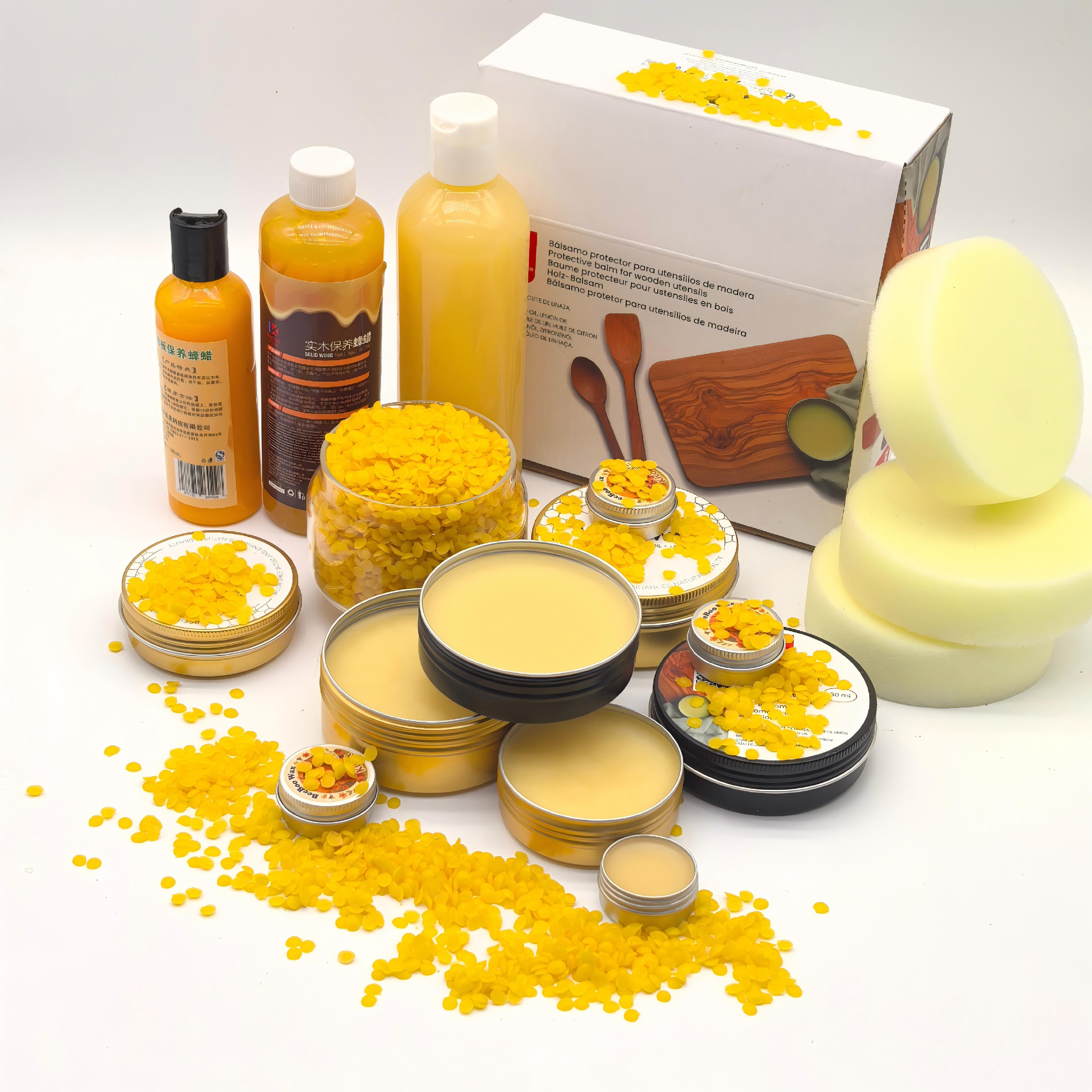
Scent is one of the fastest ways to make a product feel intentional. A board cream that carries a faint cedar or citrus note can turn a routine maintenance task into a small ritual. The right fragrance doesn’t just mask the base oils—it gives the cream a personality, helping customers remember your brand when they reach for the jar again.
But forcing a scent where it doesn’t belong can backfire. Wood boards are porous and often used for food prep, so a heavy perfume can linger on surfaces and interfere with taste. Some customers prefer a completely neutral cream that lets the wood’s natural character come through. If you can’t commit to a precise, subtle scent blend, going unscented is not a weakness—it’s a deliberate choice.
The key is match the scent to the product’s purpose and the user’s environment. A workshop-focused board cream might benefit from a faint almond or beeswax aroma, while a kitchen product aimed at home cooks could perform better with no added fragrance at all. Test with real users, and don’t assume that a signature scent is mandatory. Sometimes the strongest brand statement is simply letting the material speak for itself.
Bulk Blends That Niche Markets Actually Get Excited About
There’s a quiet shift happening in the bulk aisle, and it’s not about saving a few cents on rolled oats. Niche markets are responding to blends that feel intentional—think single-origin spice mixes with a story, or a house-roasted coffee blend that changes with the season. These aren’t generic “everything” blends; they’re curated to hit a specific note, whether it’s a smoky heat for a regional barbecue style or a floral-citrus balance for a specialty cold brew.
What makes these bulk blends genuinely exciting is that they often bypass the middle-of-the-road compromises of mass retail. A small-batch tea blend might lean into a rarely used leaf varietal, or a flour blend might pair ancient grains in a ratio that home bakers can’t easily replicate. The bulk format gives niche buyers the freedom to experiment without committing to a full retail package, and that low-risk trial often turns into a quiet loyalty.
You see it most in communities that care about provenance and process: coffee roasters offering green and roasted blends side by side, spice merchants mixing to order, or bakeries selling their signature grain blend by weight. The excitement isn’t just about the product—it’s about the access. Bulk becomes a way to bring a niche craft home, one scoop at a time, without losing the character that made it worth seeking out in the first place.
How Drum to Jar Handling Keeps Texture Consistent
Most texture loss happens long before a jar reaches the shelf. When thick emulsions, suspensions, or soft solids are scooped from a drum and forced through high-shear pumps, the internal structure that gives the product its mouthfeel can break down. Drum-to-jar handling removes that stress by keeping the material in a single, temperature-stable stream from bulk container to filling nozzle. Instead of splashing or beating the product, the transfer uses low-speed positive displacement and short, wide pathways that preserve the original viscosity and particle arrangement.
The method also avoids repeated rework. Once a drum is opened, the product is not scraped down the sides, reintroduced to the main mass, or left to warm and cool in cycles. Bottom-outlet drums and slow piston or lobe pumps move the material gently, while the jar filler waits just long enough for any trapped air to rise and escape. That short settling window prevents air pockets from becoming uneven pockets in the finished jar, so the texture the formulator approved is the texture the customer opens.
The payoff shows up most clearly in side-by-side spoon cuts. A cream that would normally shear into a thin, grainy layer stays thick and glossy; a sauce with soft particulates keeps them suspended instead of crushed at the bottom. Because every jar draws from the same undisturbed drum profile, the last jar off the line matches the first in spreadability, scoop firmness, and mouthfeel.
What a Reliable Manufacturer’s Batch Records Should Tell You
A batch record from a trustworthy manufacturer reads less like a checklist and more like a narrative of accountability. It doesn't just note that mixing occurred at 200 RPM for 15 minutes; it captures the actual operator's signature, the calibration status of the tachometer, and any deviation from the target—even a two-second overshoot. The real value lies in what isn't hidden: raw material lot numbers linked to supplier COAs, in-process test results with timestamps, and a clear trail of who reviewed each step before release. If a page has blank fields or vague remarks like 'no issues,' that's a red flag, not reassurance.
You should also see evidence of honest failure management. Reliable batch records include out-of-specification investigations, rework justifications, and the final disposition rationale—signed by quality, not just production. They tell you whether the equipment was cleaned and verified before use, whether environmental monitoring stayed within limits, and whether any manual overrides required supervisor approval. In short, the record should let you reconstruct every decision that led to the product reaching your hands, without having to ask a single follow-up question.
Shipping in Volume Without Letting Heat Ruin the Product
Scaling up a shipment usually means stacking more pallets into a single trailer or container, but that extra thermal mass can turn a minor temperature fluctuation into a full-blown product loss. The key is to stop treating insulation as an afterthought. Pre-chill the cargo area for at least an hour before loading, and use insulated bulkheads or thermal blankets to block heat from the doors—those door seals are often the weakest point. If the product can tolerate it, pack with frozen gel packs or phase change materials placed against the outer walls rather than buried in the middle, so they absorb the incoming heat first.
Airflow matters more than total cooling capacity when you are shipping dense cube-outs. Leave narrow channels between pallets and avoid stretch-wrapping them so tightly that air cannot circulate through the gaps. A common mistake is turning the reefer unit down to its lowest setting, which can freeze the front rows while the back rows bake. Instead, set the unit to maintain the product's ideal range and use data loggers placed in three zones—front, middle, and rear—to confirm the temperature stays even. If you see more than a 3°C spread, adjust the load pattern before the next run.
Even with the right setup, heat can sneak in during multi-stop deliveries or long dock dwell times. Use fast-closing strip curtains on dock doors and limit how long the reefer doors stay open. For high-value or temperature-sensitive products, add a disposable temperature recorder to each pallet, not just one for the whole trailer, so you can prove exactly which pallets stayed safe. If a shipment is delayed, having a contingency plan—like a nearby cold storage facility or insulated staging area—means you are not forced to choose between missing a deadline and cooking the entire load.
FAQ
Yes, that's a common request. Send over your current product details or a sample, and we'll adjust the beeswax-to-oil ratio and any essential oil blend to get as close as possible while keeping everything food-safe.
The base uses cosmetic-grade beeswax, food-grade mineral oil, and a touch of vitamin E for longer shelf life. If you want a fully plant-based version, we can swap the mineral oil for fractionated coconut or jojoba oil.
For private label, we can start at 500 units per scent or size. If you just want unbranded bulk with no custom labels, we sometimes allow 250 units to help you test the market before committing to a larger run.
You can choose from glass jars, tin containers, or recyclable plastic tubs. We handle label design and printing in-house, including waterproof and oil-resistant labels. If you already have a design, just send the file and we'll handle the rest.
Both. Many brands start with our stock recipe and only tweak the scent, but we also formulate from scratch for things like vegan wax blends, nut-free versions, or a thicker balm for wooden utensils and butcher blocks.
Once you sign off on the sample, production usually takes 2-3 weeks for orders up to 5,000 units. Larger runs may take 4-5 weeks, but we'll give you a firm timeline before you place the order.
Yes, we ship worldwide from our facility. We provide all the necessary documents, including certificates of analysis and origin. Customs clearance is usually handled by your freight forwarder, but we can recommend reliable ones if you need help.
Every batch comes with a certificate of analysis, and we can also provide a safety data sheet if requested. For retailers that need extra assurance, we can arrange third-party stability and microbial testing at cost.
Conclusion
Sourcing bulk beeswax cutting board cream for your label means digging past generic formulas. The real difference shows up months later on a shelf, when a poorly balanced blend starts to smell off while a carefully made one still wipes on smooth. That stability comes from the maker’s choice of waxes, oils, and any preservative-free tricks they’ve dialed in over years. It also ties directly into scent—some brand owners want a faint honey note, others need zero fragrance to stay allergen-friendly, and a flexible manufacturer should offer both without batch-to-batch drift. Niche buyers, from woodworking shops to zero-waste stores, often look for blends with uncommon additions like carnauba for a harder finish or jojoba for faster absorption, and these are the options that turn a private-label product into something worth reordering.
Beyond the formula, handling in volume separates reliable suppliers from the rest. Moving cream from large drums into retail jars without shearing the emulsion or letting it separate is a process problem that affects every squeeze or scoop a customer takes. Batch records should show more than just a date and lot number—look for viscosity checks, fill weights, and temperature logs. Shipping bulk orders through summer heat is another overlooked risk: waxes soften and oils migrate, so a manufacturer who uses insulated liners or recommends climate-controlled freight is protecting your margins. When all these pieces line up, you get a consistent board cream that arrives intact, spreads evenly, and carries your brand without a single compromise on quality.
Contact Us
Contact Person: Alan Zhu
Email: [email protected]
Tel/WhatsApp: 8613931838766
Website: https://www.cnxushibeeswax.com