
China Custom Bolts for Industrial Applications A Comprehensive Overview
2026-09-28
When your industrial project demands more than off-the-shelf hardware, China’s custom bolt manufacturing has quietly become the global backbone. From heavy machinery to precision assemblies, the right fastener supplier can make or break your timeline. That’s where Peak Fasten stands out—turning complex specifications into reliable, production-ready bolts without the usual guesswork. This overview unpacks the capabilities, materials, and quality checks you should expect before placing your next order.
Why Off-the-Shelf Bolts Fall Short in Heavy Industry
The assumption that a standard hex bolt from a local supplier can survive in a mining crusher or a steel mill is a costly misconception. Off-the-shelf fasteners are typically manufactured to meet broad commercial tolerances, with material grades like Grade 8 or Class 10.9 chosen for general-purpose strength. But heavy industry asks for far more than tensile rating. Vibration, thermal cycling, and constant shock loads expose microscopic weaknesses in off-the-shelf bolts: thread roots cut too sharply, inconsistent heat treatment, or hydrogen embrittlement from standard plating processes. These aren't theoretical failures—they show up as snapped heads on conveyor gearboxes, stretched studs on hydraulic presses, and loose flange joints on high-pressure steam lines.
Another silent killer is the mismatch between a bolt's rated strength and the actual joint design. Off-the-shelf bolts come with a fixed grip length, a generic thread pitch, and a one-size-fits-all head configuration. In heavy machinery, engineers often need longer unthreaded shanks to handle shear loads, rolled threads to resist fatigue, or custom under-head radii to prevent stress concentration at the fillet. A standard bolt forces the joint to adapt to the fastener, rather than the other way around. The result is premature loosening, galling, or a fracture that happens without warning. You can retorque and add washers all day, but the fundamental incompatibility remains.
Then there's the traceability problem. When a critical joint fails, a plant manager needs to know the exact heat lot, the precise chemistry, and the full manufacturing history of every bolt in that assembly. Off-the-shelf products rarely come with meaningful mill certs or batch-level test data. Even if they do, the chain of custody is often broken. In heavy industry—where a single failed bolt can halt production for days or endanger workers—the cost of not knowing where your fastener came from outweighs any upfront savings. Custom or application-engineered bolts may cost more per piece, but they eliminate the guesswork that off-the-shelf parts quietly introduce into every high-load connection.
Inside a Chinese Machine Shop That Turns Specs into Load-Tested Fasteners
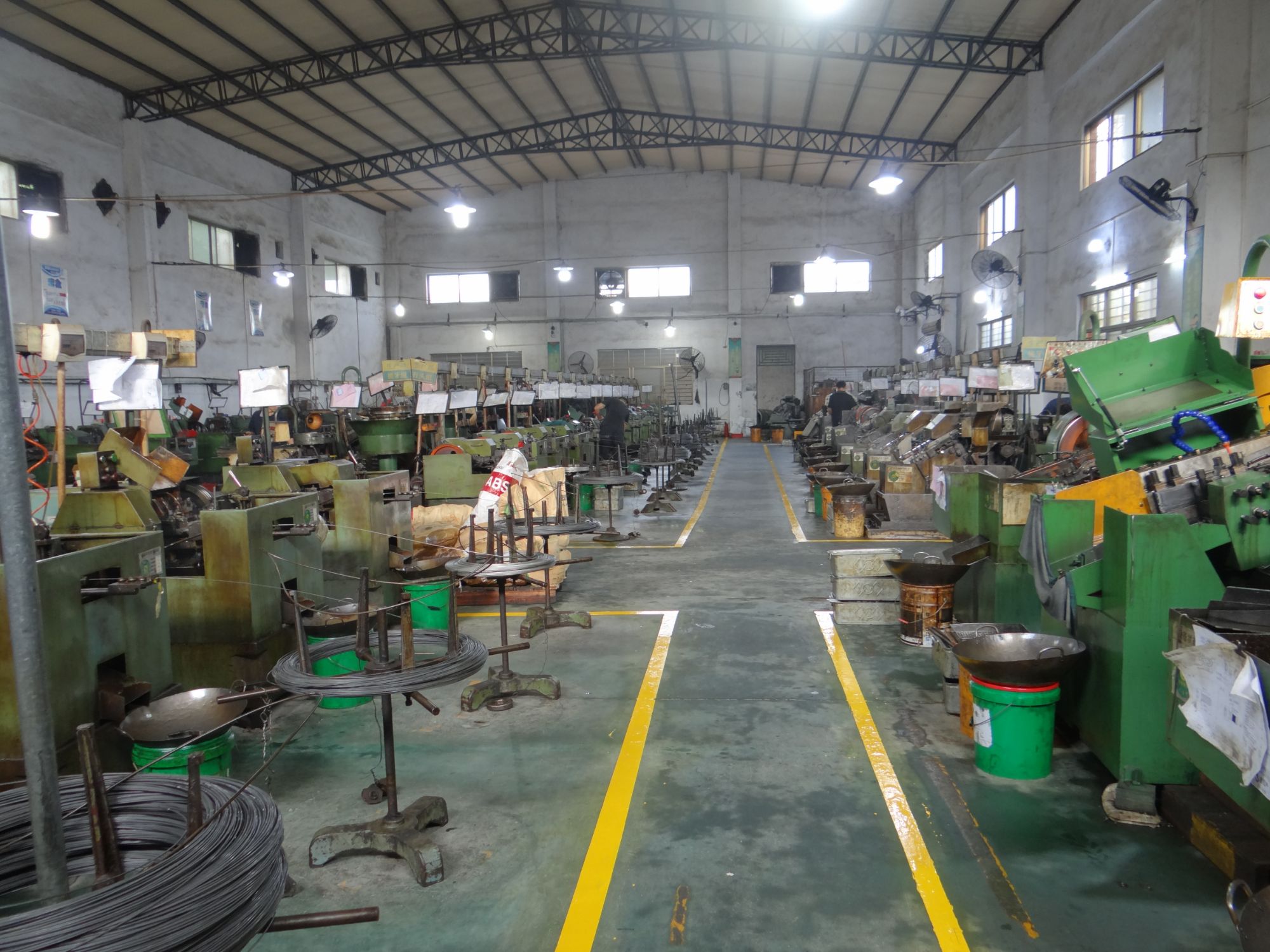
Inside this Chinese machine shop, raw steel arrives as simple bar stock and leaves as precision fasteners that have survived a battery of load tests. The floor hums with CNC lathes and thread rollers, each machine tuned to hold tolerances tighter than a sheet of paper. Workers in oil-stained gloves move between stations with a rhythm born of years of repetition, checking dimensions with micrometers that have been calibrated against certified gauge blocks. Every batch carries a paper trail—material heat numbers, tool offsets, and the signature of the inspector who signed off just before the parts hit the shipping crate.
What sets this shop apart is not just the equipment but the stubborn insistence on proving every claim. Fasteners are not merely machined and sent off with a hope and a handshake. They are loaded into test rigs that stretch, twist, and shear them until they fail, recording the exact newton-meters and kilograms of force at each breaking point. The walls are lined with charts of tensile curves and hardness readings, updated daily in marker pen. A customer can request a certificate for any lot and within minutes receive a scanned copy showing the yield point, elongation, and proof load—numbers that are not theoretical but measured on parts pulled straight from the production line.
The culture here is quietly proud but never flashy. The owner, a former toolmaker who started with one used lathe, walks the floor twice a day and still stops to re-adjust a feed rate if the chips come off the wrong color. Language on the shop floor is a mix of Mandarin and machine shorthand—short bursts of instruction, a nod, a tap on a dial. There's no marketing department, no slick brochure. The shop's reputation travels by word of mouth, and its load test reports do the talking that salespeople never needed to do.
Material Choices That Decide Whether a Bolt Survives Corrosion or Torque
The first thing that separates reliable bolted joints from premature failures is often the base alloy itself. Austenitic stainless steels like 304 hold up well in mild atmospheric conditions, but they can be a poor choice anywhere chlorides accumulate—think coastal salt spray or industrial washdowns. That is where 316 or 316L earns its reputation, thanks to the molybdenum addition that resists pitting and crevice corrosion. Yet stainless brings its own torque-related headache: galling. If the threads are not lubricated or the surface finish is too rough, the bolt can seize before it ever reaches the intended clamp load.
For high clamping forces, many engineers turn to heat-treated alloy steel such as Grade 8 or Class 12.9. These grades deliver impressive tensile strength, but that strength comes with increased susceptibility to hydrogen embrittlement, especially if the plating process introduces hydrogen or if the service environment promotes it. Zinc flake coatings offer better corrosion resistance than conventional electroplated zinc without the same risk of hydrogen pickup, though they shift the friction coefficient enough that torque values from a table can be misleading. A torque wrench reading alone cannot tell you whether the bolt is under-tensioned or stretched beyond yield unless the coating’s coefficient of friction is verified.
There are also applications where standard stainless or alloy steel simply will not do. Super duplex stainless balances high strength with excellent chloride resistance, but it costs more and requires careful machining. Titanium bolts resist seawater and many chemicals extremely well, yet their lower modulus means joint relaxation can be an issue if the clamped members are not stiff enough. The smart choice is not always the most corrosion-resistant or the strongest material—it is the one whose mechanical behavior and surface condition align with the actual torque procedure and exposure conditions.
From CAD Drawing to First Article Inspection in Under Three Weeks
Turning a CAD model into an approved First Article Inspection report in less than three weeks sounds aggressive, but it is exactly the kind of timeline modern job shops need to hit when a customer is waiting on a critical prototype or a short-run production part. The clock starts the moment the drawing file lands in the engineering queue. Instead of letting it sit for days while programmers debate toolpaths and inspectors wait for a finished part to measure, the entire workflow is treated as a single continuous process: CAD geometry feeds directly into CAM programming, which drives the machine tool, and the same CAD data becomes the reference for the inspection plan before any metal is cut.
What makes the three-week window achievable is the elimination of handoffs that traditionally eat up a week or more. The solid model carries not just dimensions but GD&T callouts, surface finish notes, and critical-to-quality features. The machinist does not have to interpret a paper drawing and re-enter numbers into a CMM; the inspection routine is built from the same nominal geometry, so any deviation shows up immediately against the CAD reference. In many cases, the first article is machined in one or two setups, measured on the machine or on a coordinate measuring machine within hours of coming off the table, and the report is generated from the same data set that drove the cutting paths. That closes the loop between design intent and verified reality without a separate, slow documentation step.
Hitting under three weeks also requires a shop to be honest about capacity and scheduling. The part does not sit in a queue waiting for a machine to open up; it is slotted into a production calendar as soon as the CAD file is reviewed for manufacturability. If the design has a tight tolerance or an unusual feature that might cause rework, that risk is flagged during programming, not after the first article fails inspection. The customer gets a realistic promise up front, and the shop holds itself to a date that is tied to actual machine availability and inspection capacity. In practice, that means the first article report is not an afterthought produced a month after the part ships, but a natural output of a workflow where the CAD drawing is the single source of truth from the first toolpath to the final dimensional sign-off.
Tight Tolerances, Zero Excuses: How Custom Threads Are Cut and Checked
Cutting a custom thread to a tolerance measured in microns starts long before the tool touches the blank. The lathe or thread grinder is thermally stabilized, the workpiece is allowed to reach room temperature, and the cutting insert is inspected under magnification for edge wear that would smear a flank angle. On a manual machine, the operator may take a spring pass with the compound set a half-thousandth deeper than the previous cut, listening for the faint change in spindle load that signals the tool is no longer rubbing but actually shearing metal. On CNC equipment, tool nose radius compensation and a post-process probing routine adjust the final pass based on real measured pitch diameter, not just the programmed coordinates.
Checking those threads is where the zero-excuses part gets enforced. A set of thread wires and a micrometer can resolve pitch diameter to within 0.0002 inches if the operator knows how to rock the wires into the flanks without bending them. But for more complex profiles, an optical comparator projects the thread form at 50x and overlays a translucent template of the exact UN, metric, or Acme geometry—any light bleeding between the shadow and the template line rejects the part. Coordinate measuring machines take it a step further, scanning hundreds of points along the helix and flagging deviations in lead, taper, or drunkenness that simple ring gages never catch.
The real discipline comes from closing the loop. If a measurement shows the pitch diameter drifting toward the low limit, the cutting parameters get adjusted before the next part, not after a batch of scrap. This means the machinist records wire readings, comparator overlays, and surface finish samples in the same notebook where they log insert changes and coolant concentration. Tight tolerances are not a promise printed on a drawing—they are a series of small, boring, repeatable actions taken between the cut and the check, and anyone who skips one of those actions gets to explain why the thread failed at assembly.
What Actually Matters When Auditing a Custom Bolt Supplier
When you're auditing a custom bolt supplier, the first thing to look past is the polished sales pitch. What really separates a dependable source from a risky one is how they handle material traceability. Ask to see the actual heat lot certifications for the raw stock, not just a generic mill test report. A supplier who can map every batch of bolts back to its original heat number—and shows you that mapping without hesitation—already clears the biggest hurdle. If their documentation trails off or they hand you a binder full of outdated certs, that's your cue to dig deeper.
Beyond paperwork, pay attention to the gauges and inspection methods they use on the floor. Custom bolts often have non-standard thread pitches, underhead geometries, or plating thicknesses that off-the-shelf equipment can't verify accurately. A supplier worth keeping will have dedicated fixtures for your parts, keep calibration records current, and be willing to walk you through a live first-article inspection. It's not about having a spotless lab; it's about whether the people doing the work understand why a few microns matter for your assembly.
Finally, ask about their process for handling nonconformances. Every shop makes mistakes, but the ones you want as a partner will have a clear, documented corrective action path—not a shrug and a promise to "do better next time." Look for evidence of root cause analysis, containment procedures, and communication that reaches you before the bad parts ship. A custom bolt supplier that treats your specs as a living agreement, not a one-time order, is the one that will keep your line running.
FAQ
Many Chinese manufacturers can handle non-standard dimensions, thread types, and coatings without forcing you into huge minimum order quantities. It’s often the mix of production flexibility and competitive pricing that draws industrial buyers.
Depending on the supplier, you can source everything from standard carbon and alloy steels to 304/316 stainless, brass, and even titanium. Reputable shops will also provide mill certificates and heat treatment records for traceability.
Most established factories work with ISO, DIN, ANSI, and JIS specifications daily. If your drawings call for a specific standard, they’ll usually confirm the tolerance class and thread fit before production, rather than assuming.
A serious supplier will do incoming material checks, in-process dimensional audits, thread gauge testing, and final mechanical tests like tensile or hardness. Ask for a pre-shipment inspection report instead of just relying on a certificate.
Many factories are more flexible than they used to be. Small runs are possible, though unit cost rises and lead times may stretch if special tooling or plating is involved. It helps to ask for a tooling fee breakdown upfront.
Custom bolts show up in structural steel connections, mining equipment, wind turbine assemblies, automotive subframes, rail fastening systems, and heavy machinery. The design often has to handle vibration, corrosion, or high torque, so material and finish get specified carefully.
After drawings are approved and tooling is ready, production often takes three to five weeks, depending on thread rolling, heat treatment, and coating. Sea freight adds another three to six weeks, while air freight cuts that to days but costs significantly more.
Look for a supplier that asks detailed questions about your application instead of just quoting a price. Check whether they have in-house testing, how they handle drawing revisions, and whether they are willing to provide a first-article sample before the full run.
Conclusion
Heavy industry has a way of exposing the limits of off-the-shelf hardware. Standard bolts, even high-strength grades, often fail under uneven loads, chemical attack, or the sheer vibration of mining and construction equipment. Chinese custom bolt shops fill this gap by taking a spec—not just a size, but a full set of mechanical and environmental requirements—and turning it into a load-tested fastener. Material choice is rarely an afterthought: a duplex stainless bolt for a coastal crane is a different beast from a nickel-alloy bolt for a high-torque turbine flange. And because many shops have tightened their CAD-to-floor pipelines, a first article inspection can arrive in under three weeks, which for project managers is often the difference between staying on schedule and bleeding downtime.
What really matters when evaluating such suppliers is not the marketing language but the discipline behind the threads. Custom threads are cut to tolerances that leave no room for guesswork, and they are checked with dedicated gauges at multiple stages, not just at final shipment. A worthwhile audit goes beyond certificates and price per piece: it looks at traceability of raw material, in-house testing capacity for tensile and hardness, and how the shop handles nonconformance when a batch drifts. The best Chinese custom bolt manufacturers treat each order as an engineering problem to solve, not a commodity to ship, and that shows up in consistent torque-to-yield results and a willingness to share process data. Buyers who ignore these details may save little more than trouble.
Contact Us
Contact Person: Mason Lv
Email: [email protected]
Tel/WhatsApp: +86 13027998452
Website: https://www.peakfastentech.com