
China FRPSkin Lite Refrigerated Truck Body Manufacturer Guide for Durable Cold Chain Transport
2026-11-23
Cold chain haulers learn the same expensive lesson sooner or later: a few degrees of drift can turn a full load of produce, vaccines, or dairy into a write-off. The truck body is where that battle is quietly won or lost. Here we go beyond spec sheets to examine why FRPSkin Lite refrigerated truck bodies from Whole Chain Tech are being chosen by Chinese cold chain fleets that need durability without hauling extra weight. You will find supplier-level detail on panel construction, thermal seals, and the wear points that separate a long-life reefer body from one that starts failing after two seasons. If you are comparing manufacturers or preparing your next purchase, this guide sets up the questions worth asking.
Why a Lighter Refrigerated Body Still Needs Stiffness in the Right Places
Cutting weight in a refrigerated body usually starts with thinner skins, composite panels or lighter frame sections. That pays off in payload and energy use, but it also removes the material that used to quietly absorb twisting from rough docks, crowned roads and uneven yard surfaces. When the shell gets too flexible, the first signs are rarely obvious: doors begin to seat unevenly, latch hardware works loose, and the vapor barrier around insulation can develop small tears that let moisture in.
Stiffness still needs to be concentrated where loads enter and where the body has to resist repeated movement. The area around the rear door frame, the upper corner rails, the suspension pickup points and the bulkhead where the refrigeration unit mounts all deserve extra section depth, gussets or high-modulus reinforcement. These local reinforcements can weigh a fraction of what a fully heavy frame would add, yet they keep the light structure from working against itself.
The goal is not a rigid box everywhere. It is a body that flexes in a controlled way, protects the insulation envelope, and keeps door seals aligned over thousands of cycles. That is why a lighter design still looks heavy in a few strategic corners: those stiff spots are what make the weight savings usable on the road.
What Separates Chinese FRP Skin Lite Panels from Standard Fiberglass
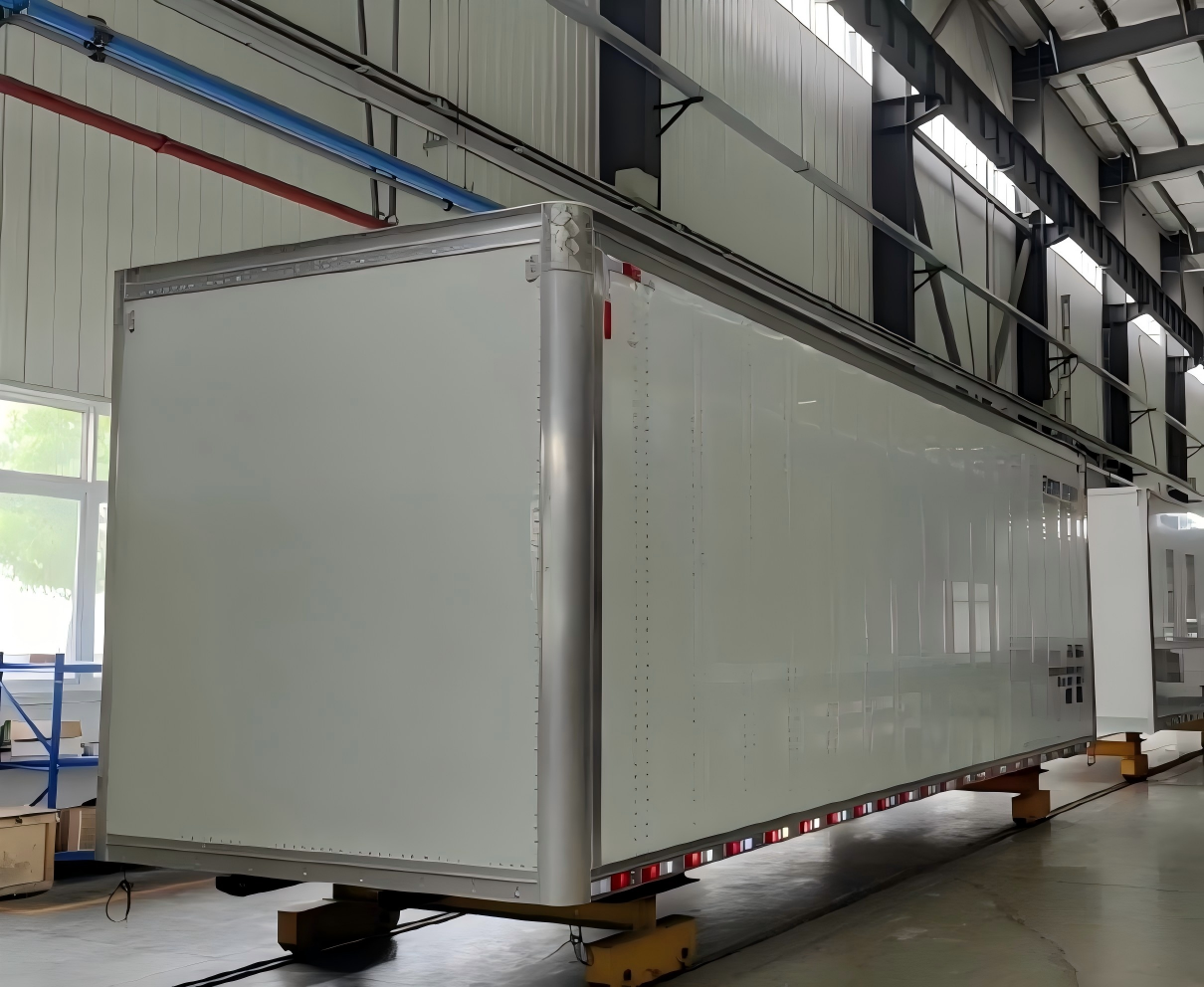
The gap often comes down to how the panel is built before it ever reaches a cut station. Chinese FRP skin lite panels are typically run on continuous laminating lines with tighter control over resin-to-glass ratios, which shows up as a more uniform thickness from edge to edge. Standard fiberglass sheet, especially from older or general-purpose production, can carry resin-rich low spots and dry zones that only become obvious after a few weeks of sun and vibration. That consistency is what lets a thinner skin lite panel hold a paint line or adhesive film without telegraphing the glass pattern.
There is also a deliberate shift in the resin and surface chemistry. Instead of just using a generic orthophthalic resin and heavy surfacing veil, many Chinese suppliers formulate for lower styrene emission during layup and better long-term bonding to foam, plywood, or aluminum framing. The back side is often left with a controlled texture rather than a glossy release finish, which makes structural adhesives bite harder and reduces the chance of delamination when the panel flexes on the road or in changing humidity.
On the shop floor, the practical differences matter most. Skin lite panels tend to cut cleaner with less chipping along the kerf, and they fold over moderate radiuses without cracking the surface. Standard fiberglass can still work for flat, low-stress panels, but it often needs more sanding, more primer, and more scrap from edge blowout. The Chinese product is not automatically better because it comes from a specialty line; it is better when the manufacturer actually controls grams per square meter, cure temperature, and batch color instead of treating the panel as a commodity sheet.
The Leak and Sweat Points That Quietly Shorten a Cold Chain Body
Most cold chain bodies do not fail from a single dramatic impact. They fade from dozens of small breaches that go unnoticed until the insulation is wet, the inner lining is stained, and the floor edge begins to lift. A torn corner seal, a stripped screw hole under the rub rail, a cracked bead of butyl around a drain outlet—these openings let moist outside air push into the panel core every time the unit cycles.
Once humidity finds a way in, the damage shifts from thermal loss to material fatigue. Condensation gathers behind the inner skin, drips into joints, and freezes at night. Repeated freeze-thaw movement widens the original entry point and separates facings from the foam. The result is a body that looks intact from the outside but is slowly losing its ability to hold temperature, adding runtime to the refrigeration unit and pulling more fuel or battery power than it should.
Catching these points early means looking beyond the obvious door gaskets. Run a hand along the lower rail after a wash, check the area around marker lights and rear frame corners, and reseal any spot where fasteners pass through the panel. A small tube of seam sealer applied at the right time often prevents the kind of hidden saturation that turns a repairable body into a candidate for premature replacement.
Factory Upgrades That Actually Extend the Life of a Refrigerated Box
Reinforcing the door opening is where most of the real longevity comes from. Instead of bolting hinge brackets straight to thin sheet metal, some plants now add a stainless backer plate inside the wall before foaming. That single change keeps the door from sagging after a few thousand cycles, which is what usually tears the gasket and lets warm air creep in. Paired with a compression-style latch that pulls the door into the seal instead of just holding it shut, the box stops working against itself.
Under the floor, the details matter just as much. A slight pitch toward the drain keeps wash water and condensate from pooling in corners where aluminum planks or seams eventually rot. Factories that add reinforced corner castings and fully welded drip rails also prevent the kind of impact damage that starts as a small crack and spreads through road vibration. Even the wiring troughs are being moved out of the splash zone, because a shorted light or fan sensor is often the first thing to fail long before the insulation does.
On the refrigeration side, upgrading to a thicker evaporator coil coating and isolating the condenser fan with rubber mounts cuts the small vibrations that loosen fittings and cause refrigerant leaks over time. The best factory upgrades are not flashy. They are mostly about reducing flex, keeping water moving away from vulnerable seams, and removing the everyday stress points that shorten a box's usable life.
When Multi-Temperature Compartments Make Sense for Local Delivery
You only start noticing temperature control when it fails. A crate of ice cream arrives soft, raw chicken edges past safe limits, or chilled salads wilt in the back of a van. That is the moment a single-zone delivery setup shows its cracks. For most small local routes, one temperature does the job. But the moment an order mixes frozen dumplings, fresh herbs, and a pint of gelato, you are asking a single box to be three places at once. Multi-temperature compartments stop being a luxury and become the only way to keep each item honest.
The real shift happens when delivery density climbs. If you are running ten stops within a two-mile radius and half of them demand different holding temperatures, reloading separate coolers eats the afternoon. Compartments let one van carry the full spread without a Tetris game of ice packs and insulated bags. Restaurants supplying both hot lunches and cold-pressed juices, meal-prep services bundling frozen breakfasts with fresh dinners, or local grocers dropping dairy and produce together all hit this wall quickly.
It also makes sense when return trips are not an option. A pharmacy delivering temperature-sensitive medication alongside regular parcels, or a bakery sending both chilled cream cakes and warm bread on the same morning run, cannot afford a second lap. The extra hardware costs more upfront, but compared to spoilage, wasted fuel, or a lost contract because the last order arrived lukewarm, the math is not close.
Service Checks That Catch Thermal Drift Before It Hits the Cargo
Thermal drift rarely announces itself with a single alarm. It shows up first as a compressor cycling a little too often, a door seal that no longer seats flush, or a return-air sensor reading that has started to lag behind the supply side. Service checks that focus on these subtle shifts can flag a weakening refrigeration loop days before the trailer ever backs up to a dock.
During a full pre-trip inspection, the useful checks are the comparative ones: measured discharge pressure against ambient conditions, defrost termination timing, and the temperature spread across the evaporator. A unit that holds setpoint in the yard can still drift under load if those underlying measurements have moved outside their normal band. Recording the values matters more than a quick pass/fail glance.
Once the cargo is loaded, the same checks shift to trend review. Shortened compressor run times, longer defrost recovery, and widening gaps between setpoint and actual temperature at the trailer nose are early signs that the system is working harder to hold conditions. Catching them here allows a service adjustment rather than an emergency call halfway through the route.
FAQ
It points to a lighter foam core and thinner glass-reinforced skins without eliminating the structural bond. The goal is to reduce tare weight while keeping enough rigidity for daily refrigerated work.
Generally yes, if the panel edges are sealed correctly and the interior lining is chosen for cart and pallet traffic. Impact damage usually shows up at unprotected corners before anywhere else.
Check whether they control foam density during lamination, use continuous rather than spot bonding, and test finished panels for thermal retention. A lower quote often means fewer edge seals or thinner skins.
It can, but the panel thickness and vapor barrier need to be specified for deep freezing. Ask for thermal conductivity values at the target temperature rather than assuming all panels behave the same.
Specify closed-cell foam, make sure all cutouts are resealed after wiring or drainage work, and avoid puncturing the inner skin with self-tapping screws that were not planned by the builder.
It can reduce body roll slightly and lower the center of gravity when compared to a heavier box, but the chassis springs and anti-roll bars still do most of the work, especially on uneven surfaces.
A damaged section can often be cut out and replaced with a bonded patch, but the repair must restore the vapor seal and insulation value. Cosmetic patches that only cover the outer skin tend to trap moisture.
With proper washing and occasional resealing of lower rails, eight to twelve years is realistic before major refurbishment, though coastal or winter-road conditions may shorten that interval.
Conclusion
A lighter refrigerated body only earns its keep when the weight savings are not traded away at the corners, door frames, and suspension tie-down points. Chinese FRP Skin Lite panels differ from older fiberglass sheets less in appearance than in the way the resin-rich skin is bonded to a closed-cell core, which limits water wicking and keeps surface dents from turning into soft spots. The places that quietly shorten a cold chain body are rarely the large panels; they are the floor drains with poorly sealed edges, the wiring pass-throughs hidden behind rear door hinges, and the lower door track where daily washdown water sits. If those seams are not bedded with a flexible, food-grade sealant and checked for condensation, the insulation gradually loses its R-value even when the outer skin still looks clean.
Factory upgrades that actually extend service life tend to be unglamorous: stainless steel threshold plates, internal cove corners that can be hosed out without trapping moisture, reinforced door jambs, and drainage channels sloped away from the gasket line. Multi-temperature compartments make sense for local delivery fleets that carry chilled dairy, fresh produce, and frozen items on the same route, but only when the bulkhead seals and separate evaporator controls are specified with enough reserve capacity for summer heat. On the service side, small checks catch thermal drift before cargo suffers: door seal compression, drain valve movement, sensor probe placement, and the condition of pressure relief vents all influence whether the box holds a stable setpoint. A disciplined maintenance habit built around those points usually does more for durability than a thicker panel spec.
Contact Us
Contact Person: Allan
Email: [email protected]
Tel/WhatsApp: +86 18227999576
Website: https://www.wholechaintech.com/