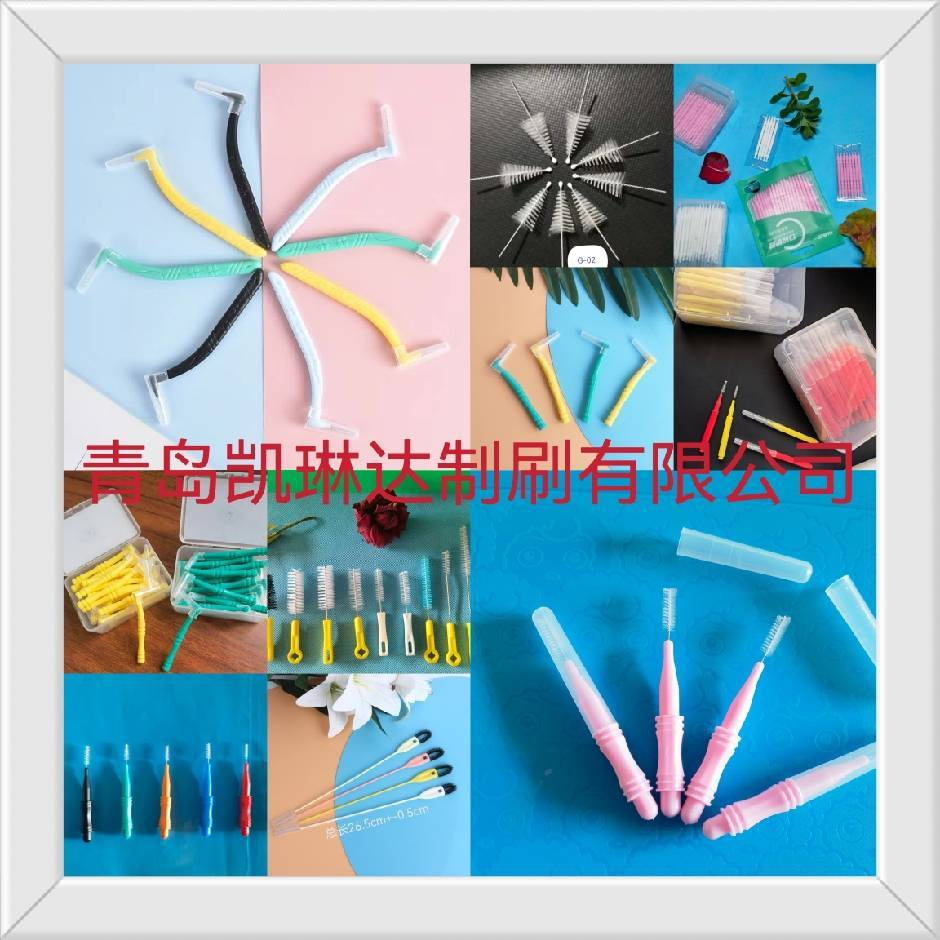
China Interproximal Brush Manufacturer Delivers Advanced Dental Care Tools
2026-11-03
Your toothbrush does a great job on the surfaces it can reach—but what about the tight spaces in between? That’s where plaque builds up unnoticed, and where most dental problems begin. A China interproximal brush manufacturer is stepping up with advanced dental care tools designed to clean those overlooked gaps with surprising ease. KLDZS brings precision engineering and everyday comfort together, making interdental cleaning a habit you’ll actually keep. Here’s what sets their approach apart.
Precision Manufacturing Meets Everyday Oral Hygiene
Precision manufacturing has quietly reshaped the tools we reach for every morning and night. The toothbrush you hold wasn't stamped out in a hurry—its bristles are often cut to tolerances of a few microns, and the neck geometry is tuned to flex just enough under pressure without snapping. This isn't about fancy branding; it's about making a daily ritual feel less like maintenance and more like a small act of care.
Consider the head of a modern electric toothbrush. Engineers use laser mapping to ensure each bristle tuft sits at a specific angle, creating a scrubbing motion that follows the gumline rather than fighting it. The motor's torque curve is calibrated so that when you press too hard, it eases back instead of grinding away enamel. Materials matter too—nylon filaments are now blended with tapered ends that slide into tight spaces, a trick borrowed from industrial polishing brushes.
What you notice, though, isn't the spec sheet. It's the way a well-made floss pick glides without shredding, or how a tongue scraper's edge stays sharp for months because it was ground with the same machinery used for surgical instruments. That's the quiet promise of precision manufacturing: you don't have to think about the engineering. You just feel a cleaner mouth and a tool that works exactly the same on day one hundred as it did on day one.
Why Dental Professionals Reach for These Brushes First
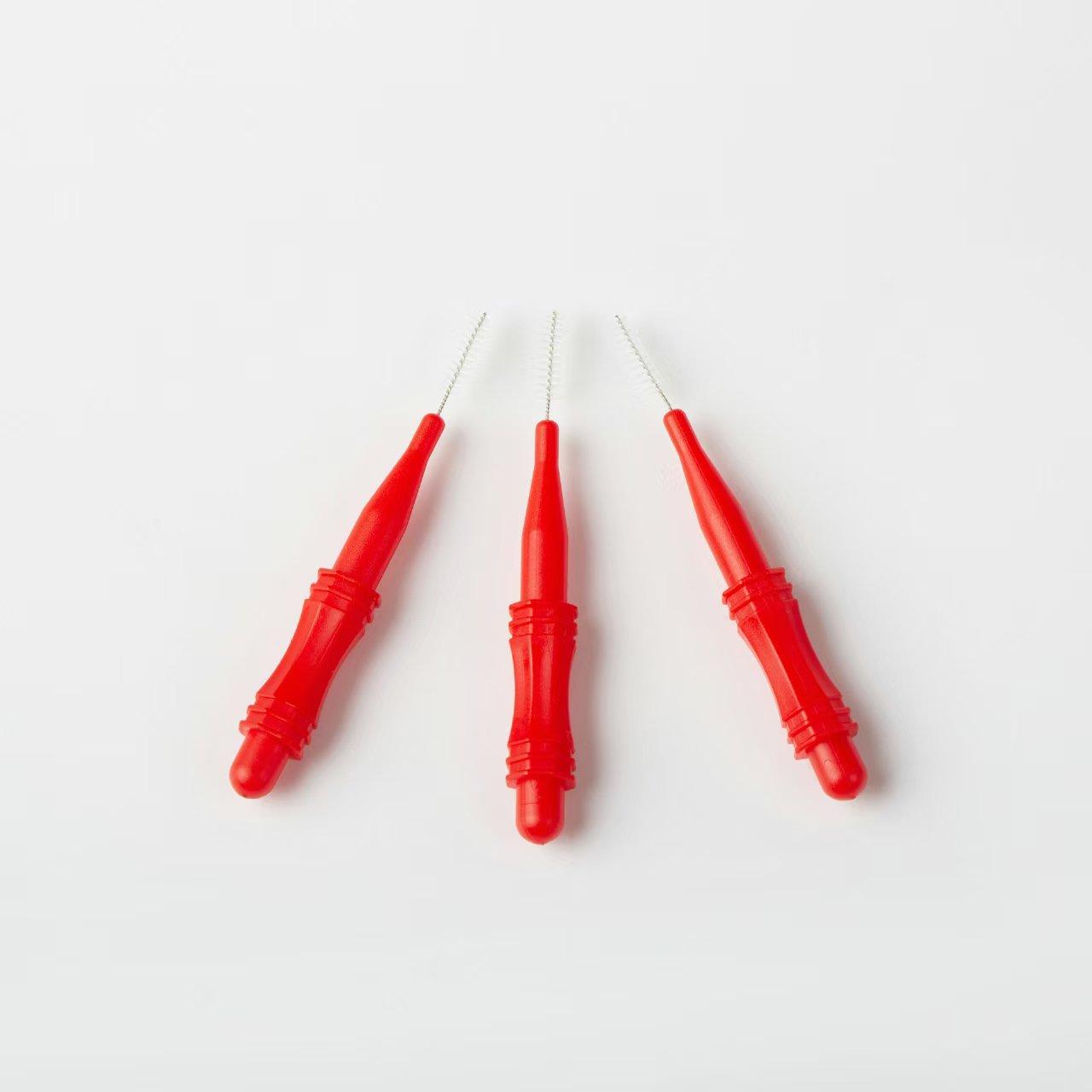
Walk into any dental operatory and you'll spot them immediately—the brushes tucked beside the sterilization pouch, the ones with slightly tapered handles and bristles that don't flare after a dozen autoclave cycles. It's not brand loyalty that keeps them there. It's the way the neck angle lets you reach a distal molar without repositioning the patient, and the fact that the bristle tufts are patterned to sweep debris from the gingival sulcus rather than just smear it across the crown.
Ask a hygienist why she reaches for a particular brush and she'll talk about tactile feedback first: the handle's grip when wet, the resistance of the bristles against calculus, the subtle click of a secure head attachment. Dental professionals are trained to distrust anything that feels gimmicky, so the brushes that earn a permanent spot are the ones that behave predictably under magnification and loupes. A brush that fuzzes after one ultrasonic bath or loses its shape during a full-mouth scaling gets quietly retired, no matter how pretty the packaging.
There's also the unglamorous reality of cross-contamination protocols. Brushes that can't withstand repeated chemical disinfection or that trap debris in hard-to-clean joints get abandoned quickly. The professionals' favorites tend to have smooth, seamless transitions between head and handle, minimal crevices, and materials that don't degrade in enzymatic cleaners. When a brush survives weeks of harsh reprocessing and still feels new in the hand, it stops being a consumable and starts being an extension of the clinician's own fingers.
Inside the Factory Where Interproximal Brushes Take Shape
On the floor where interproximal brushes come together, the first thing you notice is the quiet rhythm of the twisting machines. Spools of fine stainless steel wire feed into a series of rotating heads that braid the wire into dense, flexible cores. Nowhere near as loud as you'd expect, the process relies on precise tension rather than brute force. Operators check micrometer readings every few minutes, not because the line drifts often, but because a single loose filament would mean a brush that bends the wrong way against a tooth.
Further down the line, a row of injection-moulding stations adds the handles. Each handle starts as a tiny bead of coloured plastic, heated just enough to flow around the wire base without distorting it. The colours aren't random: blue, pink, green, and orange tell staff at a glance which diameter they're handling. After cooling, the brushes pass under a soft brush-and-air station that clears away any micro burrs left from the mould. A final camera check flags anything with uneven bristle coverage, and those are pulled aside by hand rather than discarded automatically.
What sets this particular floor apart is the way workers and machines trade off. Staff rotate through three positions hourly - wire loading, mould monitoring, and visual inspection - so no one spends an entire shift staring at the same angle. That rotation isn't written into a manual; it grew out of the team's own habit. It keeps the pace steady without turning the place into a pressure cooker, and it's probably why the reject rate stays low despite the tiny margins involved.
Custom Bristle Designs for Every Interdental Gap
People often treat interdental brushes as one-size-fits-all, but the reality is every gap has its own shape: some are tight enough to grab the thinnest filament, while others need a fuller head to remove debris without scraping enamel. Custom bristle design starts there, so you stop guessing between "too loose" and "too tight."
Some bristles use a tapered pattern, thin at the tip and slightly wider at the base, letting them slip into irregular triangular gaps. Others are spiral-cut, which means the filaments twist as you pull back, lifting more plaque from the sides. The material also changes the feel—fine antibacterial-coated wires tend to be gentler for bleeding-prone gums, while firmer polyester tufts work better in wider spaces.
The practical side is simple: pay attention to which gaps trap food or still smell after brushing, then match the bristle density and diameter to those spots. Instead of chasing the thinnest or thickest option, finding the right shape for each gap makes cleaning feel less like a chore and more like a quick, thorough sweep.
Gentle on Gums, Relentless on Plaque Buildup
Most toothbrushes force you to choose between comfort and cleaning power. This one doesn't. The bristles are arranged in a way that cushions every stroke, so your gum line never feels raw or irritated—even if you tend to brush too hard.
At the same time, the brush head packs enough density to sweep away the sticky film that builds up along teeth and just under the gum edge. Daily use leaves that smooth, just-cleaned feeling without any of the soreness.
It's a simple shift: softer contact where you need it, firmer action where plaque hides. Your gums stay calm, and your teeth feel genuinely clean—not just polished on the surface.
The Quality Checks Behind Every Single Brush
Before a single brush leaves the workshop, it passes through a series of hands-on inspections that most customers never see. First, the ferrule is checked under a bright lamp for hairline gaps or uneven crimping. Then each bristle bundle is flicked lightly to hear if any loose strands shift inside the handle. It sounds old-fashioned, but this tap-and-listen step catches weak seating that a visual pass alone would miss.
The second stage is more about feel than appearance. A finisher runs the brush across a sheet of textured test paper, checking for consistent flex and snap-back. Brushes meant for watercolor need to hold a point when wet, so a quick dip in water and a few test strokes on cotton rag paper reveal whether the tip splays too early. Any brush that doesn't recover its shape within a second is set aside for re-shaping.
Finally, a small batch from each production run is pulled for a longer wear test. These brushes are used for several days in the studio, alternating between heavy body acrylics and thin washes. Only after they survive that mixed workload without shedding bristles or loosening at the ferrule does the entire batch get approved. It's not the fastest way to make a brush, but it keeps the failure rate low enough that artists rarely have to think about the tool in their hand.
FAQ
They use fine, flexible bristles that slip into tight gaps without bending or snapping, and the handle is shaped for a firm grip even when wet.
Yes, the bristles are soft enough to avoid irritating gum tissue but still sturdy enough to remove plaque from between teeth.
Most users replace them every one to two weeks, or sooner if the bristles show signs of wear or the wire begins to kink.
Absolutely. The slim design reaches around brackets and under implant-supported bridges, making them a practical choice for orthodontic patients.
The handles are made from durable, food-grade plastic, and the bristles are coated with a thin layer of nylon to prevent scratching enamel.
Yes, they are available in multiple diameter options, from narrow tips for crowded teeth to wider heads for larger gaps.
Each batch goes through automated stiffness and bend tests, and random samples are checked under magnification to confirm bristle alignment.
The brushes come in a compact case with a snap closure, so you can carry a few in a purse or toiletry bag without them getting crushed.
Conclusion
In a market flooded with generic oral care products, a China-based interproximal brush manufacturer has quietly set a new benchmark by combining precision engineering with everyday usability. The factory floor hums with automated injection molding and micro-abrasive brushing stations, yet every batch still passes through human hands for tactile inspection. Dental professionals increasingly reach for these brushes first not because of marketing claims, but because the bristle geometry is tailored to interdental gaps as narrow as 0.6 mm and as wide as 1.5 mm. Custom wire core diameters, soft-touch handles, and a choice of nylon or TPE bristle materials allow clinics to match the brush to the patient's periodontal profile rather than forcing one size onto all. The result is a tool that feels gentle against inflamed gums yet scrapes plaque away with surprising aggressiveness.
Inside the plant, quality checks happen at fourteen separate stations, from raw stainless steel tensile testing to final tip rounding under 20x magnification. Bristles are sorted by stiffness in small batches, and every tenth brush is pulled for a flex-fatigue test simulating six months of daily use. This obsession with consistency means a brush bought in Beijing behaves identically to one shipped to Berlin. The manufacturer also runs a closed-loop water recycling system and uses medical-grade polypropylene free of BPA and phthalates, a detail many buyers miss but one that matters when the tool slides into sensitive sulci. By fusing industrial discipline with a genuine understanding of periodontal anatomy, this Chinese manufacturer delivers advanced dental care tools that feel bespoke yet cost far less than imported alternatives—proof that precision doesn't have to come with a luxury markup.
Contact Us
Contact Person: Caiju Zhang
Email: [email protected]
Tel/WhatsApp: +86 14763963294
Website: https://www.kldbrush.com