
Custom Permanent Magnets: Designing High-Performance Magnetic Solutions
2026-08-10
When off-the-shelf magnets fall short, the real challenge begins. Designing custom permanent magnets that deliver uncompromising performance isn't just about picking a material—it's about shaping the solution. At DAWA, we don't just manufacture; we engineer magnetic systems that push the boundaries of what's possible. Whether you're optimizing for extreme temperatures, tight geometries, or complex field patterns, the journey from concept to high-performance reality demands more than a catalog. Ready to explore how custom magnetic solutions can transform your next project?
Beyond Off-the-Shelf: The Case for Custom Magnets
When standard magnets fall short of your project’s demands, custom solutions step in to bridge the gap. Off-the-shelf options might seem convenient, but they rarely align perfectly with unique spatial constraints, holding strength requirements, or environmental conditions. Whether you need a non-standard shape to fit a sleek consumer device, a specialized coating to resist corrosion in marine settings, or a precise magnetic field pattern for a sensor, custom magnets unlock possibilities that ready-made parts simply can’t match.
The real advantage emerges in performance and longevity. Custom-engineered magnets are designed with your specific operating temperatures, mechanical loads, and magnetic circuit in mind, minimizing flux leakage and maximizing efficiency. This tailored approach often reduces the overall volume of magnetic material needed, cutting both cost and weight without sacrificing pull force. From medical instruments to electric vehicle motors, a bespoke magnetic assembly can mean the difference between a prototype that works and a product that excels.
Beyond technical specs, custom magnets offer a subtle but crucial benefit: supply chain resilience. When you’re dependent on a catalog item, you’re at the mercy of third-party inventory and tolerances. Partnering with a manufacturer to develop your own magnetic components gives you control over materials, quality, and delivery schedules. It’s an investment that pays off in consistency, allowing you to innovate freely instead of designing around someone else’s limitations.
Material Matters: Selecting the Right Alloy for Your Design
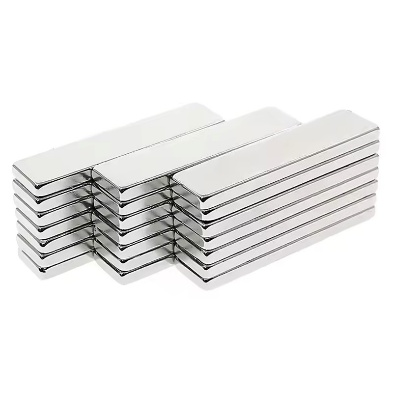
Every design tells a story, and the alloy you choose can become its most critical chapter. Far beyond simple material selection, this decision shapes how your product will perform under stress, resist corrosion, and even how it will be manufactured. The right alloy doesn't just meet a specification sheet—it anticipates the unexpected, handling temperature swings, chemical exposure, or repetitive loading that standard materials might not survive. Think of it as matching the personality of the metal to the demands of your application, ensuring that your design remains reliable long after the prototyping phase.
The selection process often comes down to balancing competing priorities. A high-strength stainless steel might offer excellent durability but prove difficult to machine, driving up production costs. Meanwhile, a lightweight aluminum alloy could reduce weight but might require additional surface treatments to prevent galling or wear. Understanding the nuances—such as how grain structure affects fatigue life or how heat treatment can transform a base alloy into something entirely different—separates a functional design from an exceptional one. It’s these subtle trade-offs that demand a deeper conversation with material suppliers and a willingness to explore less conventional options.
Ultimately, the best alloy is the one you don’t have to worry about after the product ships. That means looking beyond datasheets and considering real-world conditions: Does the environment include salt spray? Will the component experience vibration or impact? By asking these questions early and involving material expertise at the concept stage, you avoid costly redesigns and field failures. In many ways, material selection is a form of risk management, and the time invested here pays dividends in product longevity and customer trust. Your design deserves a material partner, not just a component supplier.
Geometry and Magnetization: Unlocking Performance Through Shape
The interplay between geometry and magnetization isn't just a matter of theoretical interest—it's the practical key to elevating magnetic component performance. By tweaking the shape of a magnet or the surrounding flux path, engineers can steer magnetic fields in ways that minimize leakage, sharpen flux concentration, and tailor the force profile to the task at hand. A simple shift from a rectangular block to a curved arc, for example, can dramatically improve the torque output of a motor by aligning the magnetic flux more closely with the coil currents. It's a reminder that sometimes the most elegant solutions are sculpted rather than computed.
In many designs, magnetization and shape are inseparable partners. A magnet's geometry dictates not only the direction and strength of its field but also how easily that field can be steered and concentrated where it's needed most. Consider a Halbach array: by arranging magnet segments in a precise sequence of orientations, the structure itself amplifies the field on one side while nearly canceling it on the other, all without any additional materials. This is shape-driven performance—using the physical arrangement to do the work that would otherwise require bulky shielding or complex electronics.
Beyond conventional applications, unconventional shapes open doors to performance envelopes that were once out of reach. Asymmetric designs, 3D-printed magnetic structures, and multi-pole magnetization patterns break free from the constraints of off-the-shelf components. They let designers push flux into tight corners, sculpt gradient fields for medical devices, or even create magnetic springs with nonlinear stiffness. The real breakthrough lies in recognizing that shape isn't just a container for magnet material; it's an active design tool that amplifies what magnetization can achieve.
From Prototype to Production: Streamlining Custom Magnet Manufacturing
Turning a custom magnet concept into a physical prototype used to be a drawn-out process filled with back-and-forth. We’ve tightened that loop considerably by involving our engineering team at the very first sketch. Instead of waiting for a formal spec sheet, we hash out the magnetic circuit, mechanical constraints, and thermal demands in a single working session—often over a shared screen. That early alignment slashes the number of prototype iterations and lets us move to a functional sample in days, not weeks.
Once the basics are locked in, simulation and rapid tooling take over. We run finite element analysis on the fly to tweak pole shapes or adjust material grades before cutting any steel. For low-volume test parts, we lean on 3D-printed magnet fixtures and soft tooling that mimics the final production environment closely enough to validate field strength and mechanical fit. The moment the prototype checks out, we transition to hardened production tooling without redesigning the wheel—the same CAD model feeds both stages.
The real streamlining happens at the handoff. Our prototype cell sits right next to the production floor, so the team that built the first article stays involved during pilot runs. Process parameters from prototyping—like pressing pressure, sintering profiles, and coating cure times—are already documented in a shared log. That means when a custom magnet design graduates to full-scale manufacturing, there’s no knowledge gap. Output ramps up predictably, with first-pass yields that mirror the prototype’s performance.
Real-World Solutions: Where Custom Magnets Shine
In medical device manufacturing, custom magnets aren't just components—they're silent enablers of life-saving technology. Consider an MRI machine: its massive superconducting magnet must maintain a homogeneous field within parts per million. But more surprising are the tiny, shaped magnets in catheter steering systems, allowing surgeons to navigate tortuous blood vessels with millimeter precision. Or the magnetic couplings in implantable pumps that eliminate the need for physical seals, drastically reducing infection risks. These applications demand not only exact flux patterns but also biocompatibility and reliability over decades, showcasing how tailored magnetic solutions become critical when off-the-shelf falls short.
Beyond medicine, industrial automation presents a playground where custom magnets solve seemingly impossible challenges. Take food processing lines: standard magnets might struggle to capture fine metal contaminants from fast-moving product streams, but specially designed high-gradient separators with optimized pole arrangements can pull out particles as small as 30 microns. Similarly, in electric vehicle assembly, custom magnetic grippers with Halbach arrays concentrate force on one side, securely handling irregular body panels without marring finishes. These aren't glorified fridge magnets—they're engineered precision tools that reshape how we think about material handling and safety.
Even consumer products reveal niche innovations. A well-known sports shoe brand recently switched to custom lacing magnets that are polarized to snap together only in the correct orientation, preventing misalignment during high-intensity activity. In underwater drones, corrosion-resistant magnetic thrust bearings sealed within a custom titanium housing enable silent operation at depths where conventional seals would fail. What unites these examples is a common truth: when standard solutions hit a wall, custom magnets quietly tear it down, merging material science with specific geometric and magnetic circuit design to deliver results no catalog part can match.
Future-Proofing Your Design: Trends in Permanent Magnet Technology
The magnet industry is quietly undergoing a transformation that will ripple across countless devices. Rare-earth elements, particularly neodymium and dysprosium, remain the backbone of high-performance magnets, yet their supply chain volatility is nudging engineers toward smarter, less dependent designs. One emerging shift is the use of grain boundary diffusion techniques, which allow for dramatically lower heavy rare-earth content without sacrificing coercivity. This means motors and generators can maintain robust performance at elevated temperatures while insulating themselves from geopolitical price spikes.
On the manufacturing front, additive processes are beginning to challenge the long reign of sintering and bonding. Cold spray and laser powder bed fusion now enable near-net-shape magnets with finely tuned microstructures, unlocking geometries impossible through traditional pressing. These approaches not only slash material waste but also permit localized magnetic properties, so a single component can have regions optimized for different flux patterns. It is a shift from bulk thinking to functional gradience, and it is slowly redrawing the boundaries of what a magnet can be.
Beyond the material itself, there is a growing emphasis on life-cycle thinking. Recycled magnets, once seen as a niche experiment, are entering commercial viability thanks to improved hydrogen decrepitation and re-sintering pathways. Designers are also pairing magnets with intelligent sensing to forecast demagnetization risks in real time, a move that extends service life in harsh environments. The overarching trend is not a single breakthrough, but a toolbox of converging strategies that make systems more adaptable. When you design with these undercurrents in mind, you are not just following today’s specs—you are building resilience into the very magnetic circuits that will power tomorrow.
FAQ
Custom permanent magnets are specifically engineered to meet unique performance, dimensional, or environmental requirements that generic magnets can't satisfy. Unlike standard magnets produced in bulk with fixed shapes and properties, custom solutions are tailored through material selection, precise geometry, and specialized magnetization patterns to optimize for a particular application. This means they can achieve higher efficiency in a smaller footprint, withstand extreme temperatures or corrosive environments, or integrate seamlessly into complex assemblies without the need for additional modifications.
Designing a high-performance magnetic solution is a multi-stage process that starts with understanding the application's exact needs—such as required field strength, operating temperature, and physical constraints. Engineers then use advanced simulation tools like finite element analysis to model magnetic fields and predict performance before building prototypes. Material choice is critical: neodymium, samarium-cobalt, ferrite, or alnico each offer distinct advantages. The process also considers manufacturing methods, whether sintering, bonding, or injection molding, and often involves iterative testing to fine-tune the design for peak efficiency and durability.
Custom permanent magnets are crucial in sectors where performance and precision are non-negotiable. In automotive, they're essential for electric vehicle motors, sensors, and actuators. Medical devices like MRI machines and surgical tools rely on precisely engineered magnets. The renewable energy sector uses tailored magnets in wind turbine generators and wave energy converters. Aerospace demands lightweight, high-strength magnets for avionics and satellite systems. Even consumer electronics, such as speakers and hard drives, leverage custom designs to miniaturize and improve functionality.
Material selection fundamentally determines a magnet's characteristics—strength, temperature stability, corrosion resistance, and cost. Neodymium-iron-boron magnets deliver the highest energy product, making them ideal for compact, high-power applications but may require coatings to prevent oxidation. Samarium-cobalt offers excellent thermal stability and corrosion resistance without coatings, suitable for harsh environments. Ferrite magnets are low-cost and corrosion-resistant but weaker. Alnico excels in high-temperature stability. A custom design carefully balances these properties to match the application's specific demands, often resulting in a unique material composition or grade.
Choosing a custom solution provides several distinct benefits. It allows for optimized performance, often achieving higher flux density in a smaller or irregularly shaped magnet, which saves space and weight. It can improve system efficiency by reducing energy losses and can enhance reliability under demanding conditions like high vibration or extreme temperatures. Custom designs also enable simpler assembly, as magnets can incorporate mounting features or multipolar patterns that eliminate the need for additional components. While the initial development may take more time, the overall system cost can be lower due to improved performance and reduced part count.
Magnetization patterns, such as axial, diametrical, radial, or multi-pole arrangements, can be precisely controlled in custom magnets to shape the magnetic field for a specific purpose. For instance, a multi-pole ring magnet in a brushless DC motor can provide a smooth, high-efficiency rotating field. Hallbach arrays, which concentrate flux on one side while canceling it on the other, are used in applications like magnetic bearings or linear motors. These patterns are achieved through specialized magnetizing fixtures designed during the custom engineering phase, allowing for fields that are impossible to achieve with off-the-shelf magnets.
Conclusion
Moving beyond standard off-the-shelf magnets opens up a realm of precise engineering where every parameter is purposefully tuned to the application. Instead of compromising with nearly right dimensions or field strengths, designers can specify the exact alloy, geometry, and magnetization pattern that transforms a component’s effectiveness. Selecting between neodymium iron boron for its high energy density or samarium cobalt for thermal stability becomes a strategic decision, further influenced by coercivity requirements and corrosion resistance. The shape itself is rarely neutral: carefully profiled pole faces, Halbach arrays, or radially oriented fields can channel flux with surgical precision, eliminating dead spots and reducing magnetic mass. By aligning these factors early, teams avoid costly over-engineering and ensure that the magnet works in harmony with adjacent components, compressing space and weight without sacrificing output.
Translating such designs from concepts into repeatable production hinges on streamlined prototyping and a pragmatic grasp of manufacturing tolerances. Rapid sintering trials and wire EDM cutting of prototype blanks allow engineers to verify magnetic circuit modeling before scaling to full production runs, trimming iteration cycles dramatically. In the field, these tailored solutions become enablers: electric vehicle traction motors use segmented rotor magnets to trim cogging torque, surgical robots rely on sterilizable high-grade assemblies for haptic feedback, and downhole sensors survive extreme cycles thanks to custom cladding and magnet stabilization. Looking ahead, additive manufacturing of near-net-shape magnets and grain boundary diffusion techniques are pushing achievable coercivities higher without heavy rare earth content, making designs more resilient and supply chains less brittle. This shift toward application-driven magnetic design marks a quiet revolution where commodity parts give way to integrated performance elements, future-proofing products against evolving demands.
Contact Us
Contact Person: Kelvin Lo
Email: [email protected]
Tel/WhatsApp: 0769-88561131
Website: https://dawamagnetic.com/