
Custom PVC Pipe Production Line That Grows With Your Business
2026-11-20
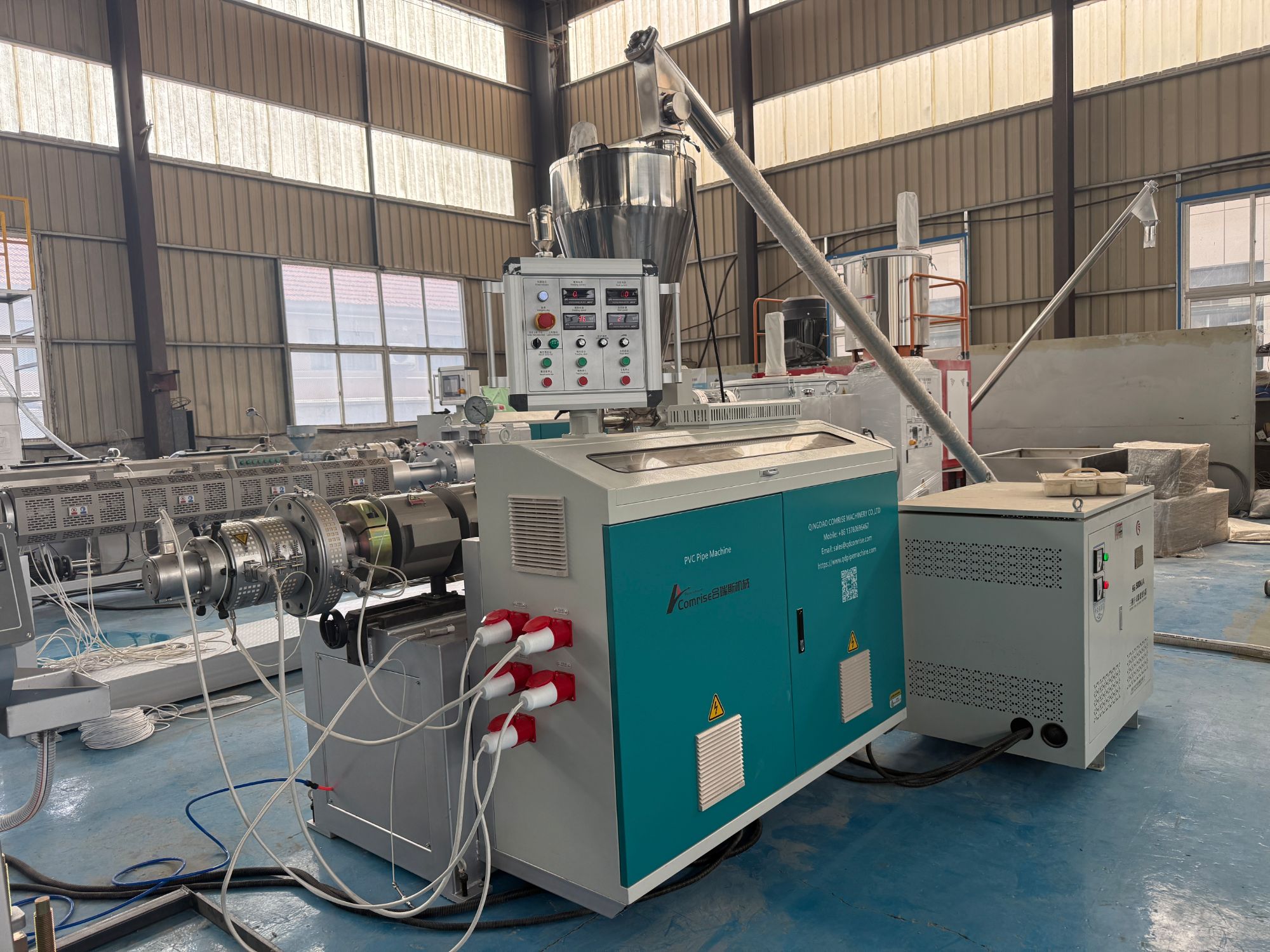
Pipe manufacturing shouldn’t lock you into a fixed scale. The right PVC pipe production line adapts as your orders shift from small batches to high-volume projects — and that flexibility often decides whether you keep or lose a contract. At COMRISE, we focus on equipment that grows with your business, not against it. This guide walks through what makes a production line truly scalable and where hidden bottlenecks tend to appear.
Buy for the Orders You Have, Not the Orders You Hope For
The numbers on your purchase sheet should come from confirmed demand, not from a story about what might happen next quarter. Every time inventory is bought ahead of real orders, cash gets locked into shelves and warehouse bins. That trade-off only works when the order book already covers the risk. If the order isn't there, neither is the reason to buy.
Suppliers will often push volume discounts, longer lead times, or just-in-case stock. It sounds reasonable until a slow month turns that extra stock into dead weight. Buying to hope means carrying the cost of storage, handling, and markdowns without a customer attached. A cleaner rule is to let the order trigger the purchase. When a paying customer commits, the buying decision becomes simple math instead of a forecast guess.
There will always be pressure to prepare for demand that seems obvious. A big account may be close, or a seasonal spike may feel inevitable. But close doesn't pay invoices. The businesses that survive tight cycles are usually the ones that stay disciplined at this exact point: they buy from their actual order list and treat every speculative unit as a choice with a cost.
Start With Fewer Modules, Add Them When Volume Justifies It
Most teams do not need the full module map on day one. Starting with a compact setup keeps configuration, training, and billing under control. A small support team may only need ticket routing, a shared inbox, and a basic knowledge base; forecasting tools or AI-driven scoring can wait until the incoming volume makes those extras worth the overhead.
The trigger for adding a module should be a real constraint, not a product demo or a competitor's feature list. When response times stretch because agents are manually sorting requests, that is the signal to enable automation. When reporting becomes a weekly bottleneck, add the analytics layer. Volume creates the evidence, and the evidence points to the next module.
This approach also prevents shelfware. Modules added before they are needed often sit unused while still appearing in the subscription cost. Waiting means the team understands exactly why a feature exists and how it should fit into the daily flow, so adoption tends to be faster and cleaner when it finally arrives.
Leave Space for Bigger Dies Without Paying for Them Now
Many shops size their equipment around the largest tool they currently run, then hit a wall when a customer asks for a part that needs a die a few inches wider. By choosing a press or molding machine with an oversized bed and taller daylight opening, you can leave that extra room idle until it actually earns money. The key is separating the machine frame from the tonnage—wider platens and longer strokes often cost far less than moving up a whole size class.
This approach also reshapes how you quote new work. Instead of turning down a job because the die will not physically fit, you can accept it with the tooling you already planned around. The unused space sits there quietly, adding no real operating cost, while the larger capacity stays available for the day a bigger die actually shows up.
It is less about buying capacity you do not need and more about avoiding a frame replacement later. A little extra clearance in the beginning keeps your options open without the monthly payment that usually comes with a bigger machine.
The Line Should Change Before Your Floor Plan Has To
A floor plan looks settled on paper, but the lines inside it are more negotiable than the outer walls. Move the edge of a built-in, shift where the tile changes, or drop a partial wall back by two feet, and the whole room starts behaving differently. The floor plan never moved; the boundary did.
This matters most in rooms that are not small but feel tight. In a kitchen, a peninsula that ends just short of the refrigerator can leave room for two people to move at once. In a living room, softening the line between entry and seating can stop guests from clustering near the door. Each change is small, but it resets the path people take without asking them to think about it.
Before redrawing the full layout, test a changed line with tape, a moved table, or a relocated shelf. Let the alteration sit for a few days. What usually happens is that the original plan was not wrong; it just needed one edge to give way.
Switch Pipe Sizes Without Reworking the Calibration Setup
A common headache with ultrasonic flow meters is the assumption that swapping pipe diameters means revisiting the entire calibration routine. In practice, many modern clamp-on systems let you keep the existing transducer spacing and simply adjust the pipe parameters in the software. As long as the wall thickness and material are entered correctly, the meter recalculates the path length and flow profile without needing a physical realignment of the sensors.
That said, there is one detail worth watching: if the new pipe size changes the expected flow velocity range, you might want to check the signal quality. A much larger pipe can put the transducers at the edge of their recommended spacing, while a smaller one may create a shorter path that picks up more turbulence near the wall. A quick on-site signal check usually tells you whether the existing setup is still solid.
What often surprises first-time users is that the calibration factor itself rarely needs a full overhaul. The meter's internal database already covers most standard pipe schedules, so choosing the new size from the menu applies the correct correction. The physical job becomes just moving the clamp-on fixture to match the new circumference, which takes minutes rather than a full recalibration cycle.
More Output Per Square Foot, Not More Square Feet
Most teams have been trained to see square footage as the answer. When orders climb or headcount grows, the reflex is to lease another bay, add another floor, or push for a bigger footprint. That reflex quietly drains capital before a single process has been challenged. The sharper question is rarely where do we put more, but what can we get out of the space we already occupy. A facility that bends its layout, storage density, and shift patterns around actual workflow tends to unlock capacity that a floor plan alone would suggest is impossible.
The difference usually hides in movement. Goods, people, and information cross the same floor dozens of times a day, and every unnecessary step is rent being paid without return. Shortening pick paths, stacking vertically instead of spreading horizontally, and staging high-turn items near dispatch can raise throughput without adding a single square foot. When the physical layout follows the rhythm of the work rather than the other way around, the same walls begin to carry more volume.
There is also a quiet financial advantage to this approach. Expansion brings new lease terms, higher energy loads, more maintenance, and a longer commitment. Improving output per square foot does the opposite: it strengthens margins on the space you already have. As throughput rises, the fixed cost of the building gets spread across more revenue, which makes the operation less fragile when demand shifts. Often the best new square foot is the one you never have to sign for.
FAQ
It starts with a core extrusion setup and lets you add downstream modules like haul-offs, cutters, and belling units as order volumes increase. That way you invest in capacity only when your sales justify it.
Yes. The extruder, die head, vacuum tank, and puller are configured around your target range, and changeover parts are designed to be swapped quickly when you add new product sizes.
Not difficult at all. The frame and control system are pre-wired and pre-drilled for additional modules, so a new cooling bath or coiler can be bolted on with minimal downtime.
A tailored line does take a few extra weeks for engineering review, but you get documentation and remote start-up support matched to your specific layout, which reduces surprises later.
You can start with manual cutters and simple controls, then upgrade to servo-driven cutting, automatic wall thickness monitoring, and centralized touchscreen control once your team is ready.
Training is built around the exact configuration you purchase. We include parameter sheets, video walkthroughs, and live sessions that cover what your operators will actually see on the floor.
The screw and temperature zones can be tuned for recycled, virgin, or blended PVC formulations, and the control recipe system lets you save settings for each material batch.
Know your current and planned output, pipe diameter range, available floor space, and power supply. That helps the engineering team propose a layout that leaves room for future additions without overbuilding.
Conclusion
A PVC pipe line that actually grows with your business starts by matching the equipment to the orders in hand, not the orders you hope will arrive next year. That means running fewer modules at first—just enough cooling, pulling, and cutting capacity for the sizes you sell today—while the frame and controls are laid out so additional sections can be added in a day or two when volume makes the investment sensible. The same thinking applies to tooling: you leave spare clearance around the die head and downstream path for larger dies without paying now for tooling you cannot use yet. When the order book does pick up, the line should deliver more output in the same footprint, relying on faster calibration, shorter changeover distances, and better space use rather than forcing a building expansion.
That flexibility becomes most valuable during size changes. Instead of reworking the calibration setup every time a different diameter runs, the table and vacuum blocks should be designed so pipe sizes can be switched with simple adjustments and repeatable settings, keeping the crew productive. The line itself should adapt before the floor plan has to change—pre-wired junction points, relocatable haul-offs, and modular control zones make it possible to add capacity without moving walls or cutting concrete. The result is not a line crammed with everything from day one. It is a line that earns its upgrades, changes shape as your product mix changes, and keeps your building and your budget intact while the business grows.
Contact Us
Contact Person: LISA LEE
Email: [email protected]
Tel/WhatsApp: +86 13780696467
Website: https://www.qdpipemachine.com