
DEUTZ Generator Set Original Manufacturer: Why Authenticity Drives Performance
2026-07-22
When it comes to generator sets, the name DEUTZ stands for engineering excellence—but only when the equipment is truly original. Counterfeit or non-genuine components can silently erode performance, fuel efficiency, and long-term reliability. That’s why partnering with a trusted source matters. At Hichai Power, we connect you directly with authentic DEUTZ generator sets, ensuring every kilowatt delivers as promised. Here’s why authenticity isn’t just a label—it’s the engine behind superior performance.
The Engineering Depth That Fuels DEUTZ Reliability
DEUTZ engines aren't assembled from off-the-shelf parts. Every major component—cylinder heads, blocks, fuel injection systems—is developed in-house. This vertical integration gives the engineers complete control over tolerances, material selection, and thermal behavior. When a connecting rod is designed to flex just enough at peak load or a cooling jacket is cast with variable wall thickness to eliminate hot spots, those decisions happen in Oberkastel, not at a subcontractor's drafting table. The result is a power unit where every system cooperates rather than merely coexists, and that coherence is what keeps a DEUTZ running reliably long after competitors' engines have started nursing faults.
Validation tells the real story. Before any engine reaches production, prototypes endure thousands of hours in test cells that simulate extreme altitudes, high ambient temperatures, and brutal duty cycles far beyond real-world applications. One particularly punishing test cycles the engine between full load and sudden shutdown repeatedly—a scenario that stresses gaskets, bearings, and seals in ways steady-state operation never could. Failures during this phase aren't setbacks; they're data points that drive iterative improvements. By the time a DEUTZ engine is bolted into a combine harvester or a construction compressor, its weaknesses have already been found and eliminated in a laboratory, not in a customer's field.
The depth extends into electronics and combustion tuning. DEUTZ calibrates its own ECU maps, tailoring fuel delivery and boost curves not just for emissions compliance but for longevity under real-world conditions. A fertilizer spreader that spends its life at constant speed gets different mapping considerations than a loader that cycles between idle and full throttle dozens of times per hour. This application-specific engineering means the engine doesn't simply meet a generic durability target—it's tuned to thrive in the exact environment where it will work. That kind of foresight comes from decades of knowing which parts can be shared and which must be purpose-built, and it's what separates a reliable engine from one that's merely adequate.
Why Settling for Imitations Undermines Long-Term Value
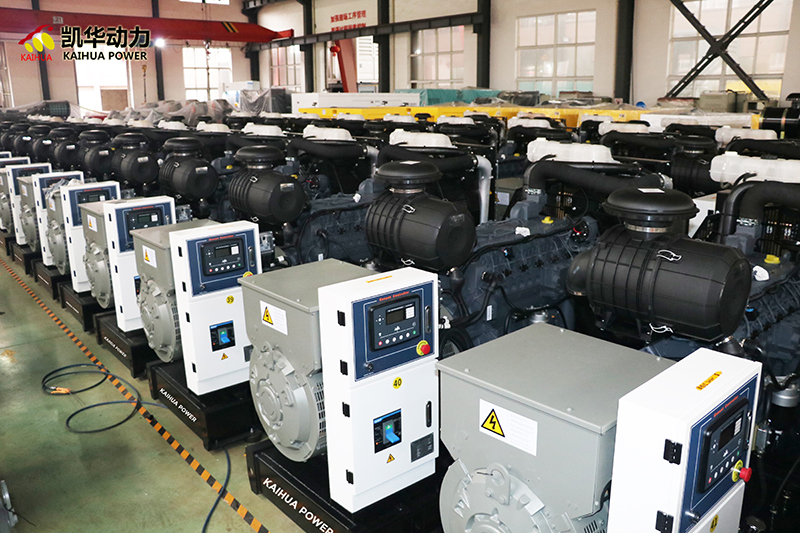
Choosing an imitation might feel like a smart shortcut to saving money, but that initial bargain often comes with hidden costs. Cheap materials and rushed manufacturing mean these products wear out faster, break sooner, and rarely perform as promised. What seems like a win at the checkout quickly turns into a cycle of replacements, repairs, and frustration—expenses that add up and quietly exceed the price of the genuine article.
Authentic products are built on years of research, testing, and refinement, which translates into longer lifespans and dependable performance. They come with warranties, customer support, and a commitment to quality that counterfeits simply cannot match. Over time, the reliability of the real thing saves you not just money, but also the stress of dealing with recurring failures. It’s a difference you feel every day, whether it’s a tool that fits perfectly in your hand or software that updates seamlessly without glitches.
Beyond numbers and durability, there’s a quieter loss when we settle for imitations: the erosion of trust and self-assurance. Using something that feels unstable or second-rate chips away at confidence, whether in a professional setting or personal life. And when we consider the waste generated by short-lived knockoffs, the broader impact becomes clear. The real value isn’t just in a longer-lasting purchase, but in choosing things that respect your time, your goals, and the world around you.
A Closer Look at DEUTZ Factory Precision
Walking through the DEUTZ production floor, the first thing that catches your eye isn’t the towering machines—it’s the quiet rhythm of absolute control. Every component seems to glide through its machining stages with almost surgical exactness. There’s no chaos, no frantic adjustments; instead, you sense a deeply embedded culture where micrometre tolerances aren’t aspirations but daily habits. The spindle speeds and feed rates aren’t just numbers on a screen—they’re the result of decades of refinement, ensuring that each cylinder bore or camshaft journal meets specifications that would make a Swiss watchmaker nod in approval.
What truly sets the factory’s precision apart is its marriage of human expertise and adaptive automation. Craftspeople working side by side with multi-axis machining centres perform in-process gauging that borders on alchemy, using both digital probes and their own fingertips to detect the faintest burr or imperfect surface finish. The assembly lines for engines destined for agricultural fields and construction sites don’t run on mere checklists; the installation of a piston into its liner, for instance, follows a thermal fitting procedure controlled to the degree, ensuring a bond that will hold under fatigue loads for thousands of hours without complaint.
Quality validation here is anything but a final rubber stamp. DEUTZ employs a strategy of networked metrology—coordinate measuring machines feed real-time data back to the machining cells, creating a closed loop that corrects any drift before it becomes a problem. This isn’t about catching defects; it’s about preventing them while the metal is still in the spindle. Even the documentation accompanying each engine is a testament to this obsession: laser-etched serial numbers link directly to a detailed birth certificate recording every critical dimension, torque value, and material batch, so that a unit working in a remote combine harvester can be traced back to the very shift and tool that shaped it.
How Genuine Parts Keep Your Generator Running Like Clockwork
A generator is only as reliable as the components inside it. When you opt for genuine parts, you’re investing in precision engineering that matches the original specifications of your unit. These aren't just generic fit-alls; they're crafted to handle the exact stress, heat, and operational demands your generator was designed for. That perfect match means less vibration, proper sealing, and consistent performance—tiny details that keep every cycle smooth and predictable, just like a well-tuned clock.
Counterfeit or off-brand alternatives might look similar on the shelf, but often cut corners in material quality and manufacturing accuracy. A subtly different gasket shape or a piston ring that’s a hair too large can accelerate wear, cause leaks, or throw off combustion timing. Before you know it, your once-dependable generator starts hiccupping, consuming more fuel, and demanding unscheduled maintenance. Genuine parts eliminate these hidden risks because they’re built to the same rigorous standards as the pieces that left the factory floor, ensuring every operation stays in lockstep with the machine’s intended rhythm.
Perhaps most overlooked is the quiet reassurance that comes from knowing the heart of your backup power system isn’t compromised. Genuine components help maintain steady voltage output and prevent the kind of erratic behavior that can damage sensitive electronics when the grid goes down. They also protect your warranty and resale value—tangible proof that you’ve cared for the machine properly. Over years of use, the small upfront cost difference becomes a sound investment in uptime and longevity, letting your generator hum along decade after decade without missing a beat.
The Real-World Performance Gap That Authenticity Eliminates
In a world saturated with polished marketing and carefully curated personas, the gap between projected image and actual capability has become glaringly wide. When brands and individuals present a version of themselves that doesn't align with their true skills, values, or operational reality, customers and partners notice. This dissonance creates friction—every interaction becomes a test of whether what was promised can truly be delivered. Authenticity closes that gap by making the external presentation a genuine reflection of what's inside, turning potential disappointment into consistent, reliable performance.
The performance gap isn't just about shattered expectations; it directly affects speed, decision-making, and resource allocation. Inauthentic fronts require constant maintenance—extra layers of communication, rework to correct misaligned outputs, and energy spent on perception management instead of real work. When a team or product is grounded in authenticity, those hidden costs disappear. Action becomes aligned with stated purpose, and execution tightens because there's no need to translate truth into a more palatable fiction before acting.
Moreover, authenticity eliminates the buffer between what is known internally and what is shown externally, enabling more agile responses to challenges. Without a curated mask, feedback loops shorten drastically. Real issues surface faster, and solutions can be crafted with full information rather than a sanitized version of it. The result is a palpable acceleration in real-world results—projects move forward without the drag of pretense, and relationships deepen because trust is built on an unshakable foundation of what is actually there, not what one wishes to be seen.
What DEUTZ Original Manufacturing Means for Your Bottom Line
When you choose genuine DEUTZ parts and engines, you're not just buying a component—you're investing in the precision engineering that keeps your equipment running longer and stronger. Every original part is manufactured to the same exacting standards as the engine itself, ensuring perfect fit, seamless integration, and peak performance from day one. This eliminates the trial-and-error downtime that often comes with aftermarket alternatives, directly protecting your operational efficiency and revenue stream.
The durability built into each original DEUTZ component translates into lower total cost of ownership. These parts are rigorously tested under extreme conditions to withstand heavy loads, high temperatures, and constant vibration—the very factors that cause non-original parts to fail prematurely. Fewer unexpected breakdowns mean fewer service calls, less overtime labor, and more uptime for your machinery. Over the lifecycle of your equipment, that reliability adds up to significant savings that go straight to your bottom line.
Beyond immediate performance, genuine DEUTZ manufacturing safeguards your engine's warranty and resale value. Using non-approved parts can void coverage and complicate future diagnostics, leaving you exposed to costly repairs. In contrast, sticking with original components preserves the integrity of your equipment, making it more attractive to buyers when it's time to upgrade. This long-term perspective turns what might seem like a higher upfront cost into a strategic financial decision that pays dividends year after year.
FAQ
An original DEUTZ generator is built to exact specifications with proprietary engineering, robust testing, and genuine components that perfectly match the engine and alternator. Aftermarket sets often cut corners with generic parts that can't replicate that integrated precision. The difference shows up in load acceptance, fuel response, and long-term durability—things that really matter when the power can't fail.
Genuine parts are manufactured to the same standards as the original fitments: they handle thermal and mechanical stresses as intended. Using them means consistent clearance fits, proper material hardening, and accurate fuel timing. This doesn't just prevent sudden breakdowns; it extends the unit's working life, often by years, because everything operates in a balanced, predictable way that non-genuine parts can't guarantee.
DEUTZ integrates advanced combustion technology directly into the engine design—things like optimised injection pressure, cooled exhaust gas recirculation, and precise turbo matching. This engineering isn't bolted on; it's inherent to the platform. As a result, the generator burns fuel more completely, which means lower Brake-Specific Fuel Consumption and emissions that stay within strict global norms without resorting to complex after-treatment that adds maintenance headaches.
Counterfeit or clone sets often mimic the outward appearance but miss critical internal details—like counterfeit ECUs that can't read true sensor data or aftercoolers with wrong fin density. This leads to derated performance, hidden overheating, and fault codes that make no sense. Worse, when something fails, you're stuck without factory support, because DEUTZ can't stand behind a machine they didn't build.
In mining or remote telecoms, the generator often runs 24/7 with minimal oversight. An original DEUTZ set handles that abuse because it's designed for high-hour duty cycles. Operators report fewer unscheduled stops, easier cold starts at altitude, and oil change intervals that actually hold true—benefits that translate directly to operating costs you can forecast accurately.
Every major component—block, head, crank—goes through rigorous validation on test cells that simulate extreme heat, cold, and dust ingestion. The assembly line uses automated torque tools and leak-test stations that record data for each engine. So by the time the genset leaves the factory, it's already proven it can handle ambient temperatures from -40°C to +50°C without degraded performance.
An original set comes with a global service network that knows the product inside out. Warranty claims are straightforward because every serial number is traceable. You also get access to genuine technical bulletins, software updates, and rapid parts fulfilment—support structures that simply don't exist for grey-market machines. It's the difference between a partner that responds and a sales transaction that ends at delivery.
Conclusion
The foundation of DEUTZ generator sets rests on a century of engineering mastery that mass-market imitations simply cannot replicate. Within DEUTZ factories, every component emerges from tightly controlled processes where metallurgy, machining tolerances, and assembly protocols align with the engine's original design intent. This precision eliminates the microscopic variances that accumulate in copycat manufacturing, directly preventing premature wear, erratic fuel delivery, and thermal instability. When you choose an original DEUTZ unit, you're not just buying an engine block—you're investing in the cumulative knowledge of thermodynamics, combustion dynamics, and durability testing that no reverse-engineered product can contain. The result is a generator that starts under load without hesitation, holds frequency within razor-thin margins, and runs season after season without the creeping performance decay that plagues substitutes.
Settling for non-genuine alternatives introduces hidden costs that surface long after the initial purchase, eroding total lifecycle value. Imitation parts lack the fatigue life and corrosion resistance of DEUTZ's proprietary materials, leading to unplanned downtime and cascading failures in critical moments. Authentic DEUTZ generators, by contrast, maintain synchronized harmony between engine, alternator, and control systems—a symphony that off-brand components disrupt. This integrated reliability translates directly to operational continuity for hospitals, data centers, and remote installations where failure is not an option. Ultimately, authenticity safeguards your bottom line by eliminating the risk of derated output, voided warranties, and the constant drip of repair expenses. It's the difference between a machine that merely runs and one that performs year after year with the confidence that only original manufacturer integrity can provide.
Contact Us
Contact Person: Ms. Lu
Email: [email protected]
Tel/WhatsApp: 8618917899306
Website: https://www.hichaipower.com