
Known Industrial Transformers: Essential Types and Their Industrial Applications
2026-05-21
Industrial transformers are the silent workhorses behind nearly every modern manufacturing process, powering everything from heavy machinery to precision electronics. But not all transformers are created equal—choosing the right type can make or break your system’s efficiency and reliability. Whether you’re dealing with isolation, control, or power distribution, understanding these essential variants is key. At TPS, we’ve spent decades helping industries match transformer specs to real-world demands. In this post, we’ll explore the most common types and where they shine, so you can cut through the noise and make informed decisions.
Oil Cooled, Industry Ready: Why Oil-Filled Transformers Rule
Step into any substation, and the low, steady hum of an oil-filled transformer is the sound of decades of proven engineering. These units rely on mineral oil not just for cooling, but as an integral part of their insulation system, wicking heat away from the core and windings with a reliability that forced-air designs still struggle to match. The oil bath does double duty: it snuffs out arcs and suppresses corona discharge, letting these workhorses handle overloads that would trip lesser dry-type alternatives. Maintenance crews know exactly what they’re getting into with a simple oil sample, getting a window into internal health without ever cracking the tank.
In gritty industrial environments, the sealed construction of an oil-filled unit shrugs off dust, moisture, and chemical vapors that eat away at open-air coils. A well-maintained tank becomes a fortress—corrosion-resistant coatings, conservator bladders that breathe without letting in contaminants, and Buchholz relays that catch faults early. That robustness translates into decades of service life, often outlasting the factories they power. When a refinery expansion project needs to squeeze more megawatts without clearing new ground, operators turn to forced-oil-air cooling kits that bolt right onto legacy tanks, a modularity that modern cast-resin designs simply can’t offer.
Beyond the technical specs, there’s a practical wisdom that keeps oil-filled transformers on spec sheets. Spare parts are ubiquitous, field repairs are doable with standard rigging gear, and the global pool of experienced technicians means troubleshooting is rarely a scramble. For applications where a shutdown means real money, the predictability of oil analysis and the simplicity of reconditioning on site beat the promise of “maintenance-free” labels every time. It’s not about clinging to the past; it’s about betting on a platform that has learned from every failure and adapted, one tank at a time.
No Oil, No Worries: Dry-Type Transformers for Indoor Safety
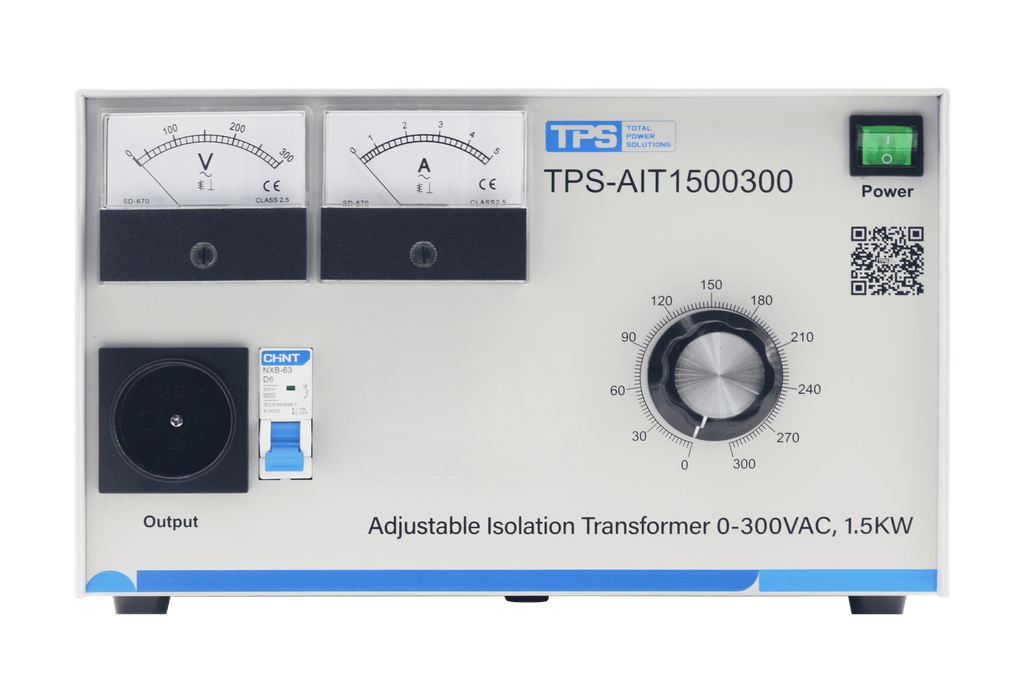
When it comes to indoor power distribution, the choice of transformer can make all the difference in safety and peace of mind. Unlike their oil-filled counterparts, dry-type transformers eliminate the risk of flammable liquid leaks entirely. This means no special containment pits, no elaborate fire suppression systems, and no nagging worry about environmental contamination. The solid insulation materials used in these units are inherently flame-resistant and self-extinguishing, giving facility managers one less thing to lose sleep over.
The absence of oil also simplifies maintenance and extends operational life in indoor settings. Without the need to monitor oil levels, test for dissolved gases, or schedule regular fluid replacement, these transformers practically take care of themselves. The insulating materials resist moisture absorption, which is a huge advantage in damp basements or humid electrical rooms where traditional units might degrade faster. And because they run cooler and quieter, they integrate more gracefully into occupied buildings without adding noticeable heat load or acoustic distraction.
Perhaps the most underrated benefit is the flexibility they offer in placement. Dry-type transformers can be installed right at the load center, sometimes even on mezzanines or within partitioned electrical closets, without violating fire codes. This proximity reduces the length of low-voltage cable runs, cutting both material costs and energy losses. In an era where every square foot of building space counts and safety regulations tighten, the oil-free design opens up possibilities that would otherwise require expensive remote vaults or outdoor enclosures.
Isolation Transformers: Your First Line of Defense Against Power Anomalies
Power anomalies—surges, spikes, sags, and electrical noise—can wreak havoc on sensitive equipment, leading to data corruption, downtime, or even permanent damage. Isolation transformers serve as a robust first layer of protection by physically decoupling the input and output circuits through magnetic induction. This galvanic isolation blocks common-mode noise and transients from propagating downstream, ensuring that only clean, conditioned power reaches your critical loads. Unlike simple surge protectors that merely clamp voltage peaks, an isolation transformer actively filters and regenerates a cleaner AC waveform, making it indispensable in medical facilities, industrial control systems, and audio-video setups where signal integrity is paramount.
At the heart of an isolation transformer’s defense mechanism is its ability to reject high-frequency interference and ground loop problems. By floating the secondary winding, it eliminates any direct conductive path between the source and the load, which is especially valuable in environments rife with electromagnetic interference. The transformer’s inherent inductance and inter-winding capacitance also attenuate fast-rising transients and repetitive noise that would easily slip past ordinary filtering. For applications where even microsecond interruptions can cause costly errors—think CNC machinery, laboratory instruments, or server farms—installing an isolation transformer at the point of entry establishes a clean power foundation that downstream devices can rely on without constant monitoring.
While many facilities treat power conditioning as an afterthought, integrating an isolation transformer early in the design phase pays dividends in both reliability and equipment longevity. Modern units often incorporate electrostatic shielding between windings for added noise suppression, and they can be tailored with specific voltage ratios, kVA ratings, and enclosure types to match site requirements. The initial investment is easily justified when weighed against the cost of unexplained failures or post-installation troubleshooting. By acting as a vigilant sentry against the unpredictable nature of utility power, an isolation transformer doesn’t just mitigate risks—it effectively removes a broad category of electrical threats before they ever reach your hardware.
Autotransformers: The Voltage Tweakers
Autotransformers don’t just step voltage up or down—they do it with a clever shortcut. Instead of using two separate windings like a conventional transformer, they share a single continuous winding. A tap point moves along this winding, allowing you to dial in exactly the voltage you need. It’s like having a volume knob for your power supply, giving you fine control without the bulk and cost of extra copper.
This design makes them surprisingly light and efficient, especially when the voltage change is modest. But there’s a trade-off: because the input and output share a winding, there’s no electrical isolation. That means you’d better know what you’re doing if you tinker with one. In the right hands, though, an autotransformer can be a brilliant problem-solver—from boosting a sagging line voltage to matching delicate lab equipment to the mains.
Industry loves them for tasks like motor starting and lighting control, where the focus is on smooth adjustment rather than isolation. They’re the quiet workhorses behind variacs on test benches and in theater dimmers. And while they may not be the star of the electrical world, their ability to tweak voltage with minimal fuss keeps engineers coming back to them time and again.
For the Heavy Hitters: Rectifier Transformers in DC-Heavy Industries
In sectors where direct current is the lifeblood of operations—think aluminum smelters, graphite furnaces, and large-scale electroplating lines—rectifier transformers don't just step down voltage; they tame the raw, pulsating power required by these beasts. Unlike their grid-interactive cousins, these units are engineered to endure ceaseless high-current stresses, often operating round-the-clock for decades. Their windings must shrug off the thermal and mechanical fatigue induced by harmonic-laden loads, all while maintaining precise conversion efficiency. The core and coil assembly is typically designed with interleaved secondary windings to minimize stray losses and ensure uniform current distribution, a necessity when dealing with tens of thousands of amps.
Installation considerations for heavy-hitting rectifier gear go well beyond standard transformer pads. You're looking at dedicated, often reinforced concrete vaults with integrated busbar trunking systems, forced-air or water-cooling loops, and meticulous grounding schemes to manage both common-mode and differential-mode noise. In many cases, the transformer is integrated into a 12-pulse or even 24-pulse rectifier bank, which demands phase-shifting windings to cancel lower-order harmonics at source. For project engineers, that means the initial specification must account not just for today's load profile but for expansions five or ten years down the line—a modular yoke clamping system and oversized bushings can save millions in future retrofits.
When Synchronization Counts: Variable Frequency Transformers
In power systems where two grids operate at slightly different frequencies or need to exchange power without a rigid phase lock, variable frequency transformers (VFTs) offer a compelling solution. Unlike back-to-back HVDC converters, VFTs use a rotary transformer with a wound rotor that can mechanically adjust its position, allowing a gradual and controlled slip between the two systems. This physical rotation permits asynchronous power transfer while maintaining the reliability and overload capability inherent to traditional transformers.
What makes VFTs particularly useful is their ability to enhance grid stability during disturbances. Because the rotor’s movement synchronizes the exchange, sudden frequency swings on one side are absorbed by the inertia of the rotating mass, providing a natural damping effect. This means that instead of tripping offline, the VFT continues delivering power while helping to stabilize the broader network—a crucial attribute for interconnections between regions with different regulatory regimes or generation mixes.
From an operational standpoint, VFTs require less complex power electronics compared to HVDC systems and can be installed using familiar substation practices. Their inherent simplicity translates into lower maintenance costs and a smaller footprint, making them an attractive option for utilities seeking a fail-safe method to link asynchronous grids. As renewable penetration grows and grid operators face more unpredictable flow patterns, the ability to count on synchronization without rigid constraints is becoming increasingly valuable.
FAQ
The main types include distribution transformers, power transformers, current transformers, potential transformers, isolation transformers, and autotransformers. Each serves a distinct role in managing voltage levels, measurement, and safety.
Distribution transformers step down voltage for final delivery to homes and businesses, operating at lower ratings. Power transformers handle bulk power transfer between grids at higher voltages and are critical in transmission networks.
They provide electrical separation between circuits, enhancing safety by preventing shock hazards and reducing noise interference. They're vital in sensitive equipment like medical devices and data centers.
Current transformers measure high currents by producing a reduced signal safe for metering and protection relays. They're essential for monitoring loads and preventing overloads in motors and generators.
Autotransformers are more compact and cost-efficient for small voltage changes, using a single winding. They're ideal for motor starters and voltage regulation but lack isolation, so they're not suitable where complete separation is needed.
Potential transformers step down high voltages for measurement and control in power systems. They're used in switchgear, substations, and with voltmeters to safely monitor grid conditions.
Oil-filled transformers offer better cooling and are preferred for outdoor, high-power uses. Dry-type are safer indoors, fire-resistant, and easier to maintain, making them suitable for hospitals and commercial buildings.
Modern transformers minimize losses through advanced core materials like amorphous steel and optimized designs. Efficient voltage conversion reduces waste heat, lowering operational costs and supporting sustainability goals.
Conclusion
Industrial settings rely on a range of specialized transformers to meet their unique power demands, and understanding the core types is essential for efficient and safe operations. Oil-filled transformers remain a dominant force in heavy-duty environments, prized for their robust cooling capabilities and durability, making them ideal for outdoor installations where thermal management is key. In contrast, indoor facilities often prioritize safety and fire resistance, which is where dry-type transformers shine—their solid insulation eliminates the risk of oil leaks and reduces fire hazards, a critical advantage in confined spaces like hospitals or commercial buildings. Meanwhile, isolation transformers serve as a frontline defense, decoupling circuits to suppress noise, block disturbances, and shield sensitive equipment from surges, harmonics, and ground loops that could otherwise cause costly downtime.
Beyond these foundational types, several other designs address niche industrial needs. Autotransformers offer a compact and economical solution for voltage adjustment, stepping levels up or down with high efficiency in applications like motor starting or rail traction. In sectors hungry for DC power—such as aluminum smelting, chemical processing, or electroplating—rectifier transformers are indispensable, converting AC to the precise DC required while withstanding high currents and harsh loads. When grid stability depends on seamless power flow across systems with different frequencies, variable frequency transformers step in, enabling controlled energy exchange without electronic conversion steps. Each of these transformer types embodies a tailored engineering response to specific industrial challenges, proving that no single design fits all scenarios—instead, informed selection based on load, environment, and operational priorities remains the key to reliable power infrastructure.
Contact Us
Contact Person: Lily
Email: [email protected]
Tel/WhatsApp: +49 (0) 2161 49526-0
Website: https://tps-elektronik.com/en/