
Library RFID Factory: Crafting Intelligent Tags for Modern Book Tracking
2026-05-24
Libraries have long been sanctuaries of knowledge, but behind the quiet shelves lies a logistical challenge: keeping track of thousands of books efficiently. Enter RFID technology, and more specifically, the experts at OSRFID. In this post, we pull back the curtain on the library RFID factory where intelligent tags are crafted to bring modern book tracking to life—transforming how libraries operate, one smart label at a time.
Where Precision Meets Print: Our Tag Fabrication Process
Every tag begins with a focused conversation about your needs—whether it's a rugged equipment label that must endure years of outdoor exposure or a delicate, high-resolution asset tag for indoor tracking. From there, our team hand-selects materials and transfer methods, balancing durability, adhesion, and visual clarity. This is not a one-size-fits-all operation; each project gets its own blueprint, ensuring the final product aligns perfectly with its intended environment.
The fabrication floor blends tried-and-true techniques with modern refinements. Our printers are calibrated to micron-level tolerances, and every batch undergoes a multi-stage inspection that checks for color consistency, edge sharpness, and bond strength. It's a process that doesn't treat tags as disposable afterthoughts but as precision components—because when a label fails, the data, compliance, or safety it represents can fail with it.
Finally, we add the subtle touches that many overlook: selecting the optimal clear coat to resist chemical abrasion, verifying barcode readability under varying light conditions, and packaging to prevent curl or damage in transit. What leaves our shop isn't just a tag; it's a small, reliable piece of your operation, built to perform as precisely as the equipment or inventory it identifies.
Beyond Barcodes: How RFID Rewrites Library Logistics
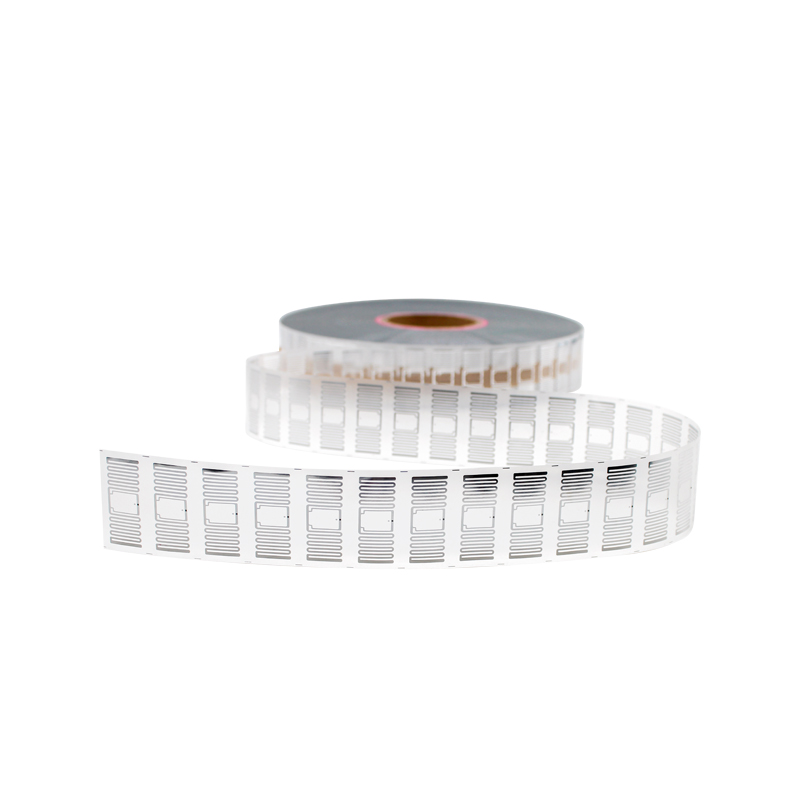
Barcodes once felt like a breakthrough, but they demand line-of-sight and one-at-a-time scanning that turns check-in and inventory into slow, error-prone chores. RFID flips that model entirely: a single pass of a handheld reader can capture dozens of tagged items in seconds, even when they're stacked, shelved, or tucked inside book drops. The technology doesn't just speed things up—it makes it possible to repurpose staff hours for patron assistance and programming instead of tedious sorting.
What really sets RFID apart is the sheer depth of data it can carry and update. Each tag stores a unique identifier, letting the system know not only that an item exists but exactly which copy it is, where it should be, and whether it's been flagged for a hold or transfer. When combined with smart shelving and automated returns, the library becomes a self-auditing organism. Misplaced materials stop being hour-long mysteries and start being pinpointed with a few steps and a beep, while routine inventory that used to shutter aisles for days can be done during open hours with barely a whisper of disruption.
Beyond the back-of-house efficiency, RFID rewires the patron experience in ways that barcodes never could. Self-checkout kiosks let people breeze through with a stack of ten items as easily as one, and the technology makes it possible to design truly touchless, walk-through lending gates that don't scream "security" but simply register what's leaving. For libraries, that means fewer queues at the desk, fewer hand-scanning injuries, and a palpable shift in atmosphere—from transactional to inviting. The logistics become invisible, and what's left is the kind of fluid browsing and borrowing that feels like a natural extension of a place built around discovery.
Tiny Tags, Massive Memory: Inside the Chip Architecture
At first glance, RFID tags might seem like nothing more than simple stickers, but peel back the layers and you’ll find a surprisingly sophisticated chip architecture. The real magic isn’t just in the antenna design or the radio communication—it’s in how the tiny silicon die manages to pack a hefty chunk of non-volatile memory into a footprint smaller than a grain of rice. These chips often carry anywhere from a few kilobits to over 64 kilobits of data, all arranged on a substrate that’s optimized for cost, durability, and mass production. The layout is a marvel of analog and digital co-design, where charge pumps, memory arrays, and modulation circuits are squeezed together under a strict power budget.
Diving deeper, the memory block itself typically uses EEPROM or FRAM technologies, chosen for their low power and high endurance. The architecture revolves around a specialized finite state machine that handles the ISO 15693 or EPC Gen2 protocol encoding, all while sipping power harvested from the reader’s RF field. What makes it tick is the way the digital logic is kept to a bare minimum—every gate counts. The memory is split into multiple banks, with a few user-accessible pages and a protected segment for the tag’s unique ID. There’s also a clever anti-collision algorithm built right into the silicon, allowing hundreds of tags to be read simultaneously without a hitch.
What really sets these designs apart is the obsessive focus on minimum operating voltage. The chip must boot up and read memory at just a fraction of a volt, sometimes as low as 0.3V, to work at long distances. This leads to some innovative circuit tricks, like sub-threshold logic and leakage-based voltage references. The memory read path is carefully pipelined to avoid stalling the RF front-end, while the write path uses a dedicated high-voltage generator that only kicks in during programming. Every nanoamp of current matters, pushing designers to abandon traditional bloated controller IP in favor of hand-crafted layouts that make the most of every square micron. That’s how a tiny tag ends up with memory that punches far above its weight class.
From Shelf to Scanner: Real-World Tracking Scenarios
In a busy grocery aisle, a box of cereal sits quietly among dozens of identical packages. A shopper picks it up, glances at the label, and drops it into their cart. The journey from shelf to checkout scanner seems trivial, but for inventory systems, this is a critical blind spot. Tracking that single box—knowing it moved, predicting when it will be scanned, and updating stock levels without manual counts—requires more than a simple barcode. It calls for a blend of weight sensors on shelves, overhead cameras that notice gaps, and the occasional RFID tag embedded in packaging. When the scanner finally beeps at the register, the system breathes a sigh of relief: another item accounted for, another data point in a constant stream of real-world activity.
Warehouses present an amplified version of this challenge. Pallets of product sit on steel racks three stories high, and workers with handheld scanners navigate narrow aisles on forklifts. The shelf here isn’t static; items are often relocated, and the scanner must confirm not just “what” but “where.” A misplaced pallet can ripple into shipping errors hours later. To bridge the gap, facilities mount scanners on conveyor belts, use voice-directed picking that logs each movement by aisle and bin, and occasionally rely on drones that photograph shelf labels from above. It’s a frantic, noisy environment where the physical act of scanning becomes a punctuation mark in a long sentence of tracking—verifying that the story on paper matches the shelf’s reality.
Beyond retail and logistics, the shelf-to-scanner pattern repeats in unexpected places. In hospital supply rooms, nurses scan medications pulled from shelves to patient bedside scanners, reducing dangerous mix-ups. Libraries tag books with RFID so that a cart wheeled past a sensor instantly checks in dozens of returns. Even museum archives track artifacts from storage shelf to conservation scanner, building a digital ledger of handling history. These scenarios share a common thread: the shelf is a starting point of trust, and the scanner is the moment of truth. The real work happens in the messy, human spaces between them, where tracking must be invisible enough not to slow anyone down, but stubborn enough to never lose sight of the item.
Durability by Design: Surviving Daily Library Wear
Library books face a unique kind of abuse. Unlike a cherished personal copy that might be read once and gently shelved, these volumes are handled by dozens, sometimes hundreds, of patrons each year. They’re crammed into backpacks, propped open on copiers, and occasionally dropped. If they’re going to survive beyond a handful of circulations, they need to be built differently—right from the start.
That’s where durability by design comes in. Publishers serving the library market often reinforce hinges with heavy-duty cloth, use extra-strong glues on spines, and opt for sewn rather than glued signatures. Covers get a protective laminate that shrugs off spilled coffee and sticky fingers. Even the paper stock tends to be thicker and more tear-resistant, standing up to the kind of page-turning that would shred a standard paperback.
These choices aren’t just about making a book “tougher.” They’re about anticipating the specific stresses of everyday library life. A well-designed library edition can handle the slide across a checkout desk, the pull from a tightly packed shelf, and the occasional rough handling without its spine cracking or its pages detaching. The result is a book that stays in circulation years longer—saving libraries money and ensuring that readers always find it ready for the next adventure.
The Quiet Efficiency Uplift: Inventory Without the Aisles
Think about how much space sits idle in a conventional warehouse. Aisles—those wide gaps between shelving units—exist solely for human pickers and forklifts to navigate. Their emptiness is a silent cost, consuming real estate and stretching traversal distances. Removing them entirely isn’t a loss; it’s a liberation of cubic volume that lets inventory breathe into the space that logistics once borrowed.
This approach doesn’t just reclaim square footage. It reshapes the rhythm of retrieval. When stock is stored in dense grids or vertical carousels, the system delivers items to the picker rather than forcing a walk. That shift eliminates wasted motion and quietly collapses the time between request and fulfillment. The hum becomes steadier, and the numbers climb without anyone needing to sprint.
The real uplift, though, comes from what stops happening. There’s no aisle congestion at peak hours, no misplaced pallet slowing the line. When every slot is a retrieval point, the entire inventory becomes adjacent to the output station. It’s a kind of spatial equality—goods miles apart in a traditional layout sit shoulder to shoulder here. The quiet part isn’t just about noise; it’s the hush of a process that no longer fights its own geometry.
FAQ
Library RFID tags are small electronic devices that use radio waves to identify books. Unlike barcodes that require line-of-sight scanning one at a time, RFID tags can be read in batches, even when stacked or hidden inside a book cover, making the process far quicker and less labor-intensive.
With RFID, patrons can use self-service kiosks to borrow or return multiple books simultaneously. The system instantly reads all the tags, updates the library database, and secures or unsecures each item, cutting wait times and freeing up staff for other tasks.
The tags are crafted from thin, flexible materials like PET or paper, with a tiny microchip and an etched antenna. They are often laminated for protection and may include a specialized adhesive designed to bond securely with book surfaces without causing damage over time.
Absolutely. Staff can scan entire shelves with a handheld reader in minutes, instantly spotting items that are out of place or missing. This turns a once tedious manual inventory into a fast, routine task, greatly improving collection accuracy.
The tags only store a unique identifier, not personal details or what a person has borrowed. Most libraries configure their systems to read tags only within the library premises, and the data is governed by strict privacy policies to protect patron confidentiality.
Each tag undergoes rigorous testing for durability, including repeated bending, exposure to extreme temperatures and humidity, and adhesion strength. Only components from trusted suppliers are used, and random samples from every batch are verified to meet performance standards before shipping.
Conclusion
At the heart of modern library logistics lies a quiet revolution—intelligent RFID tags meticulously crafted to blend precision engineering with everyday durability. These aren’t just stickers; each tag begins in a fabrication process where minute antennas are printed with exacting accuracy and microchips are bonded under cleanroom conditions. The result is a tiny device packing substantial memory, capable of storing an item’s entire circulation history, genre, and even condition notes. Unlike traditional barcodes that require line-of-sight and manual scanning, RFID flips the script, enabling instant identification of dozens of books simultaneously. But what truly sets these tags apart is their rugged design—surviving countless checkouts, spills, and the constant slide across wooden shelves without missing a beat.
Out on the library floor, this technology reshapes daily operations. Picture a librarian gliding a handheld scanner past a shelf and instantly knowing which volumes are misshelved, which are due for review, and exactly how many sit in that section—all without pulling a single spine. In backroom processing, tags talk to overhead readers as books move from book drop to sorting bin to cart, automating once-tedious routing. The true magic, however, is inventory night. Staff no longer carve hours out for aisle-by-aisle stocktakes; a quick walk with a reader captures every tag signal, compiling a full collection audit in minutes. This quiet efficiency uplift—freed from the drudgery of manual counting—gives librarians time to focus on what matters: connecting readers with stories. From precision printing to the quiet hum of a perfectly tracked collection, these RFID tags don’t just label books; they rewrite the entire logistics backbone of a library.
Contact Us
Contact Person: Esme Mo
Email: [email protected]
Tel/WhatsApp: 0086 191 2931 7837
Website: https://www.osrfidglobal.com/