
Lost Foam Casting Original Manufacturer: A Complete Guide to Quality and Efficiency
2026-10-16
Lost foam casting can produce complex metal parts with remarkable precision, but the difference between an average supplier and a true original manufacturer is rarely obvious at first glance. In this guide, we examine the key quality and efficiency factors—and show how Zhaoyuqi approaches the process differently.
Why Lost Foam Patterns Demand More Than a Pretty CAD File
A polished CAD model might look flawless on screen, but it rarely survives first contact with the foundry floor. Lost foam casting introduces a chain of physical distortions that no digital render can predict: foam bead fusion, coating thickness, sand compaction, and the violent replacement of foam by molten metal. Each step pulls the geometry away from the original file, so a pattern that mirrors the CAD exactly often yields a casting that is out of tolerance. The real value lies in anticipating these shifts before the first cut is made.
Skilled patternmakers treat the CAD file as a starting point, not a final answer. They add machining stock where the casting will be cleaned up, compensate for foam shrinkage during molding and metal contraction during cooling, and adjust cross-sections to account for coating buildup. They also rethink parting lines, gating, and venting, because a pattern must release cleanly from the mold and allow gases to escape without trapping air. These decisions come from shop experience, not from a default toolbar command.
Validation closes the loop. A first article casting is measured against the original intent, and the pattern is refined iteratively. Sometimes the CAD model is updated to reflect what actually works in production; more often, the pattern itself carries tacit corrections that never appear in the file. That feedback between digital intent and physical reality is what separates a decorative model from a pattern that consistently produces sound castings.
What an Original Manufacturer's Coating Line Reveals About Quality
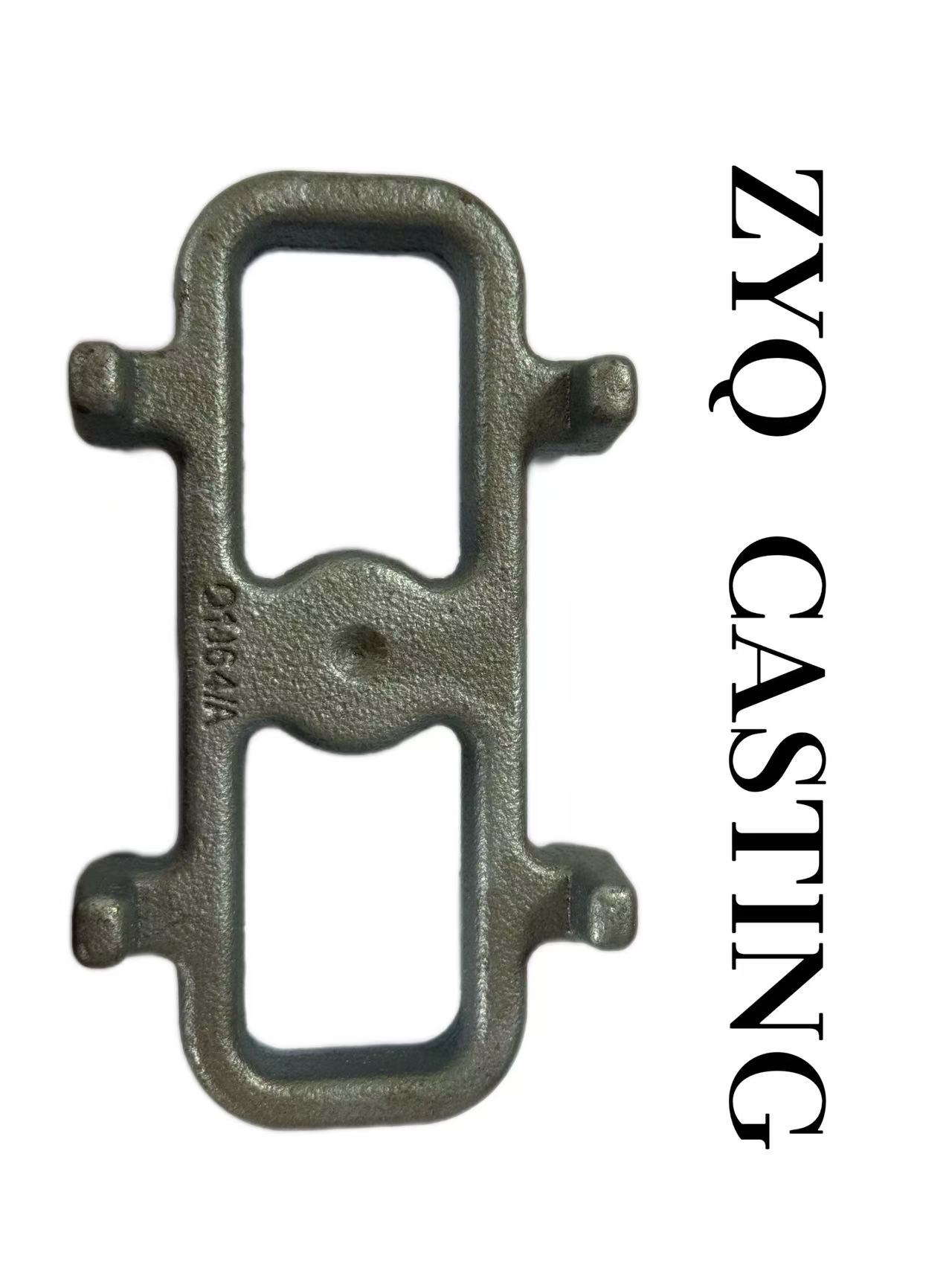
A coating line isn't just a series of spray guns and curing ovens. It's a fingerprint of the manufacturer's priorities. When you step onto an original equipment manufacturer's floor, the condition and configuration of that line tell you immediately whether they are chasing pennies or chasing longevity. The best lines are obsessively maintained, with filtration systems humming and viscosity checks logged every shift. They aren't shiny showpieces—they're workhorses that get recalibrated mid-run without anyone blinking.
What separates a great coating operation from a mediocre one is rarely the paint itself. It's the decision to slow the line speed when humidity spikes. It's the willingness to reject a batch of primer that technically passes spec but doesn't feel right on a test panel. Original manufacturers who understand quality treat the coating line as a living system, not a fixed asset. They audit temperature profiles in the cure oven not once a quarter but every morning, and they graph adhesion test results over years, spotting drift before it becomes a field failure.
And here's the part most buyers never see: the coating line reveals how a manufacturer handles invisible failures. A tiny fisheye in a hidden flange, a slight orange peel under a bracket—these things don't show up in a brochure photo. But on a well-run line, someone catches them. The operator marks the part, the supervisor calls a huddle, and the root cause gets traced back to a worn nozzle or a contaminated air line. That kind of response isn't taught in a manual. It's a culture that lives in the line itself. If you want to know how good a product really is, watch how its maker coats it when no one's looking.
How Foam Bead Fusion Impacts Dimensional Stability and Scrap
The fusion step in foam bead processing does more than just bind particles together; it directly dictates how well a part holds its shape under changing conditions. When beads are heated to the point where their outer shells soften and merge, the strength of those inter-bead bonds becomes the backbone of dimensional stability. If fusion is rushed or uneven, some beads stay only lightly tacked to their neighbors, leaving the part prone to warping, shrinking, or swelling when temperature or humidity shifts. A properly fused matrix, by contrast, locks each bead into a shared network that resists distortion over time, even in demanding packaging or insulation applications.
Scrap rates track fusion quality almost like a mirror. Weak or inconsistent bonding shows up as cracked edges, surface voids, and parts that fail dimensional checks right after demolding or during later handling. Every rejected panel or container traces back to a moment in the fusion cycle where heat, pressure, or dwell time drifted from the sweet spot. Operators who chase higher output by shortening the fusion phase often see short-term gains erased by a rising pile of out-of-tolerance scrap. The relationship is rarely linear: a ten-second reduction in fusion time might double the scrap rate, while a slight over-fusion can create its own problems with excessive density and brittleness.
Tuning fusion parameters is a balancing act that rewards a careful, observation-driven approach. Instead of relying on generic machine settings, experienced processors watch how bead surfaces transition from matte to glossy, feel the resistance of the part as it ejects, and measure key dimensions over successive cycles to spot drift before it becomes a reject. Small adjustments in steam pressure or cooling rate can shift the fusion window enough to slash scrap without sacrificing throughput. In the end, the parts that hold their shape and pass inspection are the ones where every bead found just the right amount of time and temperature to truly become one.
The Efficiency Gains Hidden in Pouring System Design
Many foundries treat the pouring basin and sprue as afterthoughts, yet small changes here can cut fill time and reduce oxide inclusions. A tapered sprue that maintains a full bore during the pour prevents air aspiration, which in turn lowers scrap rates without adding capital equipment.
Runners and ingates often hide bigger gains. By balancing the cross-sectional areas to keep melt velocity below the critical threshold for surface turbulence, a redesigned system can double the number of castings per mold. One iron foundry reworked a four-cavity layout and saw yield jump from 62% to 74% simply by shortening the runner path and staggering the ingates.
The less obvious efficiency comes from thermal management. A well-designed pouring system keeps hot metal moving through the sprue and runner quickly, but enters the mold cavity at a controlled, low velocity. This reduces premature solidification in thin sections and eliminates the need for excessive superheat, saving energy and extending furnace lining life.
Material Handling Habits That Separate Serious Foundries From Amateurs
Walking the floor of a serious foundry, you'll spot a deliberate choreography around raw materials. Incoming alloys, sand, and scrap don't pile up at random. They sit in labeled bays with clear walkways and a first-in, first-out rotation that cuts oxidation and moisture pickup. Amateurs treat storage as an afterthought, mixing returns with new metal or letting wet sand creep into the system. Serious operations track heat numbers and supplier lots down to the melt, so a quality hiccup can be traced in minutes rather than days. Forklifts have designated routes, and bins are sized to match furnace charges, not just whatever fits. This reduces double handling and contamination risks that quietly eat into casting quality.
Melt transfer habits separate the two camps even faster. Pros preheat ladles and keep them dry, knowing a damp lining can trigger a steam explosion or hydrogen pickup. They use pouring shanks and automated ladling systems sized to the job, minimizing turbulence that folds in slag and oxides. Amateurs often improvise with undersized crucibles or rush a transfer, splashing metal and creating inclusions. In a serious foundry, every transfer is timed, temperature is checked before and after, and the path from furnace to mold is kept short and clear. Spill kits and emergency shutoffs sit within arm's reach, not buried behind a pallet rack. These habits don't cost a fortune, but they prevent the small inconsistencies that mark amateur castings.
Scrap and sand handling shows the same divide. A professional foundry sorts returns—gates, risers, and rejected castings—into separate, clean containers before they go back to the furnace. They dry wet scrap, strip off sand, and avoid throwing mystery metal into a charge. Amateurs shovel everything together and hope the chemistry sorts itself out, which is how you get brittle castings or gas porosity. Serious shops also run a spectrometer check on every heat and adjust the charge with ferroalloys, keeping a log that builds a recipe history. Sand reclamation gets similar respect: sieving, cooling, and rebonding are scheduled, not skipped. These behind-the-scenes routines are unglamorous, but they are what let a foundry hit the same specs on batch fifty as on batch one.
Reading Between the Lines of a Lost Foam Factory's Scrap Reports
A stack of faded carbon copies from a shuttered lost foam casting plant tells a story that official production logs never captured. Each entry, scrawled by a shift supervisor, records the weight of polystyrene patterns, the type of alloy poured, and the scrap rate per batch—but the real narrative hides in the handwriting itself. A sudden spike in rejected molds on a Tuesday in March 1987 corresponds not to a machine malfunction, but to a delivery of recycled sand that arrived damp from a rain-soaked railcar. The margins hold terse notes: “core shift, night crew,” or “pattern cracked—check venting.” These fragments turn dry data into a chronicle of rushed deadlines, improvised fixes, and the quiet friction between engineering specs and shop-floor reality.
Scrap reports also expose the factory’s unspoken economy. A 12 percent foam scrap rate in the spring of 1991 caught the attention of the plant accountant, but the real reason never made it into the quarterly summary: an experiment with a cheaper, locally-sourced urea-formaldehyde binder that produced brittle patterns when humidity rose above seventy percent. Workers learned to compensate by over-drying the sand, but that increased gas porosity in the castings. The result was a cycle of adjustment and failure that appears in the reports as alternating weeks of high scrap and near-acceptable output, a rhythm invisible to anyone reading only the averages.
By the final months of operation, the scrap reports read less like quality-control records and more like a diary of abandonment. Orders shrank, maintenance intervals stretched, and the same three signature initials appear on every page—two fewer supervisors than the year before. A last entry, dated two weeks before the lockout, simply says “re-run A-17, oversized.” There’s no note about layoffs, no mention of the auction, no farewell. Just the quiet insistence of people still trying to pour a good part while the lights were going out around them.
FAQ
Lost foam uses a polystyrene pattern that vaporizes when molten metal is poured, leaving a near-net-shape cavity. Unlike sand casting, there's no parting line, no cores to set, and no draft angle restrictions on internal passages. This means fewer assembly steps and less machining allowance, which translates directly into shorter lead times.
An original manufacturer controls the whole process from foam pattern molding to final inspection. You get direct engineering feedback, faster design iterations, and transparent traceability on alloy batches and dimensional reports. Trading companies often blur these details, adding delays and markup without adding technical value.
Look for documented in-process checks: foam bead density verification, coating thickness measurement, sand compaction monitoring, and spectrographic analysis of each melt. Also ask for dimensional layout reports on first articles and capability studies on critical tolerances. Real manufacturers share these without hesitation.
The single-piece foam pattern eliminates core assembly and mold closing. One pattern can combine multiple components that would normally be welded or bolted together. This consolidation removes secondary operations like machining, deburring, and fitting, often reducing total manufacturing time by 30 to 50 percent on complex geometries.
Parts with intricate internal cavities, thin walls, or complex undercuts work especially well—think cylinder heads, exhaust manifolds, pump housings, and hydraulic valve bodies. If your design currently requires multiple castings welded together or heavy machining from billet, lost foam is worth a review.
Because the foam pattern is consumed, you can design undercuts, zero-draft features, and hidden channels without worrying about core pull directions or mold halves. This lets engineers combine several functions into one casting, reducing part count and assembly labor while maintaining dimensional consistency.
They should provide heat numbers tied to your purchase order, mechanical test coupons from the same pour, and detailed process parameter logs—pouring temperature, coating thickness, and cooling curve data. A trustworthy shop keeps these records for at least five years and shares them on request, not just during audits.
Watch for proactive suggestions: pattern layout optimization for multiple parts per cluster, gating redesign to reduce turbulence, and feedback on wall thickness uniformity to prevent shrinkage. Efficiency-focused manufacturers measure scrap rate, first-pass yield, and energy consumption per ton of metal poured, then use that data to improve your part's cost over time.
Conclusion
A lost foam casting's success isn't decided on screen but inside the foam cell. An original manufacturer knows the CAD file only sets intent; the real work happens when EPS beads fuse under the right steam pressure and time, because uneven fusion quietly shows up later as dimensional drift or internal voids that scrap castings long before machining. That's why the coating line reveals more than any brochure: coating thickness, permeability, and drying rhythm determine how smoothly metal replaces foam without turbulence, gas defects, or leftover residue. A rushed or poorly recycled coating will fail in the pour, no matter how polished the sales pitch.
Efficiency gains often hide in pouring system design and daily material habits. Tight gating and riser layouts cut turbulence and heat loss, but those gains disappear if foam patterns are stored in damp, careless stacks or moved long after they've begun to distort. Serious foundries control pattern storage climate, rotate inventory, and treat foam as a precision component, not packing material. The final proof sits in the scrap report: an original manufacturer reads its own trends by pattern, shift, and coating batch, hunting root causes upstream instead of filing another vague “casting defect” line. That habit—refusing to let scrap stay anonymous—separates real quality from polished guesswork.
Contact Us
Contact Person: Nico Yin
Email: [email protected]
Tel/WhatsApp: 8618561567088
Website: https://www.ductileironparts.com/