
MCM Flexible Stone for Interior Walls: Beautiful Design Recommendations
2026-08-27
When you think about covering an interior wall, you probably imagine heavy slabs or time-consuming paint jobs. But what if a single material could bend around curves, mimic natural stone, and install almost like wallpaper? That's where Magic Stone comes in. In this post, we're exploring a handful of design ideas that show how this flexible stone can transform ordinary rooms into something far more tactile and alive—without the usual hassle.
Choosing the One Wall Worth Wrapping in MCM Flexible Stone
The temptation with a material like MCM flexible stone is to cover every surface, but its real strength comes from contrast. One well-chosen wall will read as intentional; four walls will just feel busy. Look for the spot your eye lands first when you enter the room — often the wall behind the bed, the main seating area, or the one directly opposite a doorway.
Pay attention to how light moves across the space during the day. A wall that catches soft morning or late-afternoon light will show off the stone’s texture and tonal shifts without needing extra fixtures. Avoid walls that stay in shadow or get hit with harsh downlighting, since both can flatten the material or exaggerate every seam.
Also consider the wall’s practical job. The best candidate usually has fewer outlets, vents, or switches to cut around, and it doesn’t compete with busy wallpaper or heavy art. If you’re torn between two options, stand where you spend the most time and choose the one you actually notice when you look up — that’s the wall people will remember.
Limestone, Travertine, and Slate Looks That Skip the Extra Weight
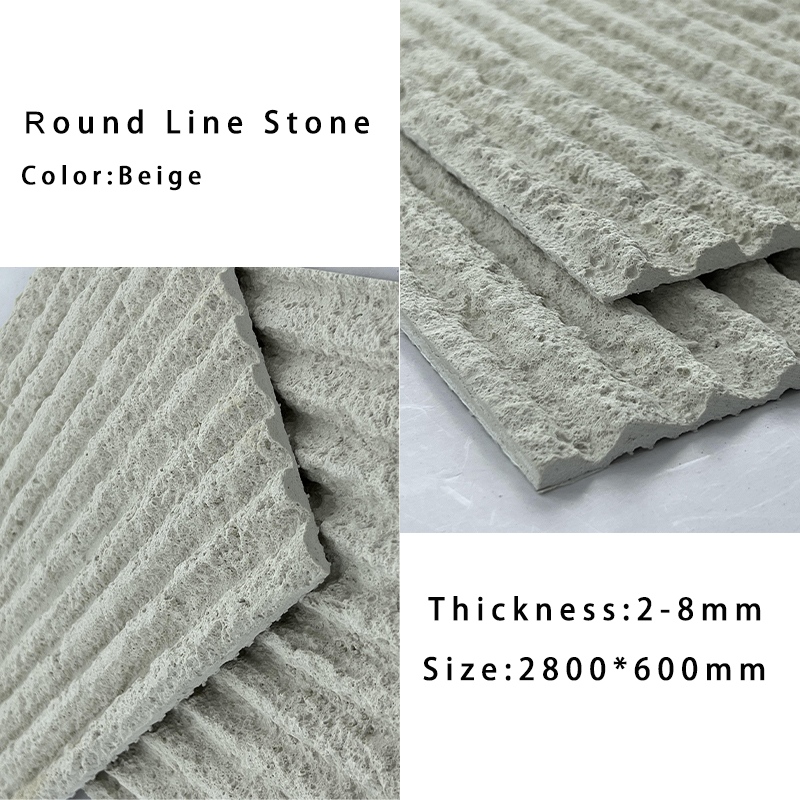
Natural stone has a way of grounding a room, but the weight behind real limestone or travertine often means beefed-up subfloors, extra framing, and a crew that isn't thrilled about hauling slabs up three flights. That's where lightweight alternatives step in. Porcelain panels and engineered tiles now replicate the soft, weathered surface of limestone, the linear pitting of travertine, and the rugged cleft of slate—without demanding structural reinforcements. You get the same earthy color shifts and textural depth, but each piece is thin enough to go directly over existing drywall or a standard plywood substrate, which opens up walls, fireplace surrounds, and even ceilings that would have been off-limits with real stone.
The visual payoff goes beyond saving your back. Because these looks come in large-format sheets or slim tiles, grout lines shrink, and the pattern reads more like a continuous slab. A travertine-look panel can wrap a shower niche seamlessly, while a slate-look tile can carry the same matte, slightly gritty finish from floor to accent wall without a single transition strip. Installers appreciate that they can cut with a regular wet saw and handle pieces solo, which often trims labor time by a noticeable margin. And if the project calls for a specific patina—say, a limestone with more fossil fragments or a travertine with wider, shallower pits—you can usually find three or four variations within a single manufacturer's line instead of waiting on a quarry shipment.
For anyone who has hesitated to bring stone into a renovation because of weight limits, these options change the math. They don't pretend to be something they aren't—up close, a trained eye might notice the repeat in patterning or the slightly more uniform edge—but from a normal standing distance, the effect is convincing. More importantly, they let you layer that grounded, organic character into spaces where real stone would simply be impractical: a second-floor bathroom, a rental kitchen backsplash, or a mobile home accent wall. The result feels intentional rather than like a compromise, and that's a win for both the design and the people who have to live with it.
Warm Earth Tones That Make a Room Feel Settled, Not Staged
There’s a difference between a room that’s ready for a magazine shoot and one that actually asks you to stay awhile. Warm earth tones—clay, ochre, soft sienna, muted terracotta—have a way of doing the latter without trying too hard. They settle into the background not as absence of color, but as a kind of quiet presence. A wall washed in a dusty sand tone doesn’t compete with your sofa; it gives the whole room permission to exhale.
The trick is choosing shades that lean slightly faded rather than saturated. Think sunbaked plaster, not paint straight from the tube. A burnt caramel accent chair next to a linen-covered sofa, a rug with faded rust and olive threads, or a throw in the color of wet clay—these pieces feel collected over time, even if you bought them last week. The mix of textures matters as much as the color itself: rough wool, matte ceramic, nubby linen all catch light differently and keep the palette from falling flat.
When in doubt, start with one larger surface—a wall, a sofa, or a large area rug—in a warm neutral earth tone, then let the rest of the room respond. Add a few smaller objects in nearby hues, but don’t chase exact matches. A slightly different undertone here and there is what makes the space feel lived-in, not staged. The goal isn’t a perfectly coordinated display; it’s a room that looks like it grew into itself.
Lighting Angles That Bring Out the Stone’s Grain Instead of Flattening It
Most people light stone straight on and wonder why the surface looks dead. A direct frontal beam erases the micro-shadows that define grain, making even a heavily veined slab appear flat and painted. Tilting the light source to a low, raking angle changes everything: each ridge and furrow casts its own tiny shadow, so the stone's natural texture reads instantly.
The sweet spot usually sits between 15 and 35 degrees off the surface, but the exact angle depends on how deep the grain runs. For subtle honed finishes, 20 degrees often reveals detail that disappears at 45. For rough cleft or flamed textures, you can push closer to 10 degrees and still avoid blowing out the high points. Move the light while watching the stone, not the other way around.
Material Pairings That Let MCM Flexible Stone Stay the Main Character
Think of MCM flexible stone as the quiet lead in a film—it doesn't need loud co-stars. Pair it with raw concrete or microcement on adjacent walls, and the stone's subtle texture becomes the focal point while the concrete recedes into a supporting role. The contrast isn't about competition; it's about letting the stone's organic movement draw the eye without anyone noticing the backdrop.
Glass is another pairing that works hard for the stone, not against it. A sheet of clear or frosted glass mounted a few inches in front of a flexible stone panel creates a shadow gap that deepens the stone's relief. The glass catches light and reflections, but it never steals the scene—it simply frames the stone like a gallery piece, making every undulation feel intentional rather than accidental.
Then there's warm, pale timber—think ash or birch veneer. Used sparingly as a shelf, a door frame, or a low bench, the wood's smooth flatness underscores how tactile and dimensional the stone really is. The eye keeps returning to the stone because the timber doesn't argue for attention; it just gives the stone a quiet, well-dressed companion that knows when to step back.
Curves, Alcoves, and Tight Corners Where Flexible Stone Shines
Most cladding materials balk at a radius. Rigid panels and large-format tiles force designers to simplify curves into faceted approximations, and the result often looks like a compromise. Flexible stone changes that math. With a backing that allows controlled flex, a single sheet can follow a gentle arc around a column or wrap a rounded kitchen island without visible seams or stress cracks. The surface keeps its natural cleft and color variation, so the curve reads as a deliberate, continuous gesture rather than a patchwork.
Alcoves and recessed niches present a different problem. Their inside corners are usually too tight for a thick stone slab, and even if a piece fits, the exposed edge shows an unnatural cut. Flexible stone can be folded into these recesses with a crisp, clean line, and because the material is thin, the build-up at the corner is minimal. That makes it practical for shelving nooks, shower niches, or display recesses where the stone needs to disappear into the architecture instead of announcing its thickness.
The real payoff comes in older buildings or custom furniture where no two angles repeat. A curved plaster wall with a tight alcove, a rounded bench base, a barrel-vaulted ceiling detail—these are the spots where standard stone becomes a headache and flexible stone becomes the quiet solution. It lets the geometry stay honest and the material stay stone, without forcing one to give way to the other.
FAQ
Yes, it handles scuffs and everyday knocks surprisingly well. Its surface resists cracking and doesn't peel away from the wall, so even with coats, bags, and shoes brushing past, it keeps its look for years.
Matte limewash paint, warm plaster, or even smooth concrete create a nice contrast. If you want a softer edge, try pairing it with raw timber shelves or linen curtains to keep the room from feeling too hard.
Definitely. Since the panels are thin, they don't eat into floor space. A single feature wall behind the vanity can make a tiny room feel intentional rather than cramped, especially in a honed or light-toned stone.
A soft microfiber cloth with warm water does most of the job. For greasy spots near a stove, add a drop of mild dish soap. Avoid abrasive scrubbers and solvent-based sprays, which can dull the surface over time.
Check the manufacturer's fire rating first, but many MCM products are approved for non-combustible surrounds. Keep the required clearance and use a heat-resistant adhesive, then it works beautifully as a floor-to-ceiling chimney breast.
The better products mimic real stone grain and mineral speckles quite well. From a normal standing distance it reads as natural stone, though if you press your nose to the wall you might notice the repeat pattern on large expanses.
It shines in Japandi, modern rustic, and warm industrial spaces. Because the material comes in muted greys, sandy beiges, and charcoal tones, it fits interiors that lean on texture and calm palettes rather than bright colors.
Conclusion
MCM flexible stone changes what an accent wall can feel like. Instead of heavy masonry, you get a lightweight panel that mimics limestone, travertine, or slate closely enough to fool the eye while skipping the extra weight. The real trick is restraint: wrap only one wall—behind a bed, around a fireplace, along a narrow hallway—so the texture has room to breathe. Warm earth tones drawn from those stone types settle a space immediately. Rather than cool grays, lean into sandy beige, soft umber, or dusty rust, and pair the stone with matte timber, brushed brass, or nubby boucle. That way the wall stays the main character.
Lighting decides whether the stone reads as real or flat. Rake a wall sconce or track fixture across the surface at a low angle and the grain, pitting, and natural shifts come alive. Blanket it with flat overhead light and those details vanish. Flexible stone also earns its keep in places rigid panels can't go: curved alcoves, arched openings, tight returns around a window. Because it bends, you get one continuous surface instead of visible seams. Leave the surrounding walls quiet, and the stone does the work. The result feels considered, not decorated.
Contact Us
Contact Person: Vito
Email: [email protected]
Tel/WhatsApp: 86 13088879266
Website: https://www.magicstonemcm.com