
Outdoor Tiles Manufacturer Reveals Timeless Trends for Durable Patio Flooring
2026-09-09
Trends come and go, but a patio is built to stay. That’s why Beata Ceramics—an outdoor tiles manufacturer known for durability—has stepped forward with a rare look at the timeless flooring trends that won’t feel outdated in five years. If you’re planning a patio project, read on before you make a single decision.
Porcelain Pavers Are the Quiet Workhorses of Lasting Patios
Many homeowners assume a stone-look patio requires natural stone, but porcelain pavers have quietly changed that expectation. They carry the visual weight of quarried material while outperforming it in day-to-day use—no sealing, no staining panic when a wine glass tips over, and no flaking after a few freeze-thaw cycles. The result is a surface that handles heavy furniture, grills, and foot traffic without demanding constant attention.
The real secret sits in their low porosity. Quality porcelain pavers absorb less than half a percent of moisture, which means frost cannot split them from the inside the way it does with some concrete or stone products. Add slip-resistant textures that stay effective even when wet, plus color that runs through the full tile body, and you get a patio that looks the same in year ten as it did on day one. That reliability is exactly why they are called workhorses—most of the time you forget they are there.
Installation does require a bit more care than laying down standard concrete slabs. A stable, well-drained base is non-negotiable, and thinner 20mm pavers work better over pedestals or compacted gravel than directly on sand alone. Yet once they are set, the ongoing upkeep drops to little more than an occasional rinse. For anyone who wants a patio that endures without turning maintenance into a hobby, porcelain pavers earn their keep quietly.
Natural Stone Looks That Won't Crumble After a Freeze-Thaw Cycle
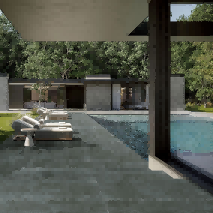
Porcelain pavers have quietly become the go-to choice for patios and walkways in regions with harsh winters. Unlike quarried stone, which can absorb moisture and split along hidden micro-fractures when that water freezes, high-density porcelain is fired at temperatures that leave almost no open pores. Water simply cannot get inside to do damage, so the surface remains intact season after season.
Manufacturers now replicate the veining of travertine, the flecks of granite, and the soft shading of limestone with remarkably convincing detail. The difference is that these surfaces don't require sealing, don't develop spalling edges, and won't turn brittle after repeated temperature swings. You get the look of a centuries-old European courtyard without the fragility.
If you're tired of replacing cracked flagstones every spring, it might be time to look at porcelain or sintered stone options. They come in large-format tiles and pavers, often with textured finishes that feel like natural stone underfoot. And because the color runs through the entire thickness, a chip or scrape won't reveal a bright white core that screams 'fake'.
Slip-Resistant Finishes That Keep Style in the Mix
Polished concrete may look sleek, but one damp morning turns it into a skating rink. The usual fix—slapping down a gritty, utilitarian coating—does the job while quietly killing the room's character. That trade-off is no longer necessary. New slip-resistant finishes balance traction with texture in ways that feel intentional, not industrial. Think micro-etched surfaces that catch the light differently at every angle, or matte sealers with a subtle tooth that read as soft rather than rough. The trick is in the particle size and distribution: fine enough to stay elegant underfoot, coarse enough to hold a shoe sole mid-stride.
Color and pattern don't have to be sacrificed either. Manufacturers now embed slip-resistant aggregates directly into porcelain tiles and luxury vinyl planks, so the grip is part of the design rather than an afterthought. A wood-look plank can carry a faintly sandy grain that mirrors real timber's natural friction, while a marble-pattern tile might hide a micro-dimple texture that only reveals itself when the light hits low across the floor. Even high-gloss looks can be achieved with a transparent anti-slip overlay that preserves the shine without the ice-rink effect. The result is a surface that asks you to walk confidently, not cautiously.
For spaces that truly need to blend safety with style—entryways, mudrooms, bathrooms, restaurant dining areas—the answer isn't choosing between pretty and practical. It's selecting a finish where the slip resistance is woven into the material's own language. Ask about the coefficient of friction, but also ask to see a sample under your actual lighting and with a splash of water. Run your hand over it. If you can't tell where the safety ends and the style begins, that's the one to specify.
Why Large-Format Tiles Make Small Patios Feel Bigger
When you step onto a small patio, the first thing your eye catches is often the pattern underfoot. Standard-sized tiles create a checkerboard of seams that constantly interrupts your gaze, making the area feel chopped into tiny sections. Large-format tiles work differently: with far fewer grout lines, the surface reads as one continuous slab, so your vision glides across it without stopping at every joint. That uninterrupted flow makes the patio feel more expansive than it actually is.
Another reason has to do with how we perceive boundaries. Small tiles announce their edges loudly, reinforcing the limits of the space. Large tiles, by contrast, blur those limits. Because each piece is so wide, you need only a handful to cover the entire floor, which reduces the visual noise that usually shrinks a compact area. The result is a subtle illusion where the patio appears to spill outward rather than end abruptly at a wall or fence.
There's also a psychological trick at play. A large, unbroken surface resembles indoor flooring, and our brains associate that continuity with bigger rooms. When a small patio uses large tiles, it borrows that indoor sense of openness, making the outdoor space feel like a true extension of the home instead of a cramped afterthought. Choosing lighter tones or a subtle matte finish can amplify the effect by bouncing more light around and further softening the edges.
Warm Earth Palettes That Outlive Trend Cycles
There's a reason a living room washed in burnt umber still feels right a decade later—it borrows from clay, stone, and late-afternoon sun. Warm earth palettes don't demand attention the way a saturated teal or a fleeting pastel does; they settle in, shifting with the light instead of fighting it. A matte terracotta on the walls reads quietly confident at noon and almost candlelit by evening, which is exactly why these colors rarely look dated.
What keeps them fresh isn't the exact shade but how you handle it. Layering sand, rust, and deep ochre in slightly uneven textures—a nubby linen sofa, a scored plaster wall, a faded wool rug—gives the palette a handmade feel that no single color-of-the-moment can replicate. Skip the overly matchy accessories; let the undertones argue a little. The best earth-toned rooms feel collected over time, not color-dropped from a seasonal forecast.
When you do want to shift things, change the ratio rather than the colors. A room that leans heavily into raw umber can feel almost Mediterranean; add more bone and blush clay, and the same bones turn quieter, more northern European. That flexibility is the quiet advantage—trend cycles move on, but these hues simply wait for you to rebalance them.
The Right Tile Thickness for Your Region's Worst Weather
In regions where winter brings repeated freeze-thaw cycles, a thicker tile can mean the difference between a surface that lasts decades and one that starts cracking after the first harsh season. The extra mass gives the material more room to absorb the stress caused by expanding ice and sudden temperature swings, reducing the likelihood of hairline fractures that eventually let moisture seep in and cause deeper damage.
On the other hand, areas that face intense heat, hail, or driving rain also benefit from a heavier tile. Thicker options hold up better against impact from debris and resist warping under prolonged sun exposure. While they may cost a bit more upfront, the reduced need for repairs or replacement makes them a practical choice for anyone who doesn't want to climb onto the roof or patio every spring to fix what the weather broke.
FAQ
Timeless trends usually root themselves in practicality—think neutral tones, natural textures, and materials that handle weather without constant upkeep. Flashy colors or overly intricate patterns tend to date a space within a few seasons.
Porcelain and quarry tiles lead the pack. Porcelain resists moisture, frost, and heavy foot traffic, while quarry tile offers a rugged, slip-resistant surface that ages gracefully. Both need far less sealing than natural stone.
Mixing tile sizes or laying them in a staggered pattern breaks up monotony. Adding a border in a slightly darker shade, or inserting occasional textured tiles, gives the floor a handcrafted feel without sacrificing strength.
Yes, if the scale is right. Large tiles with thin grout lines make a compact area feel more open. Choose matte finishes and avoid very dark colors, which can shrink the space visually.
Warm greys, sandy beiges, and muted terracotta remain steady choices. They hide dirt and leaf debris well while pairing easily with both modern and rustic outdoor furniture.
It is non-negotiable, especially in shaded or poolside areas. Look for tiles with a high coefficient of friction or a textured surface. Honed or polished finishes may look sleek but become hazardous when wet.
Absolutely. They offer the warmth of timber without warping, splintering, or annual sealing. The key is picking a tile rated for exterior use with a matte or lightly textured grain to keep it from feeling artificial.
Skipping a proper drainage slope. Water pooling under or between tiles leads to freeze-thaw damage and grout failure. A slope of about one to two percent away from the house, plus a solid compacted base, prevents most long-term issues.
Conclusion
For anyone who has watched a patio surface fail after a single rough winter, the latest guidance from outdoor tile manufacturers feels less like a trend report and more like a field manual. Porcelain pavers continue to earn their keep not through flashy marketing but through an almost stubborn resistance to moisture, staining, and daily abuse. Many homeowners are surprised to learn that the stone-look options now available do not sacrifice beauty for toughness; high-definition inkjet glazing can mimic limestone or slate closely enough that only a hand on the surface gives it away, yet the material shrugs off freeze-thaw cycles that would crack quarried stone within a few seasons. Equally important is texture. A patio that turns slick after morning dew or light rain is a liability, so manufacturers are pairing slip-resistant finishes with subtle matte and honed looks rather than forcing buyers into rough, industrial surfaces. The result is a floor that feels secure underfoot without giving up the visual softness most people want in an outdoor room.
Scale and color are doing much of the heavy lifting when it comes to making a modest patio feel intentionally designed. Large-format tiles, often two feet square or larger, reduce grout lines and visual clutter, which naturally makes a small footprint read as more expansive. Pair that with a restrained earth palette—warm sand, umber, clay, and weathered greys—and the space avoids the dated, overly saturated look that can date a patio faster than weather damage. Finally, thickness is not a one-size-fits-all detail. In regions with deep frost or heavy rainfall, a twenty-millimeter paver can be laid on grass or gravel without mortar, while colder climates may require a thicker profile or a fully mortared installation over a concrete slab. The underlying message from manufacturers is consistent: choose the material and installation method that match your climate, and the style will take care of itself.
Contact Us
Contact Person: Emma
Email: [email protected]
Tel/WhatsApp: 8618064423698
Website: https://www.beataceramics.com/