
PVC Pipe Production Line Manufacturer Evaluation Tips for Modern Extrusion Projects
2026-11-17
Selecting the right PVC pipe production line manufacturer is rarely just a comparison of extrusion speeds and screw diameters. Modern projects now hinge on quieter factors: how a supplier handles energy consumption, whether their control system can integrate with plant-level MES, and if they genuinely understand regional raw material variability. Before committing to a factory tour or a trial run, most evaluations die in the first two meetings due to vague answers about wear-part life and real output stability. With COMRISE, the conversation shifts from catalog promises to measurable line performance, yet many project teams still overlook three evaluation traps that surface only after installation.
Look Past the Extruder to the Cooling and Pulling Stages
The extruder tends to get too much credit and too much blame when profile dimensions drift. Operators will chase barrel temperatures or screw speed while the real control point sits a few feet downstream. After the die, the hot profile is still soft enough to be reshaped by vacuum calibration, water temperature, and cooling rate. Small changes in tank water temperature often move a wall thickness faster than a barrel adjustment, because the part is literally setting its final dimensions in the cooling stage.
Pulling speed also shapes the product more than it gets credit for. If the puller grips unevenly or runs slightly out of sync with the melt output, the profile can develop a repeating size variation that looks like surging from the extruder. Checking belt pressure, roller alignment, and slip during the run often reveals the true cause. Even a properly set puller will leave chatter marks or stretch thin sections if it has to fight the cooling tank or an uncalibrated haul-off.
When a dimension starts to wander, walk downstream before touching the extruder controls. Read the vacuum gauge, measure the temperature rise across the tank, and watch whether the profile pulls straight through the sprays. Those observations usually point to the correction that actually matters, instead of an upstream change that only hides a downstream problem.
Ask Which Module Sets the Line's Actual Output Ceiling
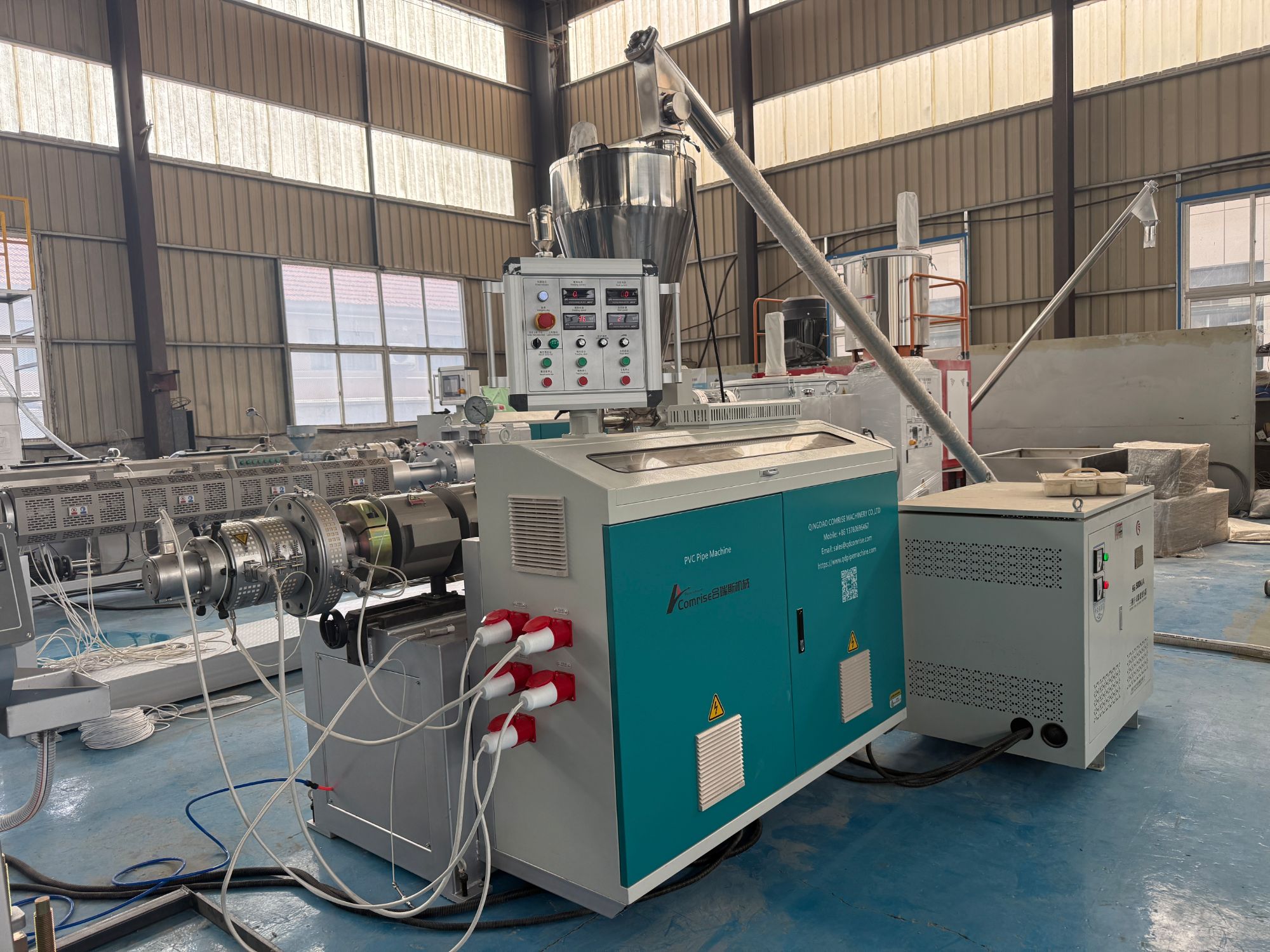
Most teams can recite the rated speed of every major module on a line, but rated speed rarely answers the question that actually matters. The ceiling is not an average of nameplate capacities, nor is it whatever the newest piece of equipment promises. It sits with whichever module runs out of headroom first once changeovers, minor stops, quality checks, and material variation are included. Until someone pins down that specific module, conversations about line performance tend to bounce between assumptions instead of facts.
Asking the question changes what gets measured. Instead of optimizing each module in isolation, the focus moves to the one place where added capacity, shorter recovery time, or a different staffing pattern would raise the entire line's output. The answer is often uncomfortable because it may not be the most expensive machine or the one with the most visible problems. It is usually the module that quietly imposes its rhythm on everything downstream, so the only way to confirm it is to watch the line under normal conditions and trace where work actually accumulates.
Watch the Control System Through a Shift Change
Shift handover is when a control system gets a new set of eyes, and it is also when small drifts become visible. Rather than repeating the same status summary, keep the trend historian open and look for what changed without a clear reason, such as loops that were switched to manual, setpoints that drifted away from the current recipe, or alarms that were acknowledged but left unresolved.
Ask the operator who is leaving to walk through the parts the screens do not show. Which valve has been sticking? Which reading lags by a few seconds? Why was that loop forced at 2 a.m.? Watching the live trends while they explain gives you a better read than a written log that flattens everything into 'ran okay.'
Before the previous shift leaves, compare the alarm and event history with the story you just heard. If something was silenced, bypassed, or placed in override, make sure it is marked and understood. The handover is not really complete until the control system's record matches the operator's account of what happened since the last changeover.
Get Energy Data from a Running Line, Not a Brochure
A brochure tells you what a product should do under perfect test conditions. A running line shows you what it actually does when the ambient temperature shifts, operators change shifts, and raw material batches drift. The difference is the gap between a controlled snapshot and a living process. Most energy audits fail because they rely on static nameplate data, but real consumption lives in the noise of daily operation.
When you pull data straight from a line that is already producing, you catch loads that no spec sheet ever mentions. A motor that cycles more often than its duty rating suggests, a compressed air leak that only opens at 2 a.m., a curing oven that reheats after every door opening, each of these adds up. Static documents cannot show you the rhythm of waste. Only continuous measurement can.
Start with the line, not the library. Connect to existing PLC tags, clamp meters, or energy monitors already installed for other purposes. Then watch a week of production including shift changes and weekend idle periods. The patterns you find there will guide every downstream decision, from equipment upgrades to shift scheduling, with a level of confidence that a glossy brochure simply cannot provide.
Map the Upgrade Path Before You Need It
Waiting until the current setup groans under pressure usually forces rushed choices, higher bills, and awkward migrations. Instead, sketch the likely next moves while everything still feels comfortable: note which components are nearing practical limits, what your team keeps complaining about, and which workflows would break first if demand spikes. A rough plan written down today beats a perfect one invented during a crisis.
Think beyond a single tool or version number. A useful upgrade path covers data formats, integrations, permissions, training, and the order of changes. Mark the dependencies that tend to hide—like an old export script or a browser-specific quirk—so they do not ambush you later. This also clarifies whether to invest in a stopgap fix or hold out for a larger overhaul.
Revisit the path on a light cadence, not just when a sales call or a system warning appears. Conditions shift: a new hire brings different habits, a client asks for tighter reporting, or a platform changes pricing. By keeping the path fresh, you turn upgrades from emergency projects into calm, predictable decisions, and you always know the next sensible step without scrambling.
Find Out Who Shows Up After Installation
The real surprise often comes a few minutes after you finish the setup wizard. Some programs quietly schedule extra tasks, drop a background updater, or bundle a browser toolbar that wasn't mentioned during the initial steps. Checking the list of running processes and newly created startup entries can reveal which third-party components actually made themselves at home.
Instead of relying on the software's own welcome screen, take a quick look at the installation folder and the system tray. You might spot a helper service, a trial scanner, or a promotional shortcut that only appears after the first reboot. Removing these extras early keeps the machine cleaner than any generic uninstall routine would suggest.
A more direct way is to use a snapshot tool before and after the install, then compare what changed. The difference is rarely just the main executable; often there are driver files, scheduled tasks, or registry run keys pointing to unfamiliar names. Once you see who actually showed up, it becomes much easier to decide what deserves to stay.
FAQ
Look for direct experience with your pipe diameter range and wall thickness targets. Ask for running lines you can visit, not just brochure specs. A dependable builder will discuss screw design, thermal control zones, and downstream calibration as one integrated system, and should be able to name specific resin grades they have processed successfully.
Insist on seeing documented output rates per screw diameter with similar formulations. The screw should be matched to your primary material blend, whether that is high-fill calcium carbonate or virgin suspension resin. Barrel venting, L/D ratio, and wear protection matter just as much as quoted throughput, especially when fillers or recycled content are part of the recipe.
The calibration sleeve, vacuum tank, haul-off, and cutter determine whether the final pipe holds ovality, wall consistency, and clean ends. A strong extruder paired with undersized cooling or a weak haul-off will still produce scrap. Evaluate the entire line as a continuous process, not as separate components bolted together.
Watch how they align and level a line before shipment. Ask whether they run a full test with your target formulation and pipe size before crating. Inspect the quality of machined surfaces, electrical cabinet wiring, and whether safety interlocks are standard rather than optional. The condition of their in-house test area often reveals more than a finished specification sheet.
Look for a defined commissioning timeline, local or remote service support with fast spare parts availability, and training that covers start-up, shutdown, and recipe changes. Request a list of common wear parts with lead times. If a manufacturer avoids discussing service after delivery, treat that as a serious red flag for an extrusion project.
Break each quote into extruder, downstream, control system, and included wear parts. Ask what is excluded, such as installation supervision, transport insurance, or calibration tooling. Low upfront pricing often hides thinner barrels, smaller motors, or limited PLC functionality. Calculate cost per quality meter of pipe over five years rather than comparing line price alone.
Prioritize systems with recipe storage, historical trending, and remote diagnostics. The interface should give operators clear control over barrel zones, screw speed, vacuum level, and haul-off tension without jumping between multiple panels. A well-structured HMI can reduce training time and make process deviations easier to catch before they create off-spec product.
Conclusion
A modern PVC pipe line often gets judged by its extruder, but the real constraints usually sit downstream. Cooling tanks, vacuum calibrators and haul-offs determine whether the line holds diameter, keeps wall thickness stable and actually hits the speeds quoted in a sales meeting. Before signing anything, ask the manufacturer which module sets the output ceiling once the screw and barrel are no longer the limiting factor. A candid answer will point to cooling length, water flow distribution or pulling force far more often than to drive horsepower. Energy figures deserve the same scrutiny: ask to see logged consumption from a running line under representative load, not a single-page brochure number taken in ideal conditions.
Control behaviour matters most during operator changeovers. Watch how the system handles a shift handover, recipe changes and alarm resets, because these are the moments where scrap and downtime quietly accumulate. The same forward-looking approach applies to capacity. Map the upgrade path before it is needed, including downstream modules, die heads and automation options that can be added without replacing the whole line. Finally, find out who shows up after installation. A manufacturer with a local service team, clear commissioning protocols and a realistic spare parts plan will influence long-term output more than any component specification on paper.
Contact Us
Contact Person: LISA LEE
Email: [email protected]
Tel/WhatsApp: +86 13780696467
Website: https://www.qdpipemachine.com