
Sampling Valve Solutions for Accurate Process Monitoring
2026-08-29
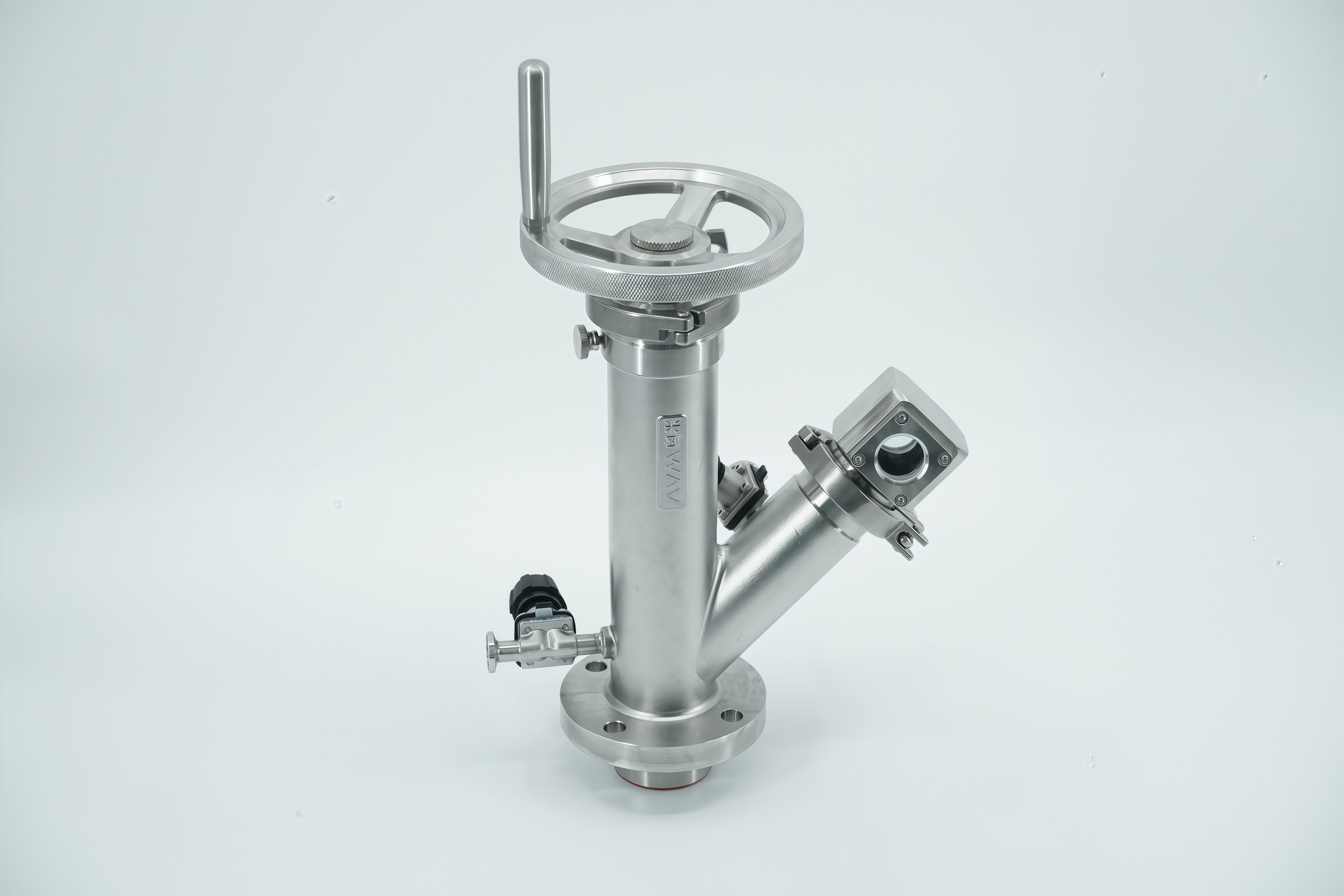
Not long ago, a plant manager spent two weeks chasing a pH discrepancy: the inline probe read 6.8, but every grab sample came back at 7.3. The culprit wasn't the instrument—it was the sampling valve. Small dead spaces, slow purging, and material hold-up were quietly altering every sample before it reached the lab. If your process monitoring depends on samples that no longer represent the line, accuracy is already lost. AVM designs sampling valve solutions specifically to eliminate those hidden distortions, giving you a true snapshot of your process. Here's what makes that possible.
Why Your Sampling Valve Might Be Lying to You
Most operators trust their sampling valves and never look back. They pull a sample, ship it to the lab, and act on the numbers that come back. But there is a quiet problem hiding in plain sight: the sample that reaches your test tube is not always the same fluid that is flowing through your process line. Dead legs, slow flushing, or a valve seat that does not fully clear the previous batch can all leave residual material behind. That leftover fluid mixes with your fresh sample, and suddenly your pH reading, contamination count, or concentration value is not a snapshot of the current stream, but a blended history of everything that passed through the valve hours or days earlier.
Then there is the issue of temperature and pressure drop at the sampling point. A valve that runs hot and then cools between grabs can cause volatile components to flash off or heavier fractions to settle out. Even a well-designed valve can lie to you if the sample port is not properly purged before you open it. The first few milliliters often carry more rust, polymer buildup, or settled solids than the main line. If you do not waste that initial volume, your analytical results will reflect the condition of the valve internals, not the true process stream.
So how do you catch a lying valve? Start by comparing a sample taken right after a long flush against one taken after the line has been sitting idle for an hour. If the numbers drift, your valve is holding onto something. Check the dead volume between the process line and the sample outlet, and consider a design with a continuous bleed or a piston that seals flush with the pipe wall. Also watch the seat material: soft elastomers swell and trap product, while metal-to-metal seats can gall and leave micro-crevices. The fix is not always a new instrument, sometimes just a different purge routine or a shorter sample path will turn a misleading tap into an honest one.
The Dead Volume Problem Nobody Mentions
Most discussions about system volume focus on the obvious culprits—long tubing, oversized fittings, or poorly swept detector cells. Yet there's a quieter source of band broadening that rarely gets called out: the dead volume hiding in plain sight at connection points. Even a supposedly zero-dead-volume union can leave a microscopic annular gap if the ferrule depth isn't matched to the port. That tiny space doesn't just dilute peaks; it creates a slow-mixing zone that smears early eluters far more than expected.
The frustrating part is that this dead volume doesn't announce itself. You won't see it in a pressure trace or a leak test. Instead, it shows up as a subtle tail on an otherwise sharp peak, or a slight drop in plate count that you blame on column age. I've seen methods where the guard cartridge was the culprit—not because it was clogged, but because the housing had an unswept recess the manufacturer never mentioned. Swapping to a different brand with a shorter flow path cut the tailing factor by nearly a third.
What makes the problem worse is that dead volume is cumulative and unevenly distributed. A few microliters at the injector might be harmless for a 4.6 mm column, but the same volume can wreck a 2.1 mm method. The usual advice to just "minimize tubing length" misses the real issue: it's the shape and sweep of internal cavities, not the total volume, that dictate how badly peaks get distorted. Until more users start measuring void volumes under actual flow conditions instead of relying on nominal specs, this quiet problem will keep eating away at resolution.
Material Choices That Keep Samples Honest
The integrity of any collected sample starts with the container you drop it into. Glass, especially Type I borosilicate, remains the gold standard for many trace-level analyses because its surface is relatively inert and it won't leach plasticizers. But glass isn't universally innocent; its silanol groups can bind certain cationic species, and amber glass is non-negotiable for light-sensitive organic compounds. Switching to PTFE or HDPE without checking the certificate of analysis can quietly add phthalates or metal residues before the sample ever reaches the bench.
Tubing and septa are easy to overlook but often the real culprits. Silicone tubing, for example, is wonderfully flexible yet notorious for adsorbing hydrophobic molecules and releasing low-molecular-weight siloxanes. A peristaltic pump line made from the wrong elastomer can strip analytes or introduce artifacts that mimic target peaks. Choosing fluoropolymer liners, or even short lengths of PEEK, keeps sample contact surfaces predictable. The goal is not to find a "pure" material—none exists—but to match the material's leachables and extractables profile to the detection limits and chemistry of the method.
Sometimes the most honest material is the one that fails predictably. A cheap polypropylene tube may be perfectly acceptable for pH or conductivity screening, yet disastrous for trace mercury storage because of vapor loss or surface reduction. Documenting what each material adds, subtracts, or transforms under your specific conditions is what keeps a sample from lying. When in doubt, run a storage stability study with matrix-matched controls: the blank should stay blank, and the spike should stay recovered.
Manual Sampling: The Hidden Bottleneck in Process Data
Process data rarely arrives in a neat, machine-ready format. Operators still walk the floor with clipboards, scribbling readings at fixed intervals or grabbing samples by hand. This ritual has become so ingrained that few question its inefficiency. Yet every manual draw introduces lag, and that lag compounds across shifts, plants, and reporting cycles. The result is a stream of data that is already stale by the time it reaches a spreadsheet.
The deeper problem is not the labor itself but the loss of continuity. A sample taken at 10 a.m. tells you almost nothing about what happened at 10:07. Process upsets, drift, and transient spikes slip through the gaps. Engineers then tune models and set control limits against a fragmented picture, mistaking sparse observations for the true behavior of the line. Over time, this hidden bottleneck quietly caps yield, quality, and troubleshooting speed.
Moving past manual sampling requires more than buying new sensors. It means redesigning the data path so that collection is continuous, timestamped, and tied to process context by default. Until that shift happens, any analytics or automation built on top will inherit the blind spots of the clipboard era.
Designing for Repeatability, Not Just Access
Most teams treat access like a checkbox: once a dataset is available to the right people, the job is done. But real analytical work doesn't end at the first query. It lives in the second run, the third revision, the re-run after a schema change, the colleague who inherits a dashboard months later. Repeatability means designing pipelines, notebooks, and data products so that anyone can reconstruct the exact same result without reverse-engineering someone's half-remembered steps.
That shift changes what you build. Instead of ad-hoc exports and local scripts, you define explicit inputs, pinned versions, and reproducible environments. You capture not just the data, but the assumptions, filters, and joins that shaped it. The goal is to make the path from raw source to finished analysis boringly predictable—so predictable that rerunning it feels less like archaeology and more like pressing play.
Repeatability also reshapes how teams communicate. A handoff stops being a folder of CSV files and becomes a shared, versioned artifact with a clear lineage. New analysts can trust the output because they can trace its origin without asking the original author. That trust accelerates onboarding, reduces silent errors, and turns one-off analyses into durable institutional knowledge.
Modular Valves for Processes That Won't Stand Still
Process lines rarely stay the same for long. A batch recipe gets tweaked, a new ingredient enters the mix, or a side stream suddenly needs its own control point. With conventional valves, every change means cutting pipe, welding new flanges, and hoping the shutdown doesn't drag on too long. Modular valves flip that script. Their bodies, actuators, and connection kits are designed to be swapped or reconfigured in place, so a process engineer can add a pressure tap, switch from manual to automated operation, or reroute a line without ripping out the whole assembly.
The real payoff shows up in the details. A modular platform keeps port sizes, seal materials, and mounting patterns consistent, which means spare parts stay interchangeable and maintenance crews aren't hunting for a one-off adapter. When a pilot run scales up, you can bolt on a larger actuator or add a limit switch box without buying a brand-new valve. Some designs even allow the internal trim to be changed from linear to equal percentage in under an hour. That kind of flexibility matters when the next process change isn't a question of if, but when.
Plants that handle frequent product changeovers—think specialty chemicals, food additives, or contract manufacturing—have learned to treat modular valves as a form of insurance. Instead of stocking a dozen different valve configurations for a dozen possible campaigns, they keep a smaller set of core bodies plus a drawer of interchangeable components. When a line switches from a thin solvent to a viscous slurry, the valve internals get swapped rather than the entire unit. Downtime drops, engineering hours shrink, and the process finally gets a valve that can keep up with its own evolution.
FAQ
A dependable setup pulls a representative sample without disturbing the main flow, pressure, or temperature. Look for designs that isolate a small volume cleanly, use compatible body materials, and offer repeatable actuation so the captured portion reflects real process conditions.
They use crevice-free internal contours, sanitary seals, and often steam-sterilizable or autoclavable parts. The goal is to avoid pockets where residue can hide, so the sample isn't contaminated by previous batches or cleaning agents.
Pharmaceutical, biotech, food and beverage, chemical processing, and water treatment typically see the biggest gains. Any operation where trace-level contamination can alter product quality or regulatory compliance relies on precise sampling.
Line pressure, temperature range, viscosity of the fluid, required sample volume, cleaning method, and material compatibility all matter. It's also worth checking whether the valve can be serviced in place or needs a full line shutdown for seal replacement.
By keeping the flow path short and fully swept, with the sealing point as close to the main line as possible. Some models use a piston or ram that retracts into the process stream, which flushes the sampling chamber during normal operation instead of leaving stagnant fluid behind.
Yes, many modern sampling valves support pneumatic or electric actuation and can be tied into a PLC or DCS. That enables timed sampling sequences, remote triggering, and interlocking with CIP or SIP cycles for safer operation.
Regularly inspect seals and diaphragms for wear, lubricate only with process-compatible compounds, and verify that any steam or cleaning cycles reach the entire sample path. Tracking sample quality trends can also give early warning if a valve seat starts leaking or retaining product.
Conclusion
Accurate process monitoring depends on valve design more than operators realize. Many systems unknowingly compromise sample integrity through trapped volume between the process line and sample point. This dead space holds residual fluid from prior draws, so the current sample never truly represents live conditions. Material selection also matters: using a wetted path that adsorbs trace components or corrodes subtly can skew analytical results. A valve that opens easily may still fail if it doesn't flush completely or maintain consistent temperature and velocity. Repeatability comes from geometry that eliminates pockets, not just from convenient access. Manual sampling compounds these issues because each operator may actuate differently, introducing timing and purge inconsistencies that hide real process shifts.
Modular valve platforms address this by letting users reconfigure sample points without welding or replacing entire assemblies, so process changes don't force compromises. The best designs treat the sample valve as part of the measurement loop, not a simple on/off accessory. Low dead-volume construction, chemically inert materials, and defined purge sequences reduce the chance that the valve "lies" about what's happening inside the reactor or pipeline. When manual steps are reduced or guided, the data stream becomes more trustworthy. Ultimately, accurate process monitoring demands a valve that respects the sample's journey from line to analyzer: every turn, seal, and material interface either preserves or destroys the truth you are trying to measure.
Contact Us
Contact Person: Ananda
Email: [email protected]
Tel/WhatsApp: 8619016718200
Website: https://www.wzaomi.com