
Telescopic Water Bottle Original Manufacturer Secrets Every Brand Should Know
2026-11-16
Sourcing a telescopic water bottle looks straightforward—until you realize why one sample survives 10,000 compressions and another leaks after a week. The original manufacturer’s secrets rarely show up on a spec sheet: gasket geometry, telescoping ring tolerance, inner tube coating. Qunhao has built its production line around these hidden variables, and brands that overlook them pay for it in returns and reviews. Here’s what actually separates a reliable telescopic bottle from a disposable gadget.
What the Prototype Stage Reveals About a Factory’s Real Capability
Most buyers treat the prototype phase as a design checkpoint, but it is actually the first unfiltered look at how a factory interprets tolerances, surface finishes, and material behavior. A shop that quietly adjusts a chamfer to avoid a known burr issue, or flags a draft angle that will cause ejection problems, is showing you its process knowledge rather than just its machines.
The way a factory handles prototype revisions tells you more than any capability list. Do they push back with concrete manufacturing constraints, or do they accept every change without comment until the sample fails? That difference separates shops that own the outcome from ones that simply follow drawings. You will also see whether their engineers talk to the floor, or whether information gets lost between quotation and CNC programming.
Yield data from a prototype run is rarely glamorous, but it is brutally honest. A factory that can produce five consistent pieces on the first attempt has already proven its fixture design, tool offsets, and operator training. If the prototype arrives with hand-filed edges and a note blaming the material, that is not a small issue. It is a preview of how the production batch will be handled when nobody is watching.
Why the Lowest Unit Price Rarely Survives a Production Run
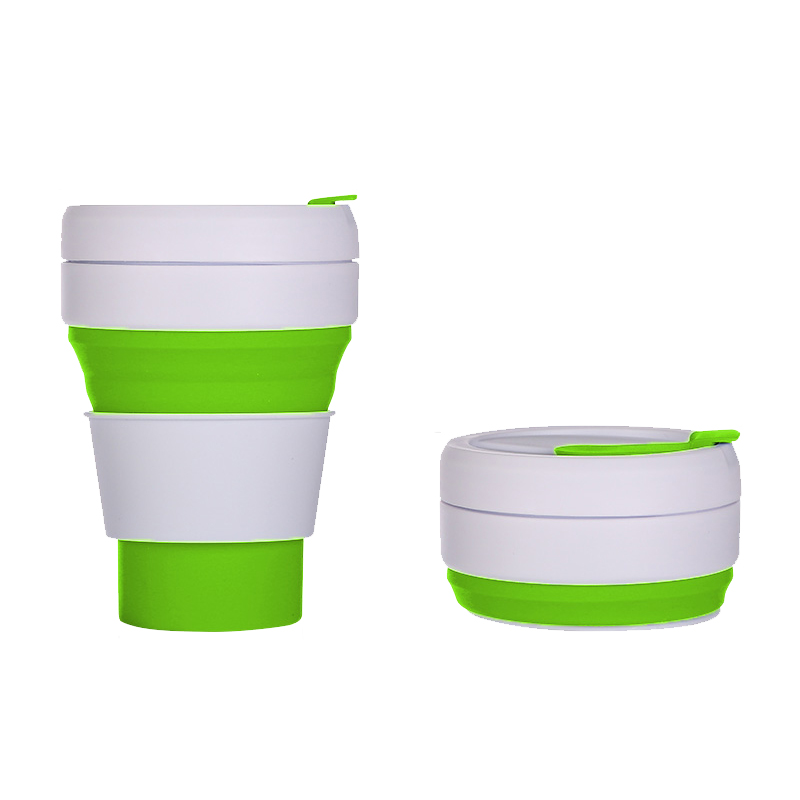
Ask any production manager what happens to the lowest unit price after the first few thousand cycles, and you will hear the same story. It works in the quote, on the spreadsheet, and maybe in the pilot lot. Then the tool starts to wear, the supplier's margin gets thin, and every small change becomes a conversation about money.
The drift shows up as 'unexpected' adjustments: a tighter tolerance here, a revised packaging spec there, a batch that passes incoming QC but fails in the field. None of these were in the original unit price because none of them were anticipated in the bid. Yet each one is a real cost that lands back on the buyer, usually after the contract is locked and the line is waiting.
Suppliers who stay in business through a full production run almost never win on the cheapest first quote. Their price includes realistic yield loss, maintenance downtime, and enough margin to absorb normal variation. That makes them look 10 percent higher at the bid stage, but over 100,000 units the math flips. The low bid becomes a series of exceptions and expedites, while the higher, stabler price quietly holds.
The Silicone Seal Problem Nobody Puts in the Spec Sheet
Every silicone seal datasheet lists elongation, tensile strength, and temperature range. What it won't tell you is that some formulations slowly release low-molecular-weight silicone oils over their service life. Those oils migrate into surrounding paint, stucco, or even window films, creating a nearly invisible residue that repels any future coating. Once that happens, repainting becomes a guessing game: sanding, solvent wiping, and priming rarely fix the issue completely, and the stain can reappear months after fresh paint goes on.
The worst part is that the problem doesn't show up in accelerated lab tests. A sealant can pass every ASTM weathering cycle and still bleed silicone plasticizer onto a porous substrate after a few years of thermal cycling. Contractors only discover it when a homeowner tries to repaint a facade and the new coat fisheyes or peels in a halo around every joint. By then the warranty period is over, and the spec sheet's silence becomes an expensive lesson.
There are ways to reduce the risk, but they require asking questions that most project documents don't address. For example, a low-bleed or neutral-cure silicone can limit migration, but these grades often cost more and aren't stocked by every distributor. If the substrate is porous or will be painted later, an architect should request third-party bleed test data rather than relying on the standard data sheet. Otherwise, the sealant becomes a slow-release contaminant that nobody budgeted for.
How to Spot a Broker Posing as a Factory
Ask for a live video tour of the production floor, not just a pre-recorded clip. A real factory will be able to walk you through active lines, show raw material storage, and even point out current work-in-progress. Brokers often hesitate or show only a small showroom with no machinery running.
Request documents like the business license and export records, then cross-check the address with the actual production site. If the company name on the invoice doesn't match the factory gate or the location keeps shifting between communications, that's a red flag.
Pay attention to how they talk about production capacity and lead times. A broker tends to promise unlimited capacity and instant customization because they don't control the real schedule. A factory will tell you about mold costs, minimum order quantities, and current line commitments without hesitation.
Designing for Assembly: The Difference Between a Sample and a Scalable Product
A prototype is built to prove a concept, not to survive an assembly line. In the sample stage, parts are often hand-fitted, fasteners are whatever is nearby, and tolerances are forgiving because a skilled technician can finesse every joint. The goal is function, not repeatability. This works beautifully for one unit, but it hides a dangerous illusion: what feels easy to assemble once can become a nightmare when repeated a thousand times.
Scaling a product forces a different conversation about design. Every extra screw, every ambiguous orientation, every part that requires a jig or a special tool adds seconds, and seconds multiply into hours across a production run. Designers start asking uncomfortable questions: Can this bracket be molded into the housing? Can these two wires become one flex circuit? Can we use snap fits instead of adhesives? The sample didn't care about these things; the scalable product lives or dies by them.
The real difference shows up in tolerance stacks and operator fatigue. A hand-built sample can hide a half-millimeter misalignment because the builder simply nudges it into place. On a moving line, that same misalignment causes jams, scrap, or inconsistent torque. Products designed for scalable assembly are often simpler than their prototypes—fewer parts, clearer orientation cues, self-locating features—not because simplicity is elegant in the abstract, but because complexity costs money every single cycle.
What Actually Happens When You Change the Bottle’s Diameter
A wider neck doesn’t just make the pour faster; it changes the entire rhythm of the liquid leaving the bottle. With a broad opening, water or wine falls in a thick, chunky column, pulling air in through the same space almost immediately. That incoming air creates a chugging sound as pockets break up the flow. You get more oxidation on the way out, which can be welcome for a young red wine but harsh for a delicate white.
Narrow the bottleneck and the stream becomes tight and laminar. The liquid slides out more quietly and with less splashing, because air has to slip past in smaller sips. This slows the pour but keeps dissolved aromas intact a little longer. It also means you can direct the stream more precisely, something bartenders count on when layering drinks.
There’s a less obvious effect too: changing the diameter shifts the balance between surface tension and gravity. A very small opening can make the liquid cling to the rim and dribble down the side, while a very wide one allows the whole cross-section to exit at once. That’s why some bottles feel like they’re fighting you, and others dump their contents with a single tilt.
FAQ
Most brands assume any food-grade silicone or PP will work, but the failure point is usually the telescopic joint. You want platinum-cured silicone for the collapsible rings because it resists fatigue cracking better than peroxide-cured alternatives. The rigid sections should use Tritan or high-clarity polypropylene with a notched impact rating above 20 kJ/m². If a factory quotes a lower price, they are often substituting standard PP that turns cloudy after 50 dishwashing cycles.
Leak-proofing is not just about O-rings. The real secret is controlling the compression set of the sealing gasket. A good manufacturer specifies a gasket material with a compression set under 15% after 72 hours at 70°C. The telescopic threads also need a slight interference fit of 0.2-0.3mm, not a flat contact. Without that, micro-gaps open up after the first few hundred cycles.
Expect to pay for at least four to five precision molds: two for the rigid shells, one or two for the collapsible sections, and one for the lid assembly. A realistic total tooling budget is $15,000-$30,000 for a three-stage telescopic design, depending on cavity count. Lead times are rarely under 35 days for the first samples. The hidden cost is the secondary machining for the sealing grooves; if a factory says they can skip that, run.
The most common late-stage defect is delamination at the bond between the rigid collar and the flexible body. It looks fine on the prototype, but after 2,000 extension cycles or UV exposure, the adhesive fails. Another one is silicone blooming, which leaves a sticky film on the collapsed sections. A reliable factory tests the assembled bottle for at least 5,000 open-close cycles and checks for shore hardness drift before shipping.
At minimum, require FDA 21 CFR for food contact and LFGB if you plan to sell in Europe. But for a telescopic design specifically, ask for a migration test report for the silicone sections under repeated stress. Many standard silicone parts pass migration tests when static, but release small amounts of siloxanes after repeated stretching. Also check for BPA-free certification on the polycarbonate alternatives, though Tritan already covers that.
The functional differentiation is in the locking mechanism. Most cheap bottles use a simple twist-lock that loosens over time. A better design uses a spring-loaded button with a hard stop at each extension point, which adds about $1.20 to unit cost but cuts return rates significantly. Another angle is the mouth opening: a wide-mouth telescopic bottle is harder to mold but much easier to clean, which matters for reusable bottle buyers.
Most factories will quote 1,000 to 2,000 pieces, but that is for stock designs with logo printing. For true custom tooling and a unique telescopic geometry, you are looking at 3,000 to 5,000 units minimum. The reason is the assembly labor: each bottle needs manual alignment of the collapsible rings, and the rejection rate during assembly runs 5-8% until the line is optimized. Small runs simply cannot absorb that waste.
Ask to see video of their fatigue testing rig, not just pictures of samples. Specifically ask how they measure the extension force after 1,000 cycles, because a drop in extension force means the rings are losing memory. Also request a copy of their internal specification for the silicone durometer range (should be 50-60 Shore A). If they cannot provide these within a few days, they are likely brokering the order to another factory.
Conclusion
When you start vetting telescopic water bottle suppliers, the prototype stage tells you more than any certificate or showroom tour. A factory that truly understands collapsible design will push back on wall thickness, thread pitch, and the way the nested rings lock together. If they simply nod and send a shiny sample, you are likely dealing with a trading company. Brokers often hide behind low unit prices that magically inflate after the first production run because the initial quote ignored real material shrinkage, tolerance stacking, and the labour involved in manual assembly. Brand owners who skip a pilot run end up discovering that the cheap quotation was never buildable at scale.
The most common failure point is the silicone seal. It is rarely specified in enough detail: durometer, compression set, food-grade cure system, or how it behaves after repeated collapsing cycles. A seal that works on a bench sample can leak after three weeks of daily use if the groove dimensions drift. Changing the bottle’s diameter seems minor, but it cascades into new moulds for the seals, altered locking tabs, and a complete rethink of the assembly sequence. Designing for assembly means every snap, fold, and thread must be repeatable on a busy production line, not just in a craftsman’s workshop. Factories that own this problem will show you the fixtures, the inline leak test, and the rejected parts bin. That honesty is the real manufacturer secret.
Contact Us
Contact Person: Cecilia
Email: [email protected]
Tel/WhatsApp: 8619057488653
Website: https://silwatbottle.com