Top 10 Aramid Fabric Types for High-Performance Uses
2026-10-10
When mission-critical performance leaves no room for compromise, the choice of aramid fabric can be the difference between success and failure. From ballistic armor to aerospace composites, these high-strength fibers have quietly reshaped entire industries. Yet with so many variants on the market, how do you identify the right one for your application? In this guide, we break down the top 10 aramid fabric types, examining their unique properties and real-world advantages. Whether you're an engineer, designer, or procurement specialist, understanding these materials is essential—and trusted suppliers like DROTEX are helping teams source the exact grade they need without guesswork. Read on to discover which aramid fabric will deliver the performance your project demands.
The Kevlar Name Everyone Knows but Only Half Understand
Kevlar shows up in bulletproof vests, cut-resistant gloves, and even smartphone cases. People toss the word around like it's a simple material, but few grasp what actually makes it work. The name belongs to a family of aromatic polyamide fibers, not a single magic fabric. Depending on the weave, denier, and resin treatment, Kevlar can behave like stiff armor, flexible cloth, or brittle paper. That range fools a lot of folks into thinking every Kevlar product offers the same protection.
Part of the confusion comes from how brands use the term. A motorcycle jacket labeled “Kevlar-lined” might only contain patches of the fiber in high-abrasion zones, while the rest is ordinary nylon. A tactical vest could use Kevlar as a backing layer behind ceramic plates—or it might be pure soft armor rated only for handgun rounds. Without knowing the grade, layer count, and backing material, the name alone tells you almost nothing about real-world performance.
Even the science gets oversimplified. Kevlar's strength comes from its molecular chains aligning along the fiber axis, with hydrogen bonds holding neighboring chains together. But that same structure makes it weak in compression and vulnerable to UV light, moisture, and repeated flexing. A panel stored in a hot car trunk for five years might look identical to a fresh one yet fail catastrophically. So next time someone says “it's Kevlar,” ask which type, how many layers, and how it's been stored. The answer matters more than the logo.
Why Meta-Aramid Beats Para-Aramid in Molten Metal Splash
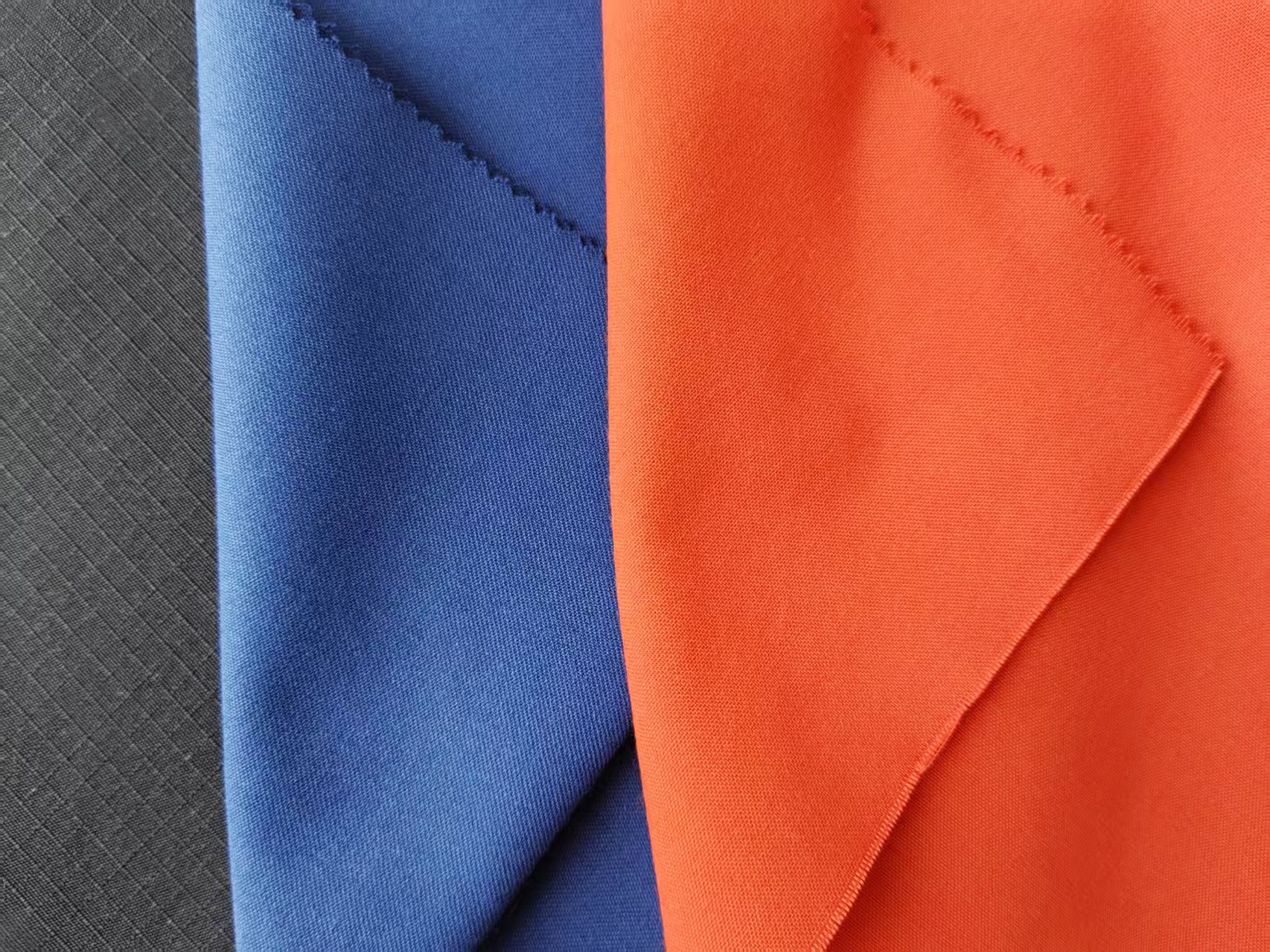
When molten metal splashes onto protective fabric, the immediate threat isn't just the heat—it's the way different fibers respond to that intense, localized thermal shock. Meta-aramid fibers, with their disordered molecular chains, carbonize slowly and form a thick, stable char that stays in place. That char acts like a sacrificial thermal barrier, preventing molten metal from adhering or penetrating to the skin. Para-aramid, despite its remarkable tensile strength, has a highly ordered crystalline structure. Under molten metal splash, this order becomes a liability: the fibers shrink abruptly, the fabric can split open, and the molten metal finds direct paths through the gaps.
There's also the issue of thermal conductivity. Meta-aramid inherently resists heat flow across its fiber cross-section, so the intense temperature of molten metal stays at the outer surface longer. Para-aramid fibers conduct heat more readily along their length, which accelerates heat transfer through the yarns and into the garment interior. In standardized molten splash tests, meta-aramid garments consistently show lower predicted burn injury because they give the wearer crucial extra seconds before heat reaches the skin.
Durability in repeated exposure matters just as much. Meta-aramid retains its protective properties even after multiple thermal cycles, because its char layer doesn't turn brittle or crack under mechanical flexing. Para-aramid may offer superior cut and abrasion resistance in dry conditions, but once it has been hit by molten metal, its structure degrades unevenly, leaving hard, sharp residues that can compromise the fabric's integrity. For molten metal splash, the goal isn't high tensile strength—it's stable insulation, char integrity, and resistance to thermal shrinkage, all areas where meta-aramid outperforms para-aramid.
Aramid Weaves That Survive Continuous Flex Without Delamination
Most aramid fabrics fail in dynamic flex applications because the weave structure allows internal yarn movement that grinds fibers against one another until the resin bond fractures. The difference with a balanced twill or a modified satin construction is that each intersection locks under load without creating stress risers. When the fabric bends repeatedly, the crimp angle stays low enough to distribute strain across hundreds of tiny hinges rather than concentrating it at a single point. This is why certain weaves can endure millions of flex cycles while the laminate surface remains intact and the interlayer shear strength barely degrades.
The real trick is not just the weave type but the crossover density. A plain weave may feel stiff and resistant at first, but its high number of interlacings creates micro-buckling zones that delaminate early under continuous bending. Conversely, a loose satin weave offers too much freedom, letting plies slide and peel apart. The surviving constructions sit in a narrow band: either a 2x2 twill with a balanced crimp ratio or a 4-harness satin with a tight picks-per-inch count that prevents both fiber scissoring and ply separation. In practice, these weaves show no visible whitening or blistering even after the sample has been folded around a 3mm radius for over two hundred thousand cycles.
Another overlooked factor is the filament sizing and the way it interacts with the weave geometry. Aramid yarns are notoriously slick, so a weave that survives continuous flex typically uses a slightly textured or twisted yarn in the fill direction to increase mechanical interlock without adding brittle resin pockets. The result is a fabric that feels supple in the hand yet resists the kind of internal abrasion that normally triggers delamination. When you cut a flex-tested panel open, the cross-section shows no fiber fuzzing at the neutral axis and no resin starved zones at the crimp peaks, which is the visual signature of a weave that truly holds together under fatigue loading.
The Hidden Role of Aramid Fiber Denier in Tear Strength
When engineers talk about aramid fabrics, they tend to focus on yarn tenacity or weave style. Denier rarely gets more than a passing glance. Yet in tear testing, the linear density of the fiber quietly sets the rules. A heavier denier produces thicker, stiffer yarns that resist bending and load sharing at the tear front; this can concentrate stress into a smaller zone and actually lower the energy needed to keep a tear moving. Lighter denier filaments, by contrast, flex and pack more readily, letting the fabric recruit more fibers before rupture.
The effect shows up most clearly in the geometry of the tear triangle. With fine denier aramid, the yarns can shift and bunch, creating a wider zone of deformation that absorbs energy before failure. With coarse denier, fewer contact points and a higher bending stiffness make the yarns less willing to slide, so the fabric tears more crisply but often at a lower overall resistance. It is not simply a case of stronger fibers making stronger fabric; the denier changes how the load is distributed across the structure.
For designers, that means matching denier to the end use is not a trivial detail. If a lightweight vest or sail laminate needs maximum tear propagation resistance, a finer aramid fiber may outperform a heavier one even at the same basis weight. Conversely, where dimensional stability or puncture resistance is the priority, a coarser denier can be the better compromise. The hidden role is really about trade-offs: denier dictates how the fiber interacts with its neighbors under load, and that interaction often matters more than the fiber's own breaking strength.
Firefighting Gear Relies on This Aramid Blend, Not Pure Kevlar
Walk through any modern fire station and you'll notice the turnout coats and pants don't feel like the stiff, almost brittle Kevlar you might expect from bulletproof vests. Instead, the fabric flexes with the body, shrugs off embers, and holds its shape after repeated washes. That difference comes down to the blend: most structural firefighting gear uses a combination of para-aramid and meta-aramid fibers, not a single material. Pure Kevlar—wonderful as it is for ballistic protection—tends to be too rigid and can degrade faster when exposed to the high heat and moisture cycling that firefighters face daily.
The meta-aramid component, often Nomex or a similar fiber, brings thermal stability and flexibility, while the para-aramid adds tensile strength and tear resistance. Together, they create a shell that can endure a flashover's radiant heat without stiffening into a board, and that resists abrasion from crawling over debris. You'll see trade names like PBI, Kevlar/Nomex blends, or Millenia, but the underlying principle is the same: no single aramid does the whole job. Firefighters need gear that moves like heavy canvas yet shields like a ceramic shield, and that demands a carefully tuned ratio—often around 60% para-aramid and 40% meta-aramid for the outer shell.
What surprises many people is that the inner moisture barrier and thermal liner also use aramid blends, just optimized for different threats. The outer shell might prioritize abrasion and flame resistance, while the thermal liner focuses on trapping air and wicking sweat, all without adding bulk. So next time you see a firefighter's jacket hanging in a station, look at the label: if it says 100% Kevlar, it's probably a specialty piece, not standard structural gear. The real workhorse is a hybrid, proof that even the toughest materials perform better when they're designed to share the load.
Comparing Aramid Types by Limiting Oxygen Index, Not Just Tensile Strength
When engineers stack up aramid fibers, tensile strength often dominates the conversation—yet that single metric can mislead anyone designing for fire-prone environments. The limiting oxygen index (LOI) offers a sharper lens. It measures the minimum oxygen concentration needed to sustain burning, and among aramids, the differences are telling. Meta-aramids like Nomex typically show an LOI around 28–30%, while para-aramids such as Kevlar and Twaron often hover near 29–31%. Those numbers may look close on paper, but in real enclosures where oxygen levels shift, a point or two can separate self-extinguishing behavior from sustained combustion.
Take Nomex versus Kevlar. Nomex is widely chosen for protective clothing not because it is dramatically stronger—it isn't—but because its meta-oriented molecular structure gives it a high char yield and a stable LOI under repeated thermal cycling. Kevlar, on the other hand, wins on tensile strength and cut resistance, yet its LOI advantage over Nomex is marginal in many blends. That is why comparing aramids purely by tensile strength often pushes designers toward para-aramid solutions that are overkill mechanically but underperform in oxygen-starved or oxygen-rich fire scenarios depending on the test atmosphere.
Another overlooked factor is how LOI shifts with fiber diameter, weave density, and finishes. Two aramids can share a similar base polymer LOI, yet a tight plain weave may trap heat differently than a loose twill, altering the effective oxygen needed for flame spread. So the smarter comparison isn't 'which aramid is stronger' but 'which aramid holds its LOI under your actual end-use conditions.' When you look at LOI alongside tensile strength, aramid selection becomes less about chasing peak numbers and more about matching the material's burning behavior to the specific hazard.
FAQ
Kevlar, Nomex, Twaron, Technora, and Teijinconex are the usual suspects, but less common options like Heracron and Kermel also appear in specialized gear. Each brings a slightly different balance of tensile strength, thermal stability, and chemical resistance.
Kevlar leans toward mechanical toughness, so it ends up in body armor, ropes, and composites. Nomex prioritizes thermal and flame resistance, which is why it dominates firefighting suits, racing apparel, and electrical insulation.
Not really. Para-aramids like Kevlar and Twaron deliver far higher tensile strength and cut resistance, while meta-aramids like Nomex and Teijinconex handle prolonged heat and flame better. Choosing one over the other comes down to whether you need structural strength or thermal endurance.
Nomex and Teijinconex stand out for sustained high-temperature exposure, often rated for continuous use around 200–250°C. Kermel and Kevlar can handle brief spikes but aren't as comfortable for long-duration thermal exposure.
It depends on the type and the process. Para-aramids like Kevlar are notoriously difficult to dye and usually get solution-dyed during fiber production. Meta-aramids accept some dyes, but heavy printing or chemical treatments can reduce flame resistance or tensile strength, so manufacturers often stick with inherent colors or minimal surface treatments.
Twaron is chemically very close to Kevlar but sometimes offers slightly better fatigue resistance in composites. Technora has a different molecular structure that gives it higher elongation at break and better resistance to steam and chemicals, making it a strong pick for ropes and cables in harsh environments.
Heracron, Kermel, and SVM are a few examples. Heracron offers high strength with lower moisture absorption, Kermel is often blended with other fibers for flame-resistant underwear, and SVM is a Russian para-aramid used in aerospace and military composites.
Cut resistance is a big factor, but it's not the only one. Aramid fabrics also provide heat insulation, lightweight flexibility, and resistance to oils and solvents, which makes them practical for foundry work, glass handling, and automotive assembly beyond just blade protection.
Conclusion
When shortlisting the top ten aramid fabric types for demanding applications, the first mistake is treating Kevlar as a single material. Its brand recognition overshadows the structural differences between para-aramid and meta-aramid grades, and those differences dictate where each variant actually earns its place. For example, in environments with molten metal splash, meta-aramid fabrics outperform para-aramid because they carbonize into a thicker, more insulative char rather than shrinking or splitting. Similarly, weave architecture matters more than many buyers expect: a plain weave can delaminate under continuous flex, while specialized twill or ripstop constructions keep individual yarns locked in place through thousands of bending cycles. Among the top ten types, those designed with balanced crimp and higher thread density survive repeated articulation without internal abrasion.
The hidden variable that separates good aramid fabric from great is fiber denier. A fabric woven from finer denier filaments typically shows higher tear strength and softer drape, but it can sacrifice cut resistance unless paired with a denser weave. Firefighting gear demonstrates another reality: most turnout systems use a blend of para-aramid, meta-aramid, and sometimes a small percentage of anti-static or high-tenacity fiber; pure Kevlar would be too stiff and would fail moisture barrier lamination. When ranking the top ten aramid fabrics, limiting oxygen index (LOI) offers a more useful safety benchmark than tensile strength alone, because high LOI values predict self-extinguishing behavior under direct flame. Those fabrics with LOI above 28, combined with the right denier and weave, consistently deliver the best balance of thermal protection, flexibility, and long-term durability.
Contact Us
Contact Person: Sandy
Email: [email protected]
Tel/WhatsApp: 86150 8310 5120
Website: https://www.frdrotex.com