
Top 10 Threaded Reinforcing Bar Socket Options for Durable Concrete Projects
2026-10-22
Getting durable concrete projects right often comes down to the small connections you can't see. Threaded reinforcing bar sockets may not grab headlines, but they quietly decide whether a structure withstands decades of stress. Before you settle on a random option, check out our top 10 picks—including trusted names like Sinou—and see which one fits your next pour.
Why Coarse Threads Outperform Fine Threads in Rebar Couplers
Coarse threads tend to hold up better in rebar couplers because they provide a larger contact area per thread, distributing load more evenly across the connection. This reduces the risk of localized stress concentrations that can lead to stripping or premature fatigue. In field conditions where alignment is rarely perfect and debris often finds its way into the threads, the deeper, wider grooves of a coarse profile are far more forgiving than the shallow, closely spaced ridges of a fine thread.
Another practical advantage is installation speed. Coarse threads require fewer turns to achieve full engagement, which matters when crews are working at height or in tight spaces. There is also less chance of cross-threading because the lead-in is easier to feel and correct. Fine threads may look appealing on paper due to their higher theoretical tensile stress area, but in the real world of rebar splicing, the coarse pitch almost always wins on reliability and repeatability.
Finally, coarse threads tolerate dimensional variation better. Rebar ends are often cut with some burr or misalignment, and a coarse thread can still engage without binding. Couplers with fine threads demand near-perfect preparation, which is unrealistic on most job sites. For these reasons, specifying a coarse thread profile for rebar couplers tends to reduce failures and rework over the life of the structure.
Steel Grade Choices That Hold Up Under Cyclic Loading
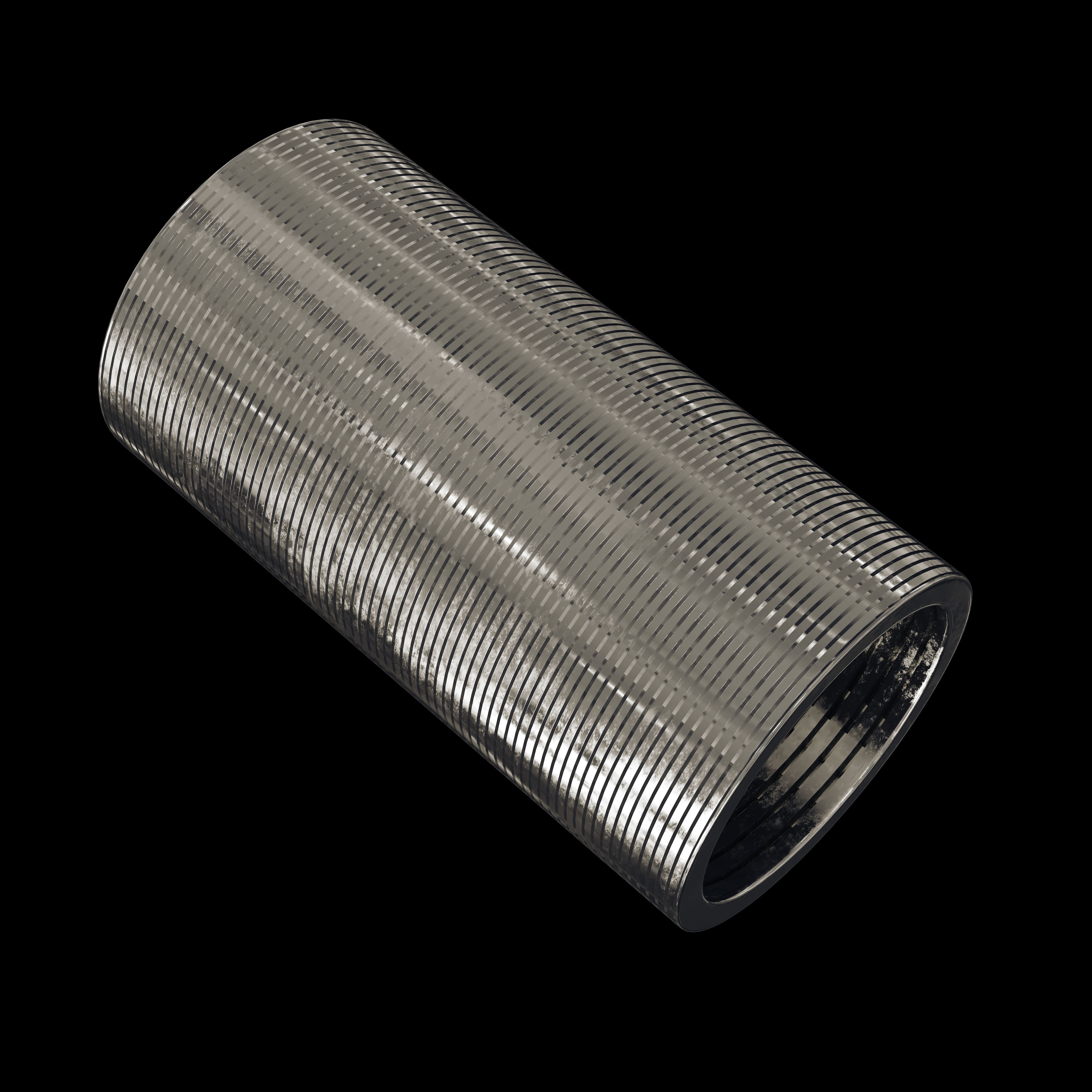
Cyclic loading punishes steel in ways a single static pull never will. Small inclusions or surface imperfections that would go unnoticed in a one-time test can become crack initiation sites once stress cycles start stacking up. For this reason, fully killed steels with low sulfur and phosphorus counts tend to outperform rimmed or semi-killed options in fatigue-prone parts. Grades like AISI 4340 or 4140, when heat-treated to a uniform tempered martensite, hold up well because their microstructure resists the localized slip that gradually deepens microcracks.
At higher cycle counts, the difference between a good grade and a poor one often comes down to cleanliness and residual stress control. Vacuum degassed or electroslag remelted material reduces the non-metallic inclusions that concentrate stress. It is also worth looking beyond the handbook fatigue limit: components that see variable amplitude loading benefit from steels with a high fracture toughness, so a crack that does start has a harder time reaching critical size. In practice, many designers rotate between a few proven choices—4340, 300M, or nitriding grades like 4140—depending on whether the part must also resist wear, corrosion, or impact.
Field Tested Differences Between Epoxy and Hot-Dip Galvanizing
When steel leaves the shop, its true test begins. Over years of sun, rain, salt spray, and mechanical wear, the gap between a well-applied epoxy coating and a hot-dip galvanized layer becomes impossible to ignore. Galvanizing forms a metallurgical bond with the steel itself, so scratches and edges stay protected by sacrificial zinc. Epoxy relies on a physical barrier; once moisture sneaks beneath a chip or crack, corrosion can travel unseen along the steel surface, quietly lifting the paint film.
Field reports from coastal and industrial sites highlight a recurring pattern. Hot-dip galvanized racks, handrails, and structural brackets often show surface oxidation that self-heals over time, with only gradual zinc loss even after a decade of direct exposure. Epoxy-coated equivalents start strong but demand touch-ups after impact damage or UV-driven chalking. In splash zones or areas with standing water, the difference sharpens: galvanized steel tolerates continuous wetting far better, while epoxy failures tend to concentrate at corners and fasteners where film thickness is hardest to control.
Installers and maintenance crews also notice practical trade-offs. Galvanizing requires no cure time and tolerates rough handling during transport, but field repairs are limited to zinc-rich paints that never fully match the original coating. Epoxy offers easier color matching and smoother aesthetics, yet its performance hinges on meticulous surface prep and dry, dust-free application conditions. In real-world comparisons where both systems face the same environment, galvanizing consistently wins for long-term durability, while epoxy remains the go-to when appearance or low initial cost matters more than decades of low-maintenance service.
Getting the Right Fit with Tolerances That Prevent Stripping
Thread stripping rarely starts with the bolt—it starts with a clearance that was never questioned. A Class 2B/2A fit works for general assembly, but when vibration, thermal cycling, or repeated maintenance enters the picture, that standard gap becomes a slow failure point. Instead of reaching for a coarser thread, tighten the allowance itself: shift to a Class 3B/3A combination, keep the pitch diameter within the middle third of the tolerance band, and verify the actual flank engagement with a simple go/no-go set before torque is ever applied.
Tolerance stacking is often overlooked. If the nut's minor diameter drifts toward the high limit while the bolt's major diameter sits at the low limit, contact area drops quickly—and the remaining threads carry more shear than intended. Specify functional gauging, not just dimensional checks, and treat coating thickness as part of the pre-plate calculation rather than an afterthought. A few microns of zinc can turn a borderline fit into a stripping risk, so design around the finished thread, not the pre-plated one.
For joints that get torqued more than once, the same fit rarely survives unchanged. Re-tapping or chasing threads removes the controlled surface layer and opens the tolerance beyond the original spec. Instead, pair a rolled-thread fastener with a controlled-tolerance insert or a prevailing-torque nut rated for the exact engagement length. That keeps the fit stable through repeated cycles without drifting into the range where a single over-torque event strips everything.
Reducing Installation Errors Using Visual Alignment Marks
Misaligned components often trace back to a single root cause: the installer has no clear reference point for where a part should sit before fasteners go in. Adding a printed or laser-etched line, a small notch, or a contrasting color block gives the eye something concrete to match against. This turns a vague “close enough” judgment into a binary check—either the marks line up or they don’t.
The marks work best when they appear on both mating surfaces and remain visible after partial assembly. A short stripe on a bracket and a corresponding stripe on the frame let a technician confirm alignment without reaching for a measuring tool. For irregular shapes or parts that can rotate slightly during tightening, paired arrows or T-shaped markers are often clearer than simple lines.
Even experienced assemblers benefit when marks are designed into the part rather than added as an afterthought. Low-contrast colors, placement under hidden edges, or marks that rub off during handling defeat the purpose. The most reliable approach is to place durable, high-contrast marks near the fastening points, and to train installers to treat any mismatch as a stop-and-recheck condition before final torque.
When Paying More for Stainless Steel Actually Saves Money
The cheapest stainless steel quote usually hides a much larger bill further down the road. In food processing plants, coastal railings, or chemical storage areas, lower-grade alloys start showing pitting and stress cracks within a couple of seasons. Once that happens, you're not just paying for replacement metal—you're covering surface preparation, welding, downtime, and sometimes product recalls. A higher upfront cost for a grade like 316 or duplex stainless shifts that repair cycle from every few years to every few decades.
There's also a quiet savings in skipping routine maintenance. Low-cost stainless often needs passivation treatments, rust converters, or constant polishing to look acceptable. Premium alloys resist chloride attack and industrial fallout well enough that a simple wash keeps them functional. Over a ten-year window, those avoided labor hours and chemical treatments often exceed the initial difference in material price.
The real comparison belongs on a spreadsheet, not a purchase order. If a $40 fastener fails on a rooftop HVAC unit, the service call alone might cost $300 before the part is touched. Buying the $12 marine-grade bolt instead of the $4 hardware-store version no longer looks like an expense—it looks like insurance with a measurable return. In harsh environments, paying more for the right stainless steel is less about prestige and more about avoiding predictable failures.
FAQ
A threaded socket creates a direct mechanical connection between two bar ends, so forces transfer through the coupler instead of relying on concrete bond around an overlap. That reduces rebar congestion, cuts material waste, and gives more predictable behavior in heavily reinforced sections.
Look for parallel-thread systems that have passed cyclic and low-cycle fatigue tests. Tapered threads are quicker to assemble, but they can be more sensitive to alignment and may not perform as well under repeated load reversals unless specifically rated.
Most do. You either cut threads directly into the rebar ends or attach a threaded stud using a cold-forging or friction-welding process. Some systems use couplers with internal wedges, but true threaded sockets need matching threads to reach full tensile capacity.
Stainless steel sockets are the safest for marine environments, but they cost more. Hot-dip galvanizing works for moderate exposure, and zinc-nickel plating offers a thinner profile with good salt spray resistance. Always match the coupler material to the rebar to avoid galvanic couples.
One advantage of threaded sockets is that you can often visually confirm the bar is seated to the correct depth through inspection holes or witness marks. Torque checks with a calibrated wrench add another layer of verification before concrete covers the joint.
Under-tightening or stopping because the bar 'feels' tight before full thread engagement. Mixing components from different manufacturers is another common mistake, because thread pitch and tolerances are not universal across brands.
If they are designed and tested to the same standard, yes. Quick-connect versions often use a tapered or snap-in wedge that locks under load, but they still need proper alignment and full engagement. The labor savings are real, but you trade some ability to disassemble or adjust after installation.
Conclusion
When a concrete project demands reliable load transfer between reinforcing bars, the choice of threaded socket often gets reduced to a simple spec check, but the real differences show up in the thread profile. Coarse threads consistently outperform fine threads because they allow faster engagement, shed concrete slurry more easily, and resist cross-threading on muddy job sites. Pair that with a steel grade selected for cyclic loading—typically a modified 1045 or a micro-alloyed equivalent—and you get a socket that survives the repeated stress reversals that fine-threaded, lower-grade alternatives simply cannot handle. Field testing between epoxy-coated and hot-dip galvanized sockets reinforces the point: epoxy offers excellent initial bond and cost control, but it chips under rough handling, whereas hot-dip galvanizing sacrifices a bit of dimensional tolerance for long-term corrosion resistance in aggressive soil or marine exposure.
Beyond material and thread choices, installation failures often trace back to poorly controlled tolerances and lack of visual feedback. A socket with tight but realistic pitch-diameter tolerances prevents the partial engagement that leads to stripping under tension, while visual alignment marks—like a circumferential groove that disappears when the bar bottoms out—cut installation errors dramatically, especially for crews working in low light or with gloved hands. The stainless steel option rarely wins on upfront bid price, but in parking structures, water treatment plants, or coastal foundations where maintenance shutdowns cost more than the hardware itself, paying more for 316 stainless sockets actually saves money over the structure's life. Those are the distinctions that separate a short-term fix from a durable connection.
Contact Us
Contact Person: HaiYan
Email: [email protected]
Tel/WhatsApp: +86 18957325588
Website: https://www.senyoubeton.com/