
Top Dry-Type Transformer Options for Reliable Power Distribution
2026-08-16
When a data center goes dark or a production line halts, the culprit is rarely dramatic—it’s often an overlooked transformer. Dry-type transformers eliminate flammable liquid risk and cut maintenance, but not all are built for the job. Among the top options for reliable power distribution, Chang Song stands out by combining robust insulation, low partial discharge, and compact design that fits modern switchgear. This post breaks down what to look for and which models earn their place in critical infrastructure.
Cast Resin Transformers That Shrug Off Washdowns and Humidity
Washdown areas are brutal on ordinary dry-type transformers. The cast resin design eliminates the ventilation gaps and air channels that normally invite moisture inside. Windings get fully encapsulated in a solid epoxy block, so there's no exposed surface for water to collect on. You can aim a hose right at the housing after a production run and the internals stay bone dry.
Humidity is just as big a threat as direct spray. In food plants or coastal facilities, condensation forms when warm air hits cooler equipment overnight. These transformers don't care. The resin casting has no hollow spaces where dew can settle, and the thermal properties stay stable even when the air is saturated. That means no morning dry-out cycles or moisture-related insulation breakdown.
What really sets them apart is how little attention they demand. Since there's no rust-prone core exposed to damp air, you avoid the pitted laminations and creeping corrosion that shorten transformer life in wet environments. For maintenance teams, that translates to fewer unscheduled shutdowns and a transformer that simply keeps working through wash cycles, steam, and seasonal dampness.
Vacuum Pressure Impregnated Windings With Minimal Partial Discharge
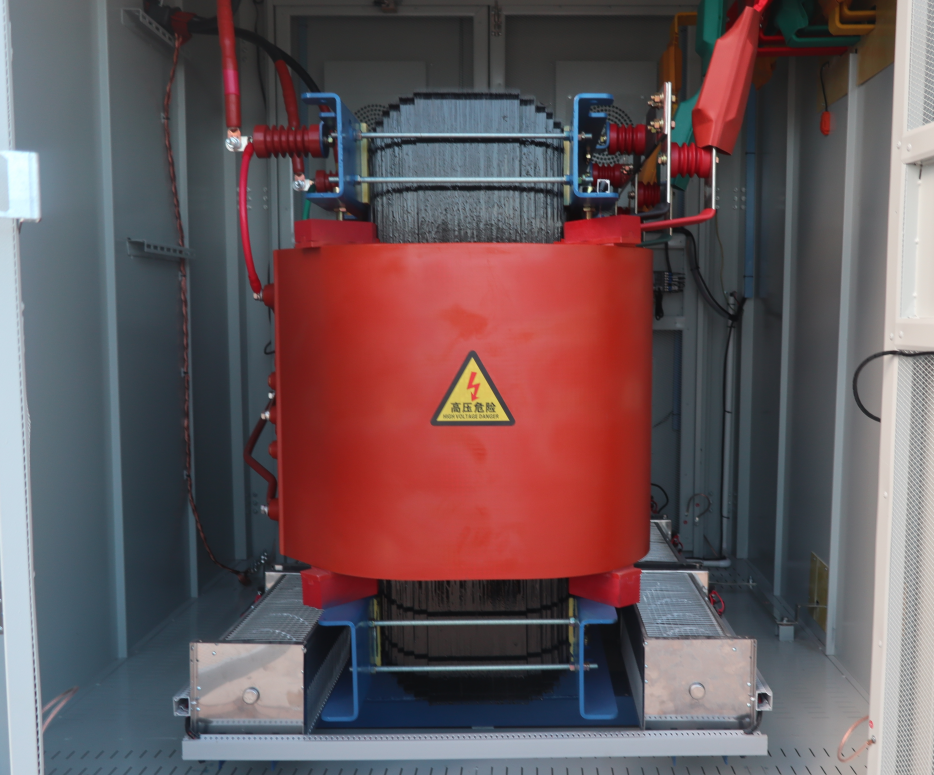
The main source of partial discharge in form-wound coils is rarely the insulation material itself but rather the tiny air pockets and voids that remain between layers of mica tape, strand insulation, and slot liners. Vacuum pressure impregnation tackles this problem at its root by first pulling a deep vacuum to draw out trapped air and moisture from the winding structure. Only after the pressure has stabilized at a low level is the resin introduced, ensuring that the liquid reaches into the smallest crevices rather than simply coating the outer surface.
What separates a reliable VPI cycle from a marginal one often comes down to resin viscosity, winding temperature, and the length of the pressure hold. If the resin is too thick or the winding too cold, penetration slows and voids can remain hidden deep in the coil. Good process control keeps the resin warm enough to flow freely but not so hot that it begins to gel before filling the entire insulation matrix. This balance is especially critical for high-voltage machines, where even a millimeter-sized void can become a discharge site under normal operating stress.
Windings processed this way show a noticeably higher partial discharge inception voltage and maintain that margin over years of thermal cycling and mechanical loading. Because the resin bonds the conductors, groundwall insulation, and slot portion into one solid mass, vibration and abrasion are also reduced. The result is a quieter electrical signature during testing and a winding that holds up better in damp or contaminated environments, both of which translate to longer service life for motors and generators operating above 6.6 kV.
Open Wound Units for Budget-Conscious Indoor Distribution
For clinics and small practices working with tight square footage and tighter budgets, open wound units offer a practical middle ground. They skip the heavy cabinetry and built-in fixtures that drive up cost and installation time, instead using modular trays, clear lids, and simple rail systems that fit onto standard shelving or countertops. The result is a workspace where dressings, saline, gauze, and disposable instruments stay within reach without demanding a dedicated treatment room or a large upfront purchase.
What sets these units apart in cost-sensitive settings is how they handle restocking and reconfiguration. Because the compartments are open rather than locked behind drawers or doors, staff can see inventory levels at a glance, which cuts down on over-ordering and last-minute shortages. They also tend to use lighter materials like powder-coated steel or high-impact polymer, reducing shipping weight and making it feasible to set up multiple stations in a hallway alcove, a storage closet converted to a minor procedure area, or even a mobile cart for house calls.
Indoor distribution here often means moving supplies from a central stockroom to satellite points of care, and open wound units adapt to that flow without requiring specialized tools or training. A community health fair, a school nurse's office, or a rural outreach van can all benefit from the same unit—just add a wall mount or a set of locking casters. The open design also simplifies infection control audits, since every item is visible and accessible for expiration date checks, helping facilities stay compliant without spending extra on inventory management software.
Epoxy-Encapsulated Cores for Corrosive and Coastal Environments
In marine and coastal installations, standard magnetic cores deteriorate quickly when exposed to salt spray, high humidity, and temperature swings. Epoxy encapsulation creates a dense, non-porous barrier that keeps chlorides and moisture away from the core material, directly extending service life in these harsh settings.
The encapsulation process usually involves vacuum impregnation or precision molding with a filled epoxy system chosen for its adhesion, thermal cycling resistance, and low moisture uptake. A well-applied layer not only prevents rust and surface degradation but also dampens mechanical vibration and improves dielectric strength. Importantly, the magnetic performance of the core remains stable because the epoxy is non-magnetic and the coating thickness is carefully controlled to avoid introducing unwanted air gaps.
Typical applications include offshore wind converters, shipboard power supplies, and coastal industrial drives where downtime from corrosion is costly. By opting for epoxy-encapsulated cores, engineers can reduce maintenance intervals, avoid premature failures, and maintain consistent inductance under fluctuating environmental conditions.
K-Factor Rated Models Sized for Harmonic-Heavy Loads
When a facility runs a lot of switch-mode power supplies, VFDs, or LED lighting, the neutral and phase conductors see current waveforms that are far from sinusoidal. Standard transformers simply weren't built for that kind of abuse. K-factor rated models, however, are wound and sized with those extra eddy-current and stray losses in mind. The K-rating itself (K-4, K-13, K-20) tells you how much harmonic current the unit can tolerate without exceeding its temperature rise limits. Pairing the correct K-factor with the actual measured or estimated harmonic profile of the load keeps things from cooking slowly over time.
Sizing isn't just about picking a bigger kVA either. A K-13 transformer feeding a bunch of desktop computers is one thing; a K-20 on a production line packed with variable-frequency drives is another. The core and coil design, the double-size neutral, the electrostatic shield between primary and secondary—all of that matters when you're dealing with triplen harmonics circulating in the neutral. Oversizing a standard transformer to cope with harmonics often backfires because the extra iron just adds more losses. A properly K-factor rated and correctly sized model does the job without wasting copper, steel, or floor space.
Low-Temperature Rise Designs That Keep Insulation Cooler Longer
Keeping insulation cool is not just about adding more material; it starts with how heat is allowed to build in the first place. Low-temperature rise designs reduce the temperature differential between the winding and the surrounding air or oil, which directly slows the chemical aging of insulation. Even a modest drop of 10°C can double the expected life of many insulating systems, so the goal is to design equipment that never approaches its thermal limit under normal load.
These designs often achieve lower temperatures through a mix of practical choices: using conductors with larger cross-sections to cut I²R losses, selecting core steel with lower specific loss, and arranging cooling ducts so that heat leaves the hot spots quickly rather than pooling around the windings. Some manufacturers also derate the flux density or add extra surface area for convection. The trade-off is typically a slightly larger and more expensive unit, but the return is insulation that stays well below its rated temperature for decades.
In practice, this approach matters most where access is difficult or downtime is expensive. Transformers installed in offshore wind farms, underground vaults, or remote substations benefit from the extra margin because replacement is costly and often impractical. By keeping the insulation cooler from the start, the equipment can tolerate occasional overloads and ambient swings without pushing the insulation into accelerated aging territory.
FAQ
Dry-type transformers eliminate the risk of oil leaks and fire hazards, which matters a lot in hospitals, schools, and underground vaults. They don't require containment pits or periodic oil testing, so installation costs stay lower. The trade-off is typically a slightly higher upfront price and larger footprint for the same kVA, but the safety and environmental benefits often justify that in occupied buildings. Modern designs use cast resin or vacuum pressure impregnated windings that resist moisture and dust, making them reliable even where ventilation is limited.
For tight spaces, look at cast coil transformers with Class F or H insulation. They can run hotter without degrading, so manufacturers can shrink the enclosure size. Ventilated dry-type units with compact core designs and reduced noise levels fit well in mechanical rooms near occupied areas. Some models offer front-only access for maintenance, which saves space against walls. If harmonics are a concern from elevator drives or LED lighting, specify a K-factor rating of K-13 or K-20 to prevent overheating without oversizing the transformer.
Cast resin transformers seal the windings in an epoxy mixture, which blocks moisture, chemicals, and conductive dust. This makes them a solid choice for wastewater treatment plants, textile mills, or coastal facilities with salty air. The encapsulated coils also resist cracking from thermal cycling, so they tolerate frequent load swings without insulation breakdown. Unlike open ventilated units, cast resin designs can operate in high humidity without preheating before energization. Some manufacturers add a quartz-filled resin to improve heat dissipation and partial discharge resistance, extending service life beyond 30 years in demanding conditions.
A practical schedule starts with a visual inspection every six months: check for dust buildup on coils, signs of overheating, or loose connections. Vacuum the enclosure and core ducts annually, but avoid compressed air that can drive debris deeper. Every two to three years, torque bus bar connections and verify insulation resistance with a megohmmeter. For cast resin units, look for cracks or discoloration that might signal partial discharge. Keep cooling fans and temperature sensors functional—test them during scheduled shutdowns. If the transformer sits in an unfiltered environment, consider adding washable intake filters and replacing them quarterly.
Yes, but the enclosure matters more than the transformer type. Standard ventilated dry-type transformers need a weatherproof housing with NEMA 3R or 4X rating, plus space for airflow. Cast resin units can use simpler enclosures because the windings are already sealed. For outdoor installations, ensure the enclosure includes a sloped roof, screened vents, and a space heater to prevent condensation during off cycles. Avoid direct sun exposure in hot climates—adding a sun shield or painting the enclosure light gray reduces internal temperatures. In cold regions, energizing a cold-soaked cast coil transformer doesn't require preheating, unlike some older dry designs.
Start with the connected load in kVA plus future growth—typically 20% headroom. But don't oversize too much, because transformer losses increase with capacity even at light loads. Use a demand meter to find actual peak demand over a week, then apply the appropriate demand factor. For mixed loads with motors, account for starting currents and short-time overloads. Dry-type units can handle occasional overloads up to 150% for short periods if the ambient temperature stays below rated. If the load includes significant harmonics, derate the transformer according to the K-factor; a K-13 transformer could handle only 80% of its nameplate kVA when feeding heavy nonlinear loads.
Temperature class sets the maximum hot-spot temperature the insulation can withstand without accelerated aging. Class H (180°C) insulation allows a transformer to run hotter than Class F (155°C) with the same load, which can mean a smaller core or greater overload capacity. However, hotter operation shortens insulation life roughly by half for every 10°C increase above the rated limit. The insulation system also includes varnish or resin that binds windings and resists moisture. Look for units with UL-listed insulation systems and a 220°C ultimate temperature rating—these handle unusual overloads and high ambient conditions without premature failure.
Yes, but standard transformers may overheat if the harmonic content exceeds about 5% of the load current. The solution is a K-rated transformer, which has a reinforced neutral conductor and a core designed to tolerate additional eddy current losses. For drives with high harmonic distortion, a K-20 rating is often sufficient; extreme cases with data center UPS loads may need K-30. But also look at the harmonic profile: third-harmonic currents (triplens) return on the neutral, so a double-sized neutral bus is critical. Coupling a K-rated transformer with an active harmonic filter at the panelboard can reduce stress on the transformer and improve overall power quality.
Conclusion
Dry-type transformers remain a cornerstone of dependable power distribution, and the choices available today reflect a strong focus on adapting to real-world environmental and load challenges. Cast resin units, for example, are built to withstand frequent washdowns and high humidity without compromising insulation integrity, making them a go-to for food processing, beverage plants, and other sanitary settings. Similarly, vacuum pressure impregnated windings deliver remarkably low partial discharge levels, which translates into quieter operation, reduced insulation stress, and a longer service life. These two approaches alone cover a wide range of facilities where moisture, dust, or cleanability is a daily concern, giving maintenance teams one less thing to worry about.
For those watching installation budgets, open wound transformers offer solid indoor performance at a lower upfront cost, while epoxy-encapsulated cores provide long-term protection in corrosive or coastal air. Harmonic-heavy environments benefit from K-factor rated models sized to handle non-linear loads without overheating, a common issue in modern buildings filled with drives and LED lighting. Add low-temperature rise designs into the picture, and you get insulation that runs cooler and lasts noticeably longer. Taken together, these options give engineers and facility managers a practical toolkit for matching dry-type transformers to the specific demands of their power distribution systems, whether the priority is cost, resilience, or operating efficiency.
Contact Us
Contact Person: Tonglun Chen
Email: [email protected]
Tel/WhatsApp: 8618906642555
Website: https://www.cncsele.com