Top Porcelain Paving Tiles for a Durable and Stylish Outdoor Space
2026-09-12
When it comes to crafting an outdoor space that can handle the elements without sacrificing style, the choice of paving tiles often gets overlooked. Many homeowners settle for dull, crack-prone slabs simply because they haven't discovered a better alternative. That's where Beata Ceramics steps in—offering top porcelain paving tiles that promise both resilience and a refined aesthetic. Read on to find out which options stand out for your next patio or garden makeover.
Why Porcelain Outlasts Standard Pavers in Freezing Conditions
Standard pavers—whether concrete, clay brick, or many natural stones—carry a hidden vulnerability in cold climates. Their surfaces are riddled with microscopic pores that soak up rain, snowmelt, and groundwater. When temperatures drop below freezing, that trapped water turns to ice and expands by roughly 9%. This expansion exerts intense internal pressure inside the paver, slowly forcing tiny cracks apart. Over repeated freeze-thaw cycles, those cracks widen, the surface begins to spall or flake, and the paver eventually fails from the inside out.
Porcelain takes a fundamentally different path. It is fired at extremely high temperatures until the raw materials vitrify, forming a dense, glass-like body with almost no open porosity. The water absorption rate for true outdoor porcelain pavers typically sits below 0.5%, often closer to 0.1%, compared to 5–10% for standard concrete pavers. With no meaningful ingress points, moisture cannot penetrate deep enough to freeze and generate destructive pressure. Even the micro-cracks that might appear on the surface do not become pathways for water, so freeze-thaw cycling has little to act upon.
In practice, this means porcelain pavers survive hundreds of freeze-thaw cycles without cracking, flaking, or losing their surface finish. They retain their color and texture through harsh winters, whereas common pavers may start showing edge deterioration within the first few seasons. For driveways, patios, and walkways in regions with repeated hard frosts, that difference translates directly into decades of stable performance rather than annual patching and replacement. The higher upfront cost of porcelain is offset by the near absence of cold-weather damage, low maintenance needs, and a surface that remains safe and slip-resistant even when wet or icy.
Finding the Right Grip Without a Rough Industrial Look
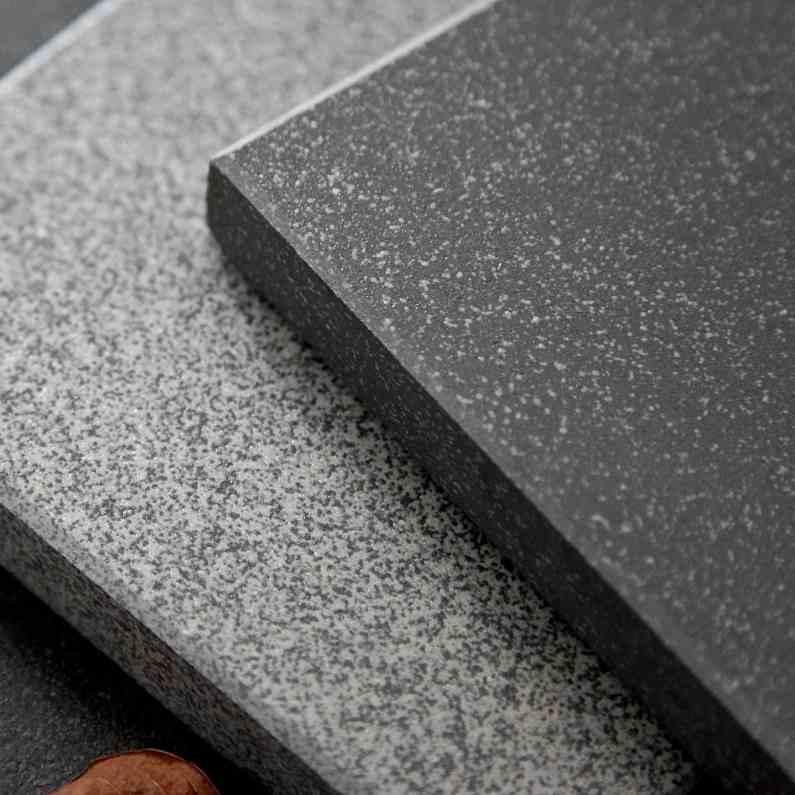
The problem with most grip treatments is that they lean on deep knurling or bead-blasted metal, which reads as harsh and utilitarian. A better approach is to work with subtle grain patterns, micro-etched ridges, or a low-contrast matte finish. These details create enough friction for a secure hold without turning the object into something that looks like it belongs on a workshop bench.
Pay attention to how the hand actually meets the surface. Gentle concave profiles, softly rounded edges, and a light crosshatch placed only where fingers land can provide real control. From a short distance, these choices almost disappear, but the moment you pick the object up, the difference is immediate. That quiet shift is what separates a considered design from a purely mechanical one.
Material matters just as much as texture. A finely textured polymer, lightly sanded wood, or unpolished anodized aluminum can all deliver slip resistance while keeping the overall look clean. Resist the urge to layer multiple treatments; one consistent, understated surface will feel more intentional than three competing patterns. The aim is a grip that feels deliberate, not like an afterthought from a heavy machinery catalog.
Thickness and Strength Ratings You Can Actually Use
A thickness rating only tells you the space a material takes up, not how it behaves under real traffic. For rubber mats, a 3/8-inch product with poor rebound can feel flimsier than a dense 1/4-inch mat, because the binder and rubber grade matter more than the listed gauge. Check the durometer and tear resistance alongside the thickness instead of relying on the big number alone.
Strength ratings drift into useless territory when they come from a single static test. If you plan to drop free weights or park a forklift on the surface, ask for the rating after repeated impacts at the same spot, not just a one-time crush test. A 2,000-pound point load might hold once on paper but fail after fifty drops, so match the test method to the way the surface will actually get abused.
Colorfast Finishes That Won't Fade in Direct Sun
Sunlight is relentless on color. Ultraviolet rays snap the chemical bonds inside dyes and pigments, while heat and moisture accelerate the damage. The result is that chalky, washed-out look on awnings, outdoor furniture, and even exterior trim after a single season. A genuinely colorfast finish has to interrupt this chain reaction before it starts, not simply add more dye to compensate.
The most dependable formulas combine two layers of defense. First, they rely on inorganic pigments—iron oxides, titanium dioxide, mixed-metal oxides—because these particles are far less reactive under UV than organic colorants. Second, the binder or clear coat carries UV absorbers and hindered amine light stabilizers. The absorbers convert incoming UV energy into harmless heat, while the stabilizers scavenge free radicals that would otherwise break down the resin and expose pigment to air. Some newer finishes also use nano-scale zinc oxide or cerium oxide, which spreads protection evenly without clouding the surface.
Look for products tested to AATCC 16 or ISO 105-B02 for textiles, or ASTM G154 for paints and coatings. A blue wool rating of 7 or higher generally means the color can withstand prolonged direct exposure with only minor drift. In real terms, a well-formulated finish might shift less than 2 Delta E units after 1,000 hours of accelerated weathering—barely noticeable to the eye. Clean the surface occasionally and avoid waxes or polishes with unknown solvents, since those can undercut the UV shield even when the pigment itself is stable.
Laying Patterns That Make Narrow Patios Feel Wider
Run the paving stones diagonally instead of straight across the narrow dimension. That simple shift pulls the eye along the longest possible sightline, so a cramped side yard stops reading as a bowling alley. If you want the illusion to really hold up, pick rectangular slabs and set them at a 45-degree angle to the house wall; the corners point outward and make the space feel less boxed in.
Another trick is to avoid long, uninterrupted joints that run parallel to the length of the patio. A staggered or herringbone pattern breaks those lines into shorter visual beats, which tricks the brain into reading more width. Mixing two sizes of pavers can help here, but keep the color range tight so the pattern does most of the work instead of turning into visual noise.
If the patio runs alongside a fence or wall, lay boards or pavers perpendicular to that boundary. This pushes movement outward from the house rather than dragging the eye down a narrow corridor. Even a subtle shift—like using a border course that steps outward at intervals—can widen the feel without adding a single square foot.
Quick Cleaning Steps That Keep Tiles Looking Fresh
A quick daily sweep with a microfiber dust mop makes a bigger difference than most people expect. Grit and sand act like sandpaper on tile glaze, especially near entryways and kitchen work zones, so removing them before they get pushed around prevents that dull, worn look. If you have pets, a quick pass with a vacuum using a soft brush attachment picks up hair and dander that would otherwise turn into grime when mopped.
For the weekly wash, skip the heavy bucket of suds. Warm water and a capful of pH-neutral cleaner are all you need. Wring the mop out until it’s barely damp, go over the floor in sections, and then dry any remaining moisture with a clean microfiber cloth. This keeps water from settling into grout lines and leaving chalky spots on darker tiles.
Grout doesn’t need aggressive scrubbing every week, but a monthly pass with a soft-bristle brush and a paste of baking soda and water keeps it from darkening. Rinse thoroughly with plain water afterward, and avoid vinegar or bleach—they might seem like quick fixes, but they slowly eat away at grout and dull natural stone surfaces.
FAQ
For most patios and walkways, 20mm thick tiles are the sweet spot. They can be laid on sand, gravel, or grass without a concrete base, and they resist cracking under furniture weight. Indoor tiles of 8-10mm are too fragile for that kind of use.
Quality outdoor porcelain has a textured or matt finish with a high slip rating, usually R11 or higher. Smooth polished tiles are the ones to avoid. If you pick a tile rated for wet areas, you will get reliable grip even with bare feet.
Yes, 20mm porcelain pavers can be laid on a compacted sand or gravel bed, as long as the ground is stable and drains well. For driveways or areas with vehicle traffic, a concrete base or a thicker paver is a safer choice.
Warm water and a soft-bristle brush handle most dirt. For tougher stains, a pH-neutral stone cleaner works well. Avoid acidic or abrasive products, which can dull the surface over time.
Porcelain is fired at very high temperatures, so the color runs through the entire tile body. It will not fade like dyed concrete or some natural stone. A UV-stable tile will look the same years later.
Not typically. Outdoor porcelain pavers are dense and have high breaking strength, often over 35MPa. A sharp impact on an unsupported corner can chip it, but once installed on a proper bed, they handle everyday knocks without issue.
Yes. Porcelain does not absorb salt or water, so it will not spall or corrode like some concrete or stone. A textured finish is essential to keep the area safe when wet, and the tile will need no sealing.
Not at all. You can find them in wood-look planks, concrete-style greys, stone-effect textures, and even bold geometric patterns. The color range has expanded a lot, so matching a modern or rustic look is easy.
Conclusion
Porcelain paving tiles have redefined what it means to build an outdoor space that endures. Unlike standard concrete pavers that crack and spall when water freezes inside their pores, high-quality porcelain is fired at extreme temperatures to become nearly impervious, so it shrugs off freeze-thaw cycles without a single chip. But durability alone isn't enough—you also need a surface that stays safe underfoot. The best tiles offer a subtle, micro-textured grip that prevents slips when wet, yet they avoid the coarse, sandpaper-like finish that makes some industrial pavers look cheap and feel uncomfortable. Thickness matters too: a 20mm outdoor-rated porcelain tile gives you the flexural strength to handle patio furniture and foot traffic, and it can even be laid on grass or gravel without a full concrete bed. Look for rectified edges and a PEI rating of 4 or higher if you want true everyday toughness.
When it comes to style, colorfastness is non-negotiable. Premium porcelain uses through-body pigments or UV-stable glazes, so a deep charcoal or warm travertine look won't bleach out after a few summers of direct sun. And because porcelain comes in large formats like 24x24 or 30x30 inches, you can lay them in a running bond or a 45-degree herringbone to visually widen a narrow patio—fewer grout lines trick the eye into seeing more space. Maintenance is refreshingly simple: a quick sweep, a rinse with a hose, and the occasional pH-neutral cleaner will keep the surface looking brand new. Porcelain doesn't need sealing, won't stain from spilled wine or leaf tannins, and resists moss growth far better than natural stone. By combining freeze-proof strength, subtle slip resistance, fade-free color, and low-upkeep practicality, these tiles deliver a patio that actually looks better with age—without the usual trade-offs.
Contact Us
Contact Person: Emma
Email: [email protected]
Tel/WhatsApp: 8618064423698
Website: https://www.beataceramics.com/