
Top Private 5G Networks: Transforming Enterprise Connectivity Today
2026-06-04
The era of private 5G networks is here, reshaping how enterprises connect, operate, and innovate. As industries race to embrace this transformative technology, companies like IPLOOK are at the forefront, delivering tailored solutions that unlock new levels of efficiency and security. But what exactly makes private 5G a game-changer, and why are businesses across the globe making the switch? Let's dive into the top ways private 5G is revolutionizing enterprise connectivity—and how IPLOOK is leading the charge.
Redefining Connectivity: What Private 5G Really Means
When we strip away the buzzwords, private 5G is not just about faster downloads on our phones. It represents a fundamental shift in how enterprises architect their digital infrastructure, offering a level of control, reliability, and security that was previously out of reach. Unlike carrier-operated public networks, a private 5G deployment empowers an organization to own its own connectivity fabric, tailoring it precisely to its operational needs. This means absolute authority over who connects, when, and how data traverses the network, transforming connectivity from a rented utility into a strategic, on-premise asset.
The real meaning of private 5G lies in its ability to harmonize the physical and digital worlds. It delivers ultra-low latency and deterministic response times, enabling real-time communication among machines, sensors, and personnel without the unpredictable delays of the public internet. In a manufacturing setting, this translates into synchronized robotic workflows, instant safety shutdowns, and granular asset tracking. The network can prioritize critical control signals over routine maintenance data, ensuring that a millisecond-level command reaches its destination first. This convergence of operational technology and information technology paves the way for truly adaptive environments, where decisions are made at the edge based on instantaneous, local context rather than distant cloud servers.
Beyond technical specifications, private 5G redefines connectivity by collapsing the barrier between onsite and remote operations. It creates a seamless, campus-wide wireless fabric that extends the reach of expert workers, making telepresence and augmented reality guidance feel native and immediate. A technician wearing smart glasses can receive visual overlays while inspecting a machine, with instructions streamed from a specialist hundreds of miles away, all with the fluidity of being in the same room. This dissolves geographical constraints and allows the best human expertise to be applied anywhere, anytime, turning connectivity into a multiplier for institutional knowledge and operational agility.
Enterprise Networks Unleashed: The Power of Private 5G
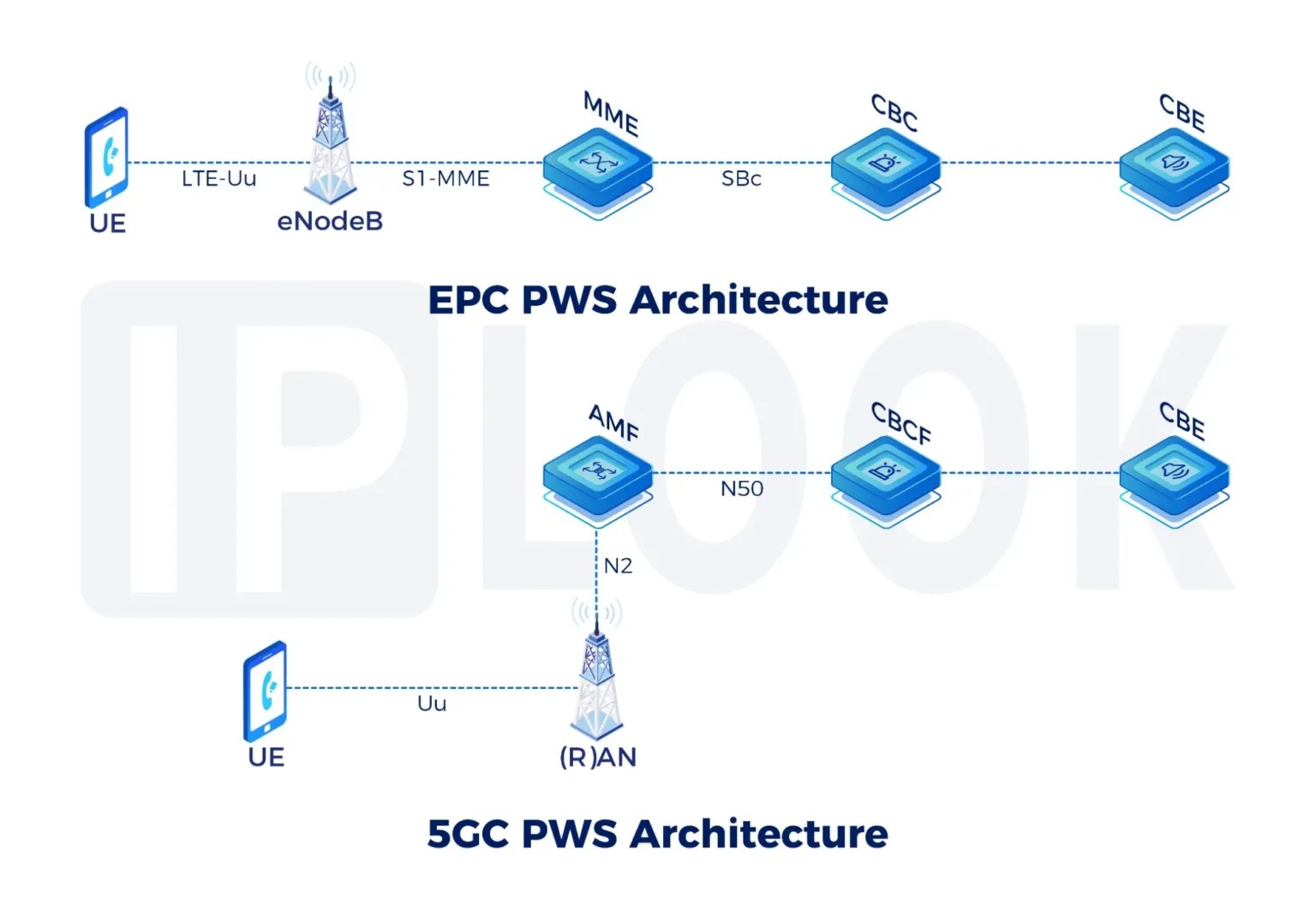
The shift toward private 5G is reshaping how enterprises think about connectivity. Unlike public networks that force shared bandwidth and generic service levels, a dedicated 5G setup hands control back to the business. It means factories can run autonomous robots without a hiccup, warehouses can track inventory in real time with zero lag, and remote operations feel as responsive as being on-site. This isn't just an upgrade—it's a foundation for rethinking workflows from the ground up.
What really sets private 5G apart is the blend of ultra-low latency, ironclad security, and the ability to slice the network for different tasks. Imagine a single infrastructure supporting massive IoT sensor grids while simultaneously streaming 4K video for quality inspections, all without interference. Companies are carving out dedicated digital airspace that keeps critical data on-premises and out of the public cloud, which is a game-changer for industries with strict compliance demands.
Beyond the technical specs, the true power lies in adaptability. A private 5G network can be tuned to the exact needs of a logistics hub one day and a mining operation the next. Early adopters are already seeing how this flexibility translates into faster decision-making, fewer costly downtimes, and the ability to deploy new technologies like augmented reality training without wrestling with legacy Wi-Fi constraints. It's less about faster downloads and more about building a nervous system for the entire enterprise.
From Factory Floors to Hospitals: Private 5G in Action
On a bustling factory floor, the clatter of machinery now syncs with a silent, invisible thread: private 5G. No longer tethered by Ethernet cables or struggling with patchy Wi-Fi, autonomous guided vehicles glide between assembly lines with millimeter precision, their paths rerouted in real time by edge analytics. Sensors on every press and conveyor belt stream vibration and temperature data, enabling predictive maintenance that slashes downtime. Workers equipped with augmented reality headsets receive overlaid schematics and remote expert guidance, their gestures and voice commands transmitted without a hint of lag. This is not a distant prototype—it’s manufacturing’s new backbone, where reliability isn’t a luxury but a requirement for lights-out production.
Step into a hospital, and the same technology hums under the surface, yet its purpose shifts from productivity to preserving life. Private 5G carves dedicated lanes for patient monitor data, ensuring a cardiac alert never queues behind a visitor’s video call. Surgeons in operating theaters manipulate robotic arms with haptic feedback so instantaneous it feels like an extension of their own hands, while imaging scans as heavy as 2GB load in seconds, not minutes. Even beyond the OR, it’s about subtle, critical touches: ambulance drones rehearsing landing routes on a secure network, or a nurse’s tablet pulling up a patient’s history the moment she enters the room, thanks to geofencing attuned to her badge.
These two worlds, though miles apart, share a common thread: control. In both, private 5G hands the reins back to the organization, eliminating the compromises of public networks. A factory can dial up its uplink capacity for a sudden burst of video inspections, while a hospital can prioritize a telemedicine consult over routine software updates—all managed through a single pane of glass. The result isn’t just faster connectivity but a fabric that molds to the rhythm of the work, whether it’s the beat of a press or the pulse of a patient.
Beyond Wi-Fi: Why Private 5G is the Next Big Leap
The connective tissue of modern enterprise has long been woven from Wi-Fi signals, but that fabric is starting to fray at the edges. In environments where latency is measured in lost revenue and coverage gaps translate directly to operational blind spots, the limitations of traditional wireless networking become impossible to ignore. Private 5G steps into this chasm not as a minor upgrade, but as a fundamental architectural shift—offering dedicated spectrum, deterministic performance, and a level of control that Wi-Fi simply wasn't designed to provide.
Consider a sprawling manufacturing floor dense with robotic arms, autonomous guided vehicles, and real-time monitoring sensors. Wi-Fi access points, even in the best mesh configurations, struggle with seamless handoffs and interference in such high-density, metal-heavy settings. Private 5G, built on cellular principles, thrives here. Its microsecond-level latency and ability to maintain persistent connections for thousands of devices per square kilometer make it the backbone for Industry 4.0 applications where a split-second disconnection can halt production or compromise safety.
Beyond raw performance, the appeal lies in autonomy. Enterprises deploying their own 5G networks gain granular authority over data flow, security policies, and service quality—tailoring the airwaves to specific tasks without contending with public network congestion or shared spectrum etiquette. This isn't about replacing Wi-Fi for casual browsing or office email; it's about unlocking a new tier of digital transformation where connectivity becomes as precise and reliable as the industrial machinery it governs.
Locking Down Data: The Security Edge of Private 5G
Data isolation sits at the core of private 5G’s security posture. Traffic never leaves the organization’s physical or virtual perimeter, staying within dedicated infrastructure rather than traversing shared carrier backbones. This containment sharply reduces exposure to external interception, man-in-the-middle attacks, and the kind of mass traffic aggregation that attracts sophisticated adversaries. The network’s data plane remains under strict local control, allowing security teams to enforce policies that align precisely with internal risk thresholds without relying on third-party assurances.
Encryption protocols in private 5G go well beyond the standard protections found in consumer mobile networks. Stronger authentication frameworks tie every device to a unique, hardware-rooted identity before it ever transmits payload data. Over-the-air and backhaul links use robust ciphering with ephemeral key exchanges, making it extremely difficult to reconstruct captured packets even under laboratory conditions. Customizable cipher suites also let organizations lock down legacy endpoints that lack modern security stacks, bridging gaps that would otherwise become exploited entry points.
Operational control is where private 5G truly draws a line. No external operator can access the network’s management interfaces or decrypt its traffic without explicit administrative consent. Policy-driven segmentation limits lateral movement, so a compromised sensor on the factory floor cannot easily pivot to inventory databases or building controls. Combined with real-time monitoring and on-site law enforcement of access rules, this architecture creates a closed loop where data ownership and protection responsibilities are never outsourced or abstracted away.
Crafting Your Private 5G Network: Key Deployment Insights
Building a private 5G network starts with a sharp focus on what you actually need it to do. Too many projects get bogged down by chasing every possible feature instead of solving a concrete problem. Map out the specific devices, applications, and data flows that matter to your operations—whether it’s autonomous vehicles on a factory floor, real-time video analytics in a stadium, or secure sensor mesh across a campus. This clarity helps you sidestep over-engineering and keeps the business case solid.
Spectrum choice can make or break your deployment. Licensed spectrum gives you predictable performance and legal protection, but shared bands like CBRS in the U.S. offer a middle ground with lower barriers to entry. Don’t overlook the physical environment either; walls, heavy machinery, and even outdoor foliage can degrade signals faster than lab tests suggest. A thorough site survey with actual radio equipment—not just software simulations—will reveal dead zones and interference hotspots that would otherwise ambush you later.
Integration with existing IT and OT systems is often where projects stumble. Your shiny new 5G core needs to talk to legacy Ethernet, Wi-Fi, and industrial protocols without creating silos. Plan for identity management, device onboarding, and end-to-end security from day one—retrofitting these is messy. Also, think about who will run the network once it’s live. A small team might not have the expertise to tune QoS profiles or troubleshoot RAN issues, so factor in managed services or training expenses early.
FAQ
A private 5G network is a dedicated cellular setup built for a single organization, giving you full control over coverage, capacity, and security. Unlike public 5G, which you share with millions of others, your traffic stays on-site, latency drops dramatically, and you decide who connects and what gets priority.
Names like Nokia, Ericsson, and Samsung often come up because they supply the core infrastructure. But you also have specialized players like Celona and Athonet making it easier for enterprises to deploy their own networks without needing a telecom background.
Factories and warehouses thrive on predictable, low-latency connections. Private 5G lets you run autonomous robots, real-time video analytics, and massive sensor grids without interference. Wi‑Fi just can’t match that reliability when heavy machinery and metal racks are everywhere.
It’s definitely not limited to the big players anymore. Startups and mid-sized manufacturers are using streamlined, cloud-managed options. If your operations depend on uninterrupted connectivity—like in healthcare labs or creative studios—the investment can pay off faster than you might think.
With private 5G, all your data stays local and you control the SIM-based authentication. It’s much harder to spoof a device or snoop on traffic compared to Wi‑Fi passwords. Plus you can slice the network so that sensitive equipment operates in an isolated virtual lane.
Spectrum access is often the first hurdle—you need to secure licensed or shared frequencies. Then there’s the integration with existing IT systems and finding people who understand both cellular and enterprise networking. It’s getting easier, but careful planning is still essential.
Consider the Port of Southampton in the UK. They deployed private 5G to connect cranes, autonomous vehicles, and IoT sensors, which slashed latency and boosted cargo visibility. Or look at factory floors where predictive maintenance data flows seamlessly without the cable clutter.
Upfront costs can be higher than a Wi‑Fi 6 upgrade, but when you factor in reduced downtime, fewer cable runs, and the ability to support ultra-dense device counts, the total cost of ownership often swings in favor of private 5G over a few years.
Conclusion
Private 5G is quietly reshaping how businesses think about their digital infrastructure, offering a dedicated cellular environment that goes far beyond what conventional Wi-Fi can deliver. Unlike shared public networks, these isolated deployments put spectrum control directly in the hands of the enterprise, enabling ultra-low latency, predictable performance, and a level of customization that legacy solutions struggle to match. The result is not just faster data—it’s a fundamental shift in reliability, coverage, and the ability to support critical operations without interference. Security sits at the core of this transformation, too. By keeping traffic entirely on-premises and applying end-to-end encryption along with granular access policies, organizations can lock down sensitive information in ways that public infrastructure never could. This convergence of performance and protection is what makes private 5G a true leap forward, especially in environments where every millisecond matters.
The proof is already visible across sectors that demand precision and resilience. On factory floors, private 5G ties together autonomous robots, real-time quality inspection cameras, and augmented-reality maintenance tools in a seamless fabric of machine-to-machine communication. Hospitals likewise benefit from uninterrupted telemetry, high-resolution imaging transfers, and mobile clinical workflows—all running on a network engineered for life-critical reliability. But successful adoption isn’t plug-and-play. Deploying a private 5G network requires careful architecture planning, from spectrum selection to integration with existing IT systems and edge computing nodes. The enterprises that get this right are those that treat the network not as a utility upgrade, but as a strategic platform for innovation. In a world where connectivity determines capability, private 5G is quietly becoming the backbone of the next industrial chapter.
Contact Us
Contact Person: Shimmy
Email: [email protected]
Tel/WhatsApp: 85253392231
Website: https://www.iplook.com