
Top Sewer Pipe Cleaning Machine Factory Guide to Quality and Durability
2026-09-21
A sewer pipe cleaning machine is only as good as the factory that builds it. When downtime isn't an option, you need equipment that withstands daily abuse—and that starts with how a manufacturer approaches quality and durability. AMJET and other top factories set the bar, but not all machines are equal. In this guide, we'll walk through what to look for before you invest.
Inside the Build: What Makes a Sewer Pipe Cleaning Machine Last
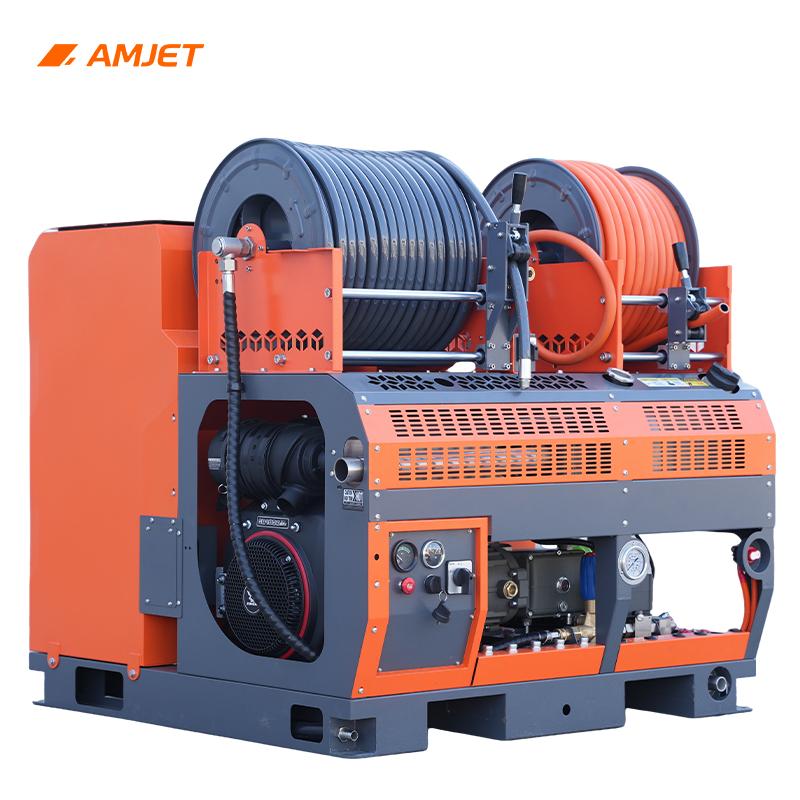
Longevity in a sewer pipe cleaning machine rarely comes from a single feature. It starts with the frame. The best builds use thick-wall steel tubing with full-perimeter welds, not spot welds or flimsy brackets. Stress concentrates where the hose reel mounts and where the engine cradle attaches, so reinforcement plates there keep cracks from starting. A powder-coated finish holds up better than wet paint when the machine gets dragged through manholes and splashed with effluent.
The drivetrain and water path tell you more than the spec sheet. Look for a motor with thermal protection and sealed bearings, because heat is the usual killer. Pumps with ceramic plungers and stainless steel valves tolerate grit and hard water without pitting. Swivel joints and quick connects should be brass or stainless, not plastic, and the hose reel needs a braked, gear-driven hub rather than a cheap friction tensioner. Those details are what let the machine run all day without cooking itself.
Serviceability is the quiet half of durability. If you cannot reach the engine oil drain or the pump inlet filter without tearing the frame apart, small maintenance tasks get skipped. Smart builds leave room around wear items, use standard-size fittings, and keep control boxes away from direct spray zones. A machine that is easy to grease, flush, and inspect will outlast a more powerful one that fights you at every oil change.
Factory Floor Signals of Quality You Can Actually Verify
Walk any factory floor and you'll see plenty of posters claiming zero-defect targets, but real quality leaves traces you can check with your own eyes. Look at how raw materials are staged: are they clearly labeled, segregated by lot, and rotated so older stock gets used first? A messy incoming area where boxes are stacked randomly often predicts mix-ups downstream. Watch how operators handle non-conforming parts. Do they pause, tag the item, and log the issue, or do they quietly set it aside and keep the line moving? That small behavior tells you more about a factory's quality culture than any polished audit report.
Another signal sits in the calibration stickers on gauges and torque wrenches. If the dates are fresh and the stickers are intact, the factory invests in measurement integrity. If you spot faded labels, hand-scratched corrections, or tools left on workbenches instead of in their designated holders, that's a red flag. Also pay attention to first-article inspections: a line that stops to verify the first piece after every setup change, every shift, or every material swap is actively controlling variation. When you see operators comparing parts against master samples under good light, you're looking at a team that owns quality instead of just shipping it.
The Durability Tests That Separate Real Workhorses from Imitations
A gearbox that survives a static load test on a polished bench can still shake itself apart on a jobsite. The tests worth paying attention to run machines through repeated shock cycles—dropping loaded pallets, hitting potholes, slamming dock plates—while accelerometers track how much vibration reaches the motor mounts and control boards. Cheap castings and thin brackets usually fail within the first few hundred cycles, not because the motor quits, but because the frame cracks around a bolt hole or a capacitor snaps off its solder pads. That's the difference between something that looks tough in a brochure and something that stays bolted to the floor after a decade.
Another tell is how the machine behaves under wide temperature swings. Imitations often use potting compounds and wire insulation that expand and contract at different rates; by the eightieth cycle, connectors creep loose and hairline fractures start in solder joints. A serious durability program runs the unit from freezing to full-load heat, back down, and then through a condensing humidity step. Pass that, and the electronics don't just survive—they keep calibration drift under a few percent. That matters when a wrong reading can damage product or injure someone.
Dust mixed with moisture is the test that separates field equipment from showroom replicas. It's not enough to spray water at a sealed enclosure. The harsher method forces fine silica and humidity into every seam, then bakes it on, cycle after cycle, while the cooling fan and display stay active. If a machine still spins its fan, reads its screen, and holds IP ratings after that kind of abuse, it wasn't designed by a team that stopped at minimum compliance.
Why Thicker Steel and Better Seals Matter More Than Spec Sheets
Spec sheets love to parade numbers that look impressive on a screen, but out in the field those figures often crumble under real-world abuse. A machine can boast theoretical load ratings or claimed duty cycles, yet if the frame flexes when you push it hard or the seals allow one grain of dust into a bearing, all those promises become meaningless. Thicker steel isn’t about adding weight for the sake of it; it’s about creating a structure that resists twisting, cracking, and fatigue over thousands of hours. Similarly, better seals aren’t a minor upgrade—they’re the difference between a component that runs smoothly for years and one that grinds itself to death because a bit of grit slipped past a cheap lip. These physical realities beat spec-sheet math every single time.
The truth is that most buyers get distracted by horsepower, speed, or fancy control systems, while the unglamorous parts quietly determine whether the machine survives the first rough season. Thicker steel plates in high-stress areas absorb shock and spread loads instead of concentrating them at weld points. Over time, this prevents hairline fractures that spec sheets never mention. On the sealing side, double-lip designs, better compounds, and proper housing tolerances keep contamination out and lubrication in. A tiny leak might not show up on a dyno test, but it will destroy a gearbox or pivot joint long before the advertised service interval. When you compare two machines, the one with heavier steel and superior seals might look less flashy on paper, but it’s the one that’s still working when the other is in the shop.
Field experience teaches you to look past the glossy brochures. Welders and mechanics know that a machine with a slightly lower theoretical output but a rigid, well-sealed chassis will outperform a fragile high-spec competitor every month of the year. Thicker steel also means better resistance to dents and deformation from accidental impacts—common on job sites where operators aren’t babying the equipment. Better seals reduce maintenance downtime, because you’re not constantly replacing contaminated bearings or leaking cylinders. None of this shows up in a spreadsheet, but it shows up in your operating costs and resale value. So next time someone waves a spec sheet in your face, ask about the frame thickness and seal design. Those are the specs that actually keep you running.
Maintenance Truths from Experienced Sewer Cleaning Crews
Ask any crew that’s pulled a root-choked line at 2 a.m. and they’ll tell you: most backups aren’t bad luck, they’re bad habits. The biggest culprit is “flushable” wipes—they don’t break down like toilet paper, they just twist into rope-like clogs. Grease is a close second. It goes down hot and liquid, then cools into a solid cap that narrows the pipe. If you’re doing either, you’re not maintaining a sewer line; you’re scheduling an emergency call.
Experienced crews will also tell you that snaking a line doesn’t solve the real problem if roots have already cracked the pipe. You clear the blockage, patch the symptom, and six months later the roots are back, thicker than before. A camera inspection costs less than repeated call-outs and actually shows you whether the line is just dirty or structurally failing. That knowledge changes the fix from a quick cable run to a targeted repair—or at least a smarter schedule for hydro-jetting.
Finally, don’t wait for the gurgle. Slow drains, sewage smell in the yard, or a toilet that bubbles when the washing machine empties are early warnings. A maintenance cleaning when you notice these signs is far cheaper than a basement full of waste. The truth is simple: your sewer line doesn’t care about your schedule. A little routine attention beats a dramatic rescue every time.
Choosing a Factory Partner Without Falling for Marketing Hype
When you're scrolling through factory websites, every supplier seems to have the same glossy promises: “state-of-the-art equipment,” “ISO-certified,” “trusted by global brands.” The real question isn't what they claim, but what they can prove without a scripted pitch. Ask for a live video walkthrough of the production floor at an unplanned time. Watch how the manager responds. If they deflect, stall, or insist on a scheduled tour with polished lighting, that's your first clue the marketing budget outweighs the manufacturing reality.
A genuine manufacturing partner will talk more about failures and fixes than about awards and certifications. Listen for the stories: the time a batch of components failed tolerance checks, how they traced the root cause, what they changed in the process. Marketing hype avoids admitting any weakness; factory reality embraces the fact that production lines are messy, and only systems—not slogans—keep quality consistent. Ask to see a recent non-conformance report. If they look confused or say they don't have one, you're likely dealing with traders, not makers.
Finally, test their responsiveness beyond the sales team. Email the engineering department with a specific technical question about your product geometry or material spec. A factory with genuine depth will get back to you with a detail-laden answer, often including a counter-question about your tolerance stack or surface finish. A marketing-driven middleman will either forward your message to a sales rep who dodges the question or reply with a generic brochure line. The difference is noticeable within two exchanges.
FAQ
A dependable factory backs its equipment with transparent material specs, in-house load testing, and detailed records of field performance rather than just glossy brochures.
The drum or reel assembly, drive motor, and frame welds take the most punishment. Look for thick-gauge steel frames, sealed bearings, and motors with thermal protection if you want years of service.
Ask for a short video of the machine running a timed blockage simulation, request the exact grade of steel used in the frame, and check whether the factory performs a 24-hour continuous run test on each batch.
Yes. Thin powder coating that chips easily, exposed wiring without strain relief, wobbly wheel brackets, and vague answers about bearing brands are all red flags.
Proper testing catches misaligned drums, weak hose connections, and overheating motors before shipping. Factories that run every unit under load for at least an hour tend to have far fewer early failures.
For most municipal and plumbing use, a heavy-duty powder-coated carbon steel frame is enough and keeps costs reasonable. Stainless steel matters mainly if the machine will face constant exposure to salt, chemicals, or high humidity.
They keep common wear parts like hoses, nozzles, and drum bearings in stock, offer clear diagrams, and usually respond within one business day with troubleshooting steps instead of forcing a service visit.
Conclusion
A sewer pipe cleaning machine that earns its place on the truck isn't defined by a glossy catalog. The real story starts inside the frame, where thicker gauge steel plates and full-length weld runs absorb the daily abuse of potholes, tight access points, and hurried crews. On the factory floor, you can spot the difference: solid fixtures, consistent torque marks, and fittings that don't wobble under hand pressure. Those little physical clues often predict how long the drum, hose reel, and drive system will survive. Durability testing matters too—machines that run for hundreds of cycles under load, with pressure spikes and debris simulations, separate the workhorses from cheap clones. Thicker steel around the drum and better shaft seals aren't just spec sheet fillers; they keep water and grit out of bearings, which is where most failures begin.
Experienced sewer cleaning crews will tell you maintenance isn't optional, but the right design makes it far less painful. Grease fittings that are actually reachable, quick-release covers, and modular components mean a crew can service the unit between jobs instead of hauling it back to the shop. That matters more than a long warranty that hides behind fine print. When choosing a factory partner, don't fall for polished marketing or a stack of awards. Ask to see the welding jigs, ask for the name of the engineer who designed the frame, and request a video of a machine completing a full test cycle. A factory that lets you look behind the curtain, without hesitation, is one that trusts its own build. At the end of the day, quality and durability come down to honest materials, overbuilt stress points, and a factory floor culture that treats every unit like it'll be used hard for a decade. That's the guide no headline can replace.
Contact Us
Contact Person: Mike
Email: [email protected]
Tel/WhatsApp: +86 19545555505
Website: https://www.amjeting.com/